Deutsche Telekom is investing nearly €250 million to expand its Munich Industrial AI Cloud to 20 megawatts after the facility’s initial capacity was fully booked seven months after its February 2026 launch, The Fast Mode reported. Chief executive Tim Höttges announced the expansion at a Munich event on 9 November, heise reported. The investment adds Nvidia Blackwell Ultra B300 systems to the Tucherpark site, where companies use computing capacity for AI models and industrial applications.
Key points
- The nearly €250 million expansion will take the Munich facility to 20 megawatts.
- New Blackwell Ultra B300 systems will join existing B200 GPUs, doubling Deutsche Telekom’s chips in this class.
- Deutsche Telekom says the first phase was fully booked seven months after the factory opened in February 2026.
- Siemens and other companies already use the site for industrial AI, robotics and simulations.
B300 systems extend the Munich installation
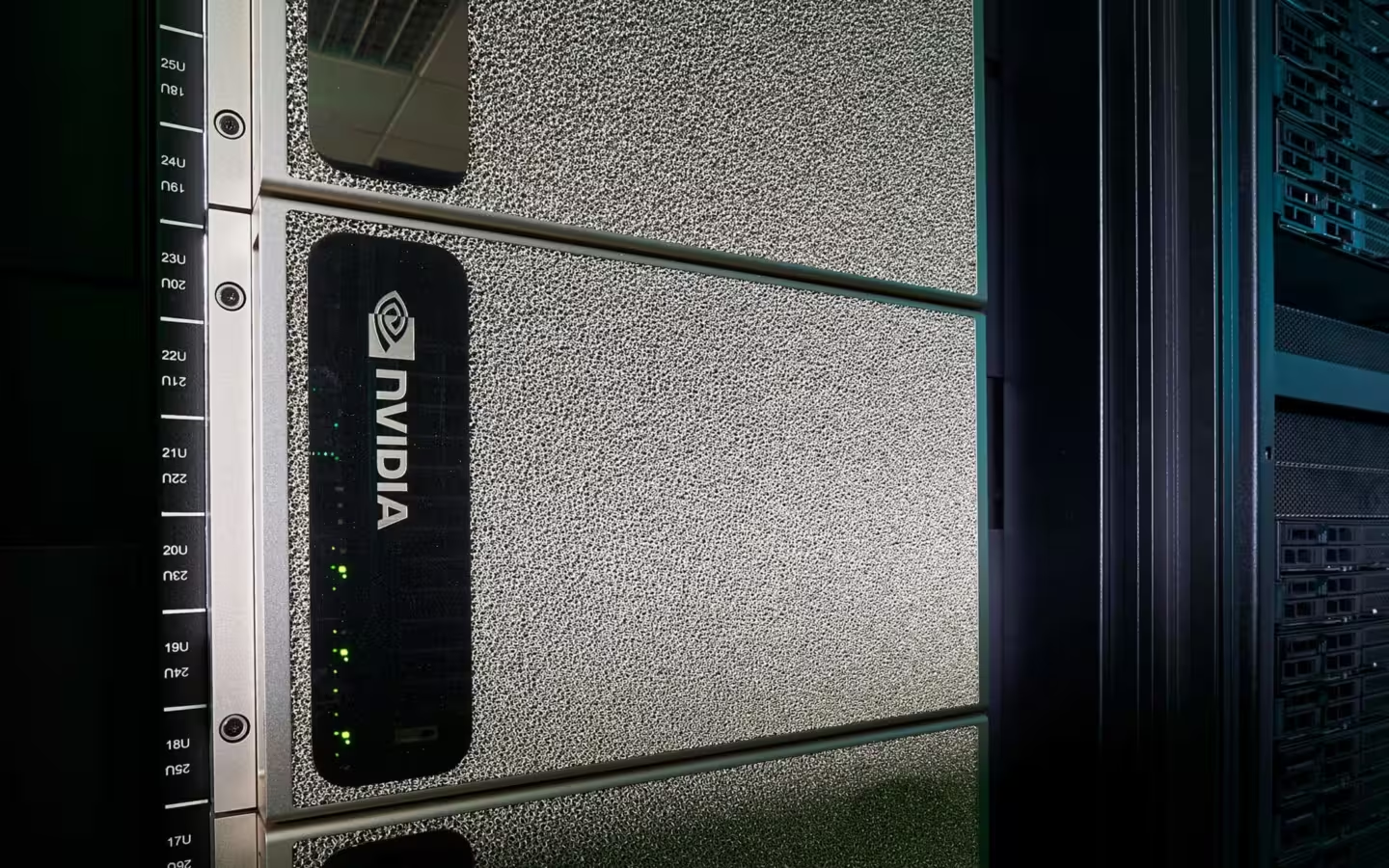
The additional B300 GPUs will sit alongside Blackwell B200 systems already installed at Tucherpark. Deutsche Telekom says the purchase will double its number of chips in that class and increase computing capacity. The factory will continue to use Nvidia RTX PRO 6000 Blackwell Server Edition GPUs.
The site is set to grow from 10,000 Nvidia Blackwell GPUs to 20,000, heise reported. Its planned power capacity is 20 megawatts. Deutsche Telekom previously targeted more than 10,000 Nvidia GPUs for private AI clouds.
Deutsche Telekom is positioning the new systems for training and running large AI models, reasoning workloads and simulations. Its Industrial AI Cloud also supports digital twins and robotics work, including tests of how equipment behaves in simulated environments. Those workloads draw on different GPU classes and software, including Nvidia CUDA X and Omniverse, according to the company.
Nvidia Vera Rubin racks cannot fit in the underground facility’s lift, T-Systems chief executive Ferri Abolhassan said at the Munich event, according to heise. Deutsche Telekom is adding B300 systems to the existing site rather than installing those racks there.
Tucherpark’s first phase filled in seven months
The Industrial AI Cloud began operating at Tucherpark in February 2026. Deutsche Telekom says its initial capacity was fully booked seven months later and that it began planning further expansion stages in May. The company says the opening phase increased Germany’s available AI computing capacity by 50 percent.
Siemens, Currenta, Synopsis, Agile Robots, Wandelbots, PhysicsX, Noxtua, EDAG and Soofi use the infrastructure, according to Deutsche Telekom. Their work spans industrial AI, robotics, simulations and language models. The German language model Soofi is being trained on Deutsche Telekom’s infrastructure.
Abolhassan said the first stage was at capacity, with Siemens and Daimler Truck among its industrial users, and that a project pipeline pointed to further demand, Data Centre Magazine reported. The named users and booked capacity give the expansion an existing customer base. The new investment remains Deutsche Telekom’s spending commitment.
The Munich project forms part of Deutsche Telekom’s effort to supply companies with AI computing under European data-protection and security requirements. Germany and Nvidia have also signed a declaration to develop industrial AI models.
Tucherpark cooling and a possible Bavaria expansion
Deutsche Telekom puts the Munich facility’s Power Usage Effectiveness at 1.2. The measure compares a data centre’s total electricity use with the power consumed by its IT equipment. Cooling and power systems account for the additional use. The company also plans to put the site’s waste heat to work heating the Tucherpark district.
Deutsche Telekom is discussing another expansion in Bavaria with partners. According to the company, implementation depends on financing and an economically viable model, and it has not made a final investment decision. Höttges has also said the company is planning a further stage at Tucherpark, heise reported.
The underground data centre draws cooling water from the neighbouring Eisbach through heat exchangers. Deutsche Telekom’s measurements put the resulting rise in the stream’s temperature so far at 0.02 degrees, according to heise.