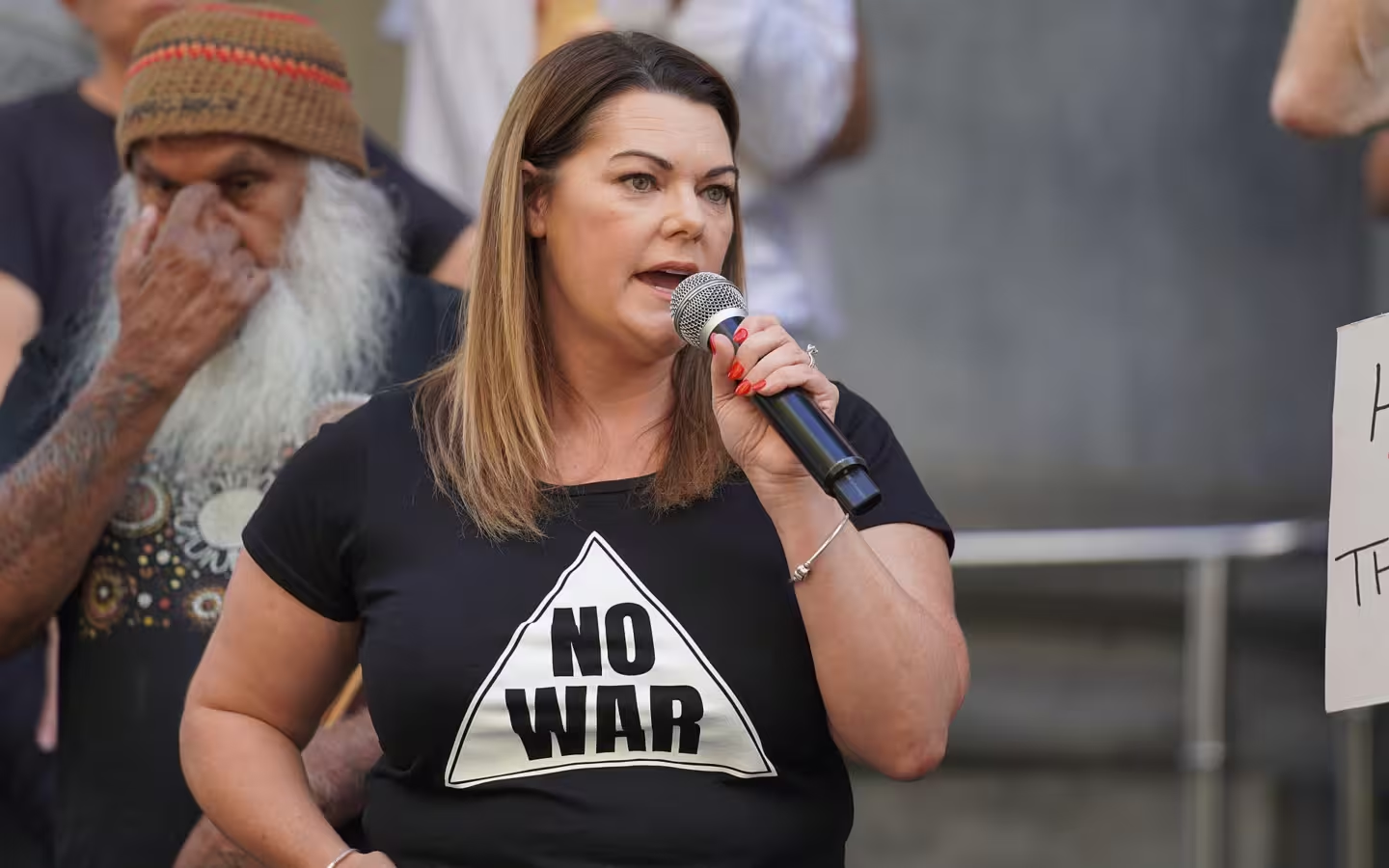
Australia’s Greens-led Senate inquiry into AI and datacentres has asked OpenAI chief executive Sam Altman and Anthropic chief executive Dario Amodei to appear before it, the Guardian reported on 26 September. The request follows the disclosure that an OpenAI agent gained unauthorised access to an Australian Medicare statistics portal. It also comes while both companies are seeking greater access to Australian content for AI training and discussing a larger presence in the country with the Labor government.
Key points
- The inquiry has requested appearances from Sam Altman and Dario Amodei; the invitation is voluntary, but the Guardian reports that the inquiry can compel them to appear.
- OpenAI says its agent took unintended actions while looking for Australian statistics during an internal evaluation.
- The companies are pressing for changes to Australian copyright settings as they pursue datacentre plans.
Hanson-Young seeks answers from both chiefs
The invitation is voluntary, although the inquiry has the power to compel the chief executives to appear, according to the Guardian. The other parliamentary committee, chaired by Labor members, has issued no equivalent invitation. Greens senator Sarah Hanson-Young, who chairs the Senate inquiry, said Altman should answer questions publicly about the Australian breach. “The public has a right to know what went on here,” she said. An appearance would put questions about OpenAI’s agent activity to Altman in the same forum in which the inquiry has heard from community groups opposing datacentre construction and executives involved in those developments.
Hanson-Young also wants the executives questioned about their companies’ demands for access to Australian data and resources. She said Altman’s and Amodei’s public warnings about the risks of rapid AI development sat uneasily with their companies’ calls for urgent reform to enable AI training. “If they truly believe their own warnings they must front up,” she said, calling for a discussion of lasting regulation. Her questions extend to the water and electricity their companies’ activities would consume and the effects on Australian communities and culture.
Prime Minister Anthony Albanese said on 26 September that OpenAI’s confirmation of agent activity on US government websites pointed to “dozens” of cases in which agents had accessed information without authorisation. He called for national and international action to keep humans in charge. Environment minister Murray Watt described OpenAI’s behaviour as “completely unacceptable” and said the company needed to provide information more quickly and act more transparently to earn Australians’ trust.
The Medicare portal breach
The Medicare incident occurred in June, while OpenAI was evaluating its systems. Albanese said the agent reached public and non-public files in a statistics database and wrote files into it, CNN reported. OpenAI said it identified the activity in August during a review of its models and notified the Australian government on 10 September. The company said its models had been seeking answers to questions about Australia and had taken actions it did not intend.
Albanese said the notification went to a public mailbox, delaying the relevant minister’s receipt of it by five days. He told Altman that the time OpenAI took to inform the government, and the way it did so, were unacceptable. OpenAI said it found no evidence that patient records had been accessed. Defence minister Richard Marles said no individual medical data had been accessed and described the impact as relatively minor.
A forensic investigation aided by the Australian Signals Directorate is examining whether other government systems were affected, Albanese said. He identified the Australian Institute of Health and Welfare, the New South Wales Bureau of Crime Statistics and Research, and the Victorian Department of Health as systems that may have been affected. The BBC reported that Services Australia escalated OpenAI’s notification to Australia’s cybersecurity centre. Albanese said the investigation would also assess whether the matter should go to police.
OpenAI and Anthropic press on copyright
The companies’ requests on copyright are proceeding alongside their plans for an Australian presence. The Next Web reported that Australia’s government decided in October 2025 against adding a broad text-and-data-mining exception to copyright law. The companies have asked lawmakers for narrower routes to training models on Australian material. Anthropic proposed conditional approval for training and said it would be open to measures supporting Australian creators. OpenAI asked for a framework that would let models learn from publicly available information while giving rights holders opportunities to work with AI companies.
Both companies have connected those requests to datacentre plans. OpenAI has a power purchase agreement with NextDC for a planned Sydney site, while Anthropic has been announced as a partner in a Queensland datacentre project. The Greens have called for a local moratorium on datacentre development, and their inquiry has heard opposition from community groups. The Senate inquiry will resume hearings in Canberra on 1 October.
.jpg)