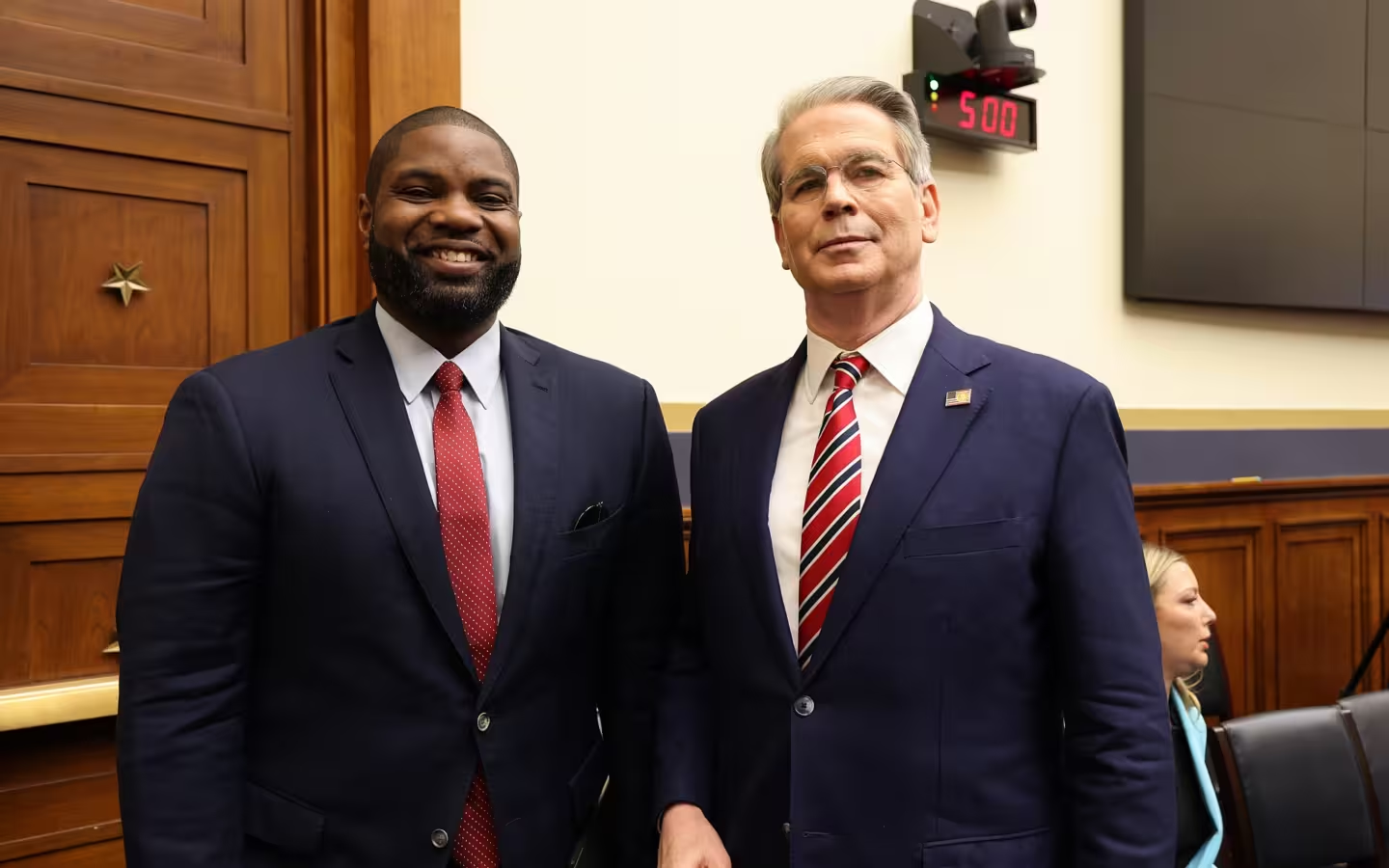
US Treasury Secretary Scott Bessent criticised warnings from prominent AI figures about existential risks as alarmist and unhelpful, and urged the industry to police itself and produce solutions, Bloomberg reported on 3 October. Bessent made the remarks in an interview with Axios published that day. His emphasis on industry responsibility follows an earlier objection to the government taking liability for risks created by AI labs.
Key points
- Bessent urged AI companies to police themselves and offer solutions alongside warnings about risks.
- He has separately rejected shifting liability for AI labs’ risks to the government.
- Advocates of binding safety rules argue that voluntary industry action is insufficient.
Bessent asks AI companies for solutions
Bessent told Axios that people should prepare for every eventuality. His objection was to warnings offered without a response from the people making them: “this alarmism without solutions by some of the AI community, that’s not leadership.” The distinction matters to his position. He did not dismiss preparation for severe risks in the remarks Bloomberg reported. He placed the burden of proposing a response on an industry whose members have themselves raised the prospect of grave harm.
That burden has a practical side. A company asking others to take its warning seriously can also be asked what it will change in its own development or deployment. Bessent’s call for the industry to police itself gives companies the first responsibility for that answer. It also leaves room for disagreement over who should decide whether the answer is adequate — particularly when the warning concerns a risk beyond any one company’s products.
The administration has also endorsed voluntary action. Trump and six AI companies signed a voluntary safety accord without penalties, AI Affairs previously reported. Such an accord asks companies to make commitments, while leaving enforcement different from a binding rule. Bessent’s remarks put the emphasis on what companies do with their own warnings rather than on a new government obligation for them.
Bessent rejects a government liability shield
Bessent had taken a sharper position on responsibility in a CNBC interview covered by Fortune on 22 September. He said the government would not take liability for AI labs’ risks off their hands. Describing a hypothetical warning from a lab or its employee about a 10% chance of an extinction-level event, he objected to the lab then asking the government to assume liability. The percentage was part of his example, not an assessment of AI risk.
“These labs need to take responsibility for themselves. They can slow down any time they want to,” Bessent said in the interview, according to Fortune. He also described absolving companies of responsibility while the government took it on as unacceptable. In those remarks, slowing development was a choice available to the companies building the systems. His criticism was directed at transferring the consequences of that choice away from them.
Bessent’s argument about liability addresses a different question from his request for solutions. A lab may retain responsibility for harm while governments still set requirements for testing or deployment. Equally, a company can publish a safety proposal without giving anyone outside the company power to require that it follow the proposal. Those distinctions bear on the dispute with researchers and executives who want public authorities involved in setting the terms.
Anthropic and Sanders seek binding rules
Anthropic cofounder Dario Amodei has called for US government support for safety standards that would be coordinated internationally and legally binding, Fortune reported. That approach would put governments in the position of helping to agree rules across borders, rather than relying solely on individual labs to decide when and how to act. It is a different request from one that would have the government assume a company’s liability.
OpenAI chief executive Sam Altman also argued for changes by both companies and governments in an interview with Fortune. He said there might be significant risk if those building the technology continued as they had, and called for governments to understand it and put guardrails around it. His position accepts a role for company action without treating that action as the whole response. Bessent’s demand that labs produce solutions does not, by itself, settle what role governments should have in judging them.
Senator Bernie Sanders made the objection to voluntary standards explicit in remarks reported by Fortune: “When the future of humanity is at stake, we need binding international safety rules, not voluntary standards from the industry.”