South Korean President Lee Jae-myung asked officials on 17 November to consider a reward of at least 100 million won for reports of cheating with advanced electronic devices in the College Scholastic Ability Test, the country’s university entrance exam. At an emergency preparations meeting he chaired by video from Manila, Lee also directed officials to investigate exam-paper images uploaded to AI services during the test, The Asia Business Daily reported, citing a written briefing from the presidential office. The exam is scheduled for 19 November.
Key points
- Lee asked officials to consider a reward of at least 100 million won for tips about cheating with advanced electronic devices.
- He ordered a review of agreements with global technology companies and checks on exam-paper images uploaded to AI services during the test.
- The government plans to seek a 10-year exam ban for test-takers who cheat using electronic devices, up from one year.
- More than 8,400 additional staff are to be assigned to 1,312 test centres.
Lee’s proposed 100 million won reward
Lee made the request after Prime Minister Han Seong-sook briefed him on measures against cheating, according to the account of senior presidential spokesperson Kang Yujeong’s written briefing. The proposed reward would go to someone reporting cheating involving advanced electronic devices. The government plans to keep accepting reports through the Ministry of Education’s reporting centre after the exam ends.
The meeting brought together Deputy Prime Minister for Science and ICT Bae Kyunghoon, Education Minister Choi Kyo-jin, Interior and Safety Minister Yoon Ho-jung and Chief of Staff Lim Kwang-hyun. Lee was in the Philippines for the ASEAN Summit. He told officials to examine posts in online communities and on social media for possible gaps in the exam safeguards, and called for a response to false information that could alarm test-takers and their parents.
The meeting followed a pledge by Han to mount a national response to AI exam cheating and the formation of a presidential task force. Lee’s reward proposal adds a route for receiving reports from people who encounter suspected cheating, including after test day.
AI uploads and technology company records
Lee asked Bae and the presidential senior secretary for AI to review the terms of agreements with global technology companies. He directed them to use those agreements to check every instance in which an image of a CSAT paper was uploaded to an AI service during the exam. He also called for efforts to require large technology companies to provide relevant material from exam hours for future national qualification tests.
Those instructions address two periods: uploads during the 19 November CSAT and access to company-held material during future qualification tests. The proposed future requirement would place an obligation on the companies holding the records. For the coming exam, Lee assigned the agreement review to Bae and the presidential AI secretary, and the upload checks are to proceed on the basis of those agreements.
Lee also asked the Ministry of Education to supply permitted school materials, including erasers, to all test-takers. The request sits alongside checks on what candidates bring into exam rooms: according to The Asia Business Daily, the government plans to inspect every candidate’s glasses and check collars and sleeves.
A proposed 10-year CSAT ban
The government plans to increase the period for which a test-taker who uses an electronic device to cheat is barred from the CSAT from one year to 10 years. It will consult the National Assembly about applying that change from this year’s exam. The length of a ban for merely possessing a prohibited device is also to be settled through Assembly discussions. The ruling Democratic Party has separately proposed a 10-year ban for AI exam cheating.
For serious cases, the government plans to file a complaint or request an investigation on suspicion of obstructing official duties by fraudulent means. It also plans to revoke the admission of anyone who gained a university place through cheating. Those measures concern different stages of a case, from suspected misconduct during the exam to a place obtained afterwards.
At test centres, officials plan to collect electronic devices before the first session and put candidates’ bags in hallways outside classrooms. A nationwide emergency alert is planned between 8:25 and 8:30 a.m. to help locate phones that have not been handed in. Lee ordered at least one additional alert without advance notice for the same purpose.
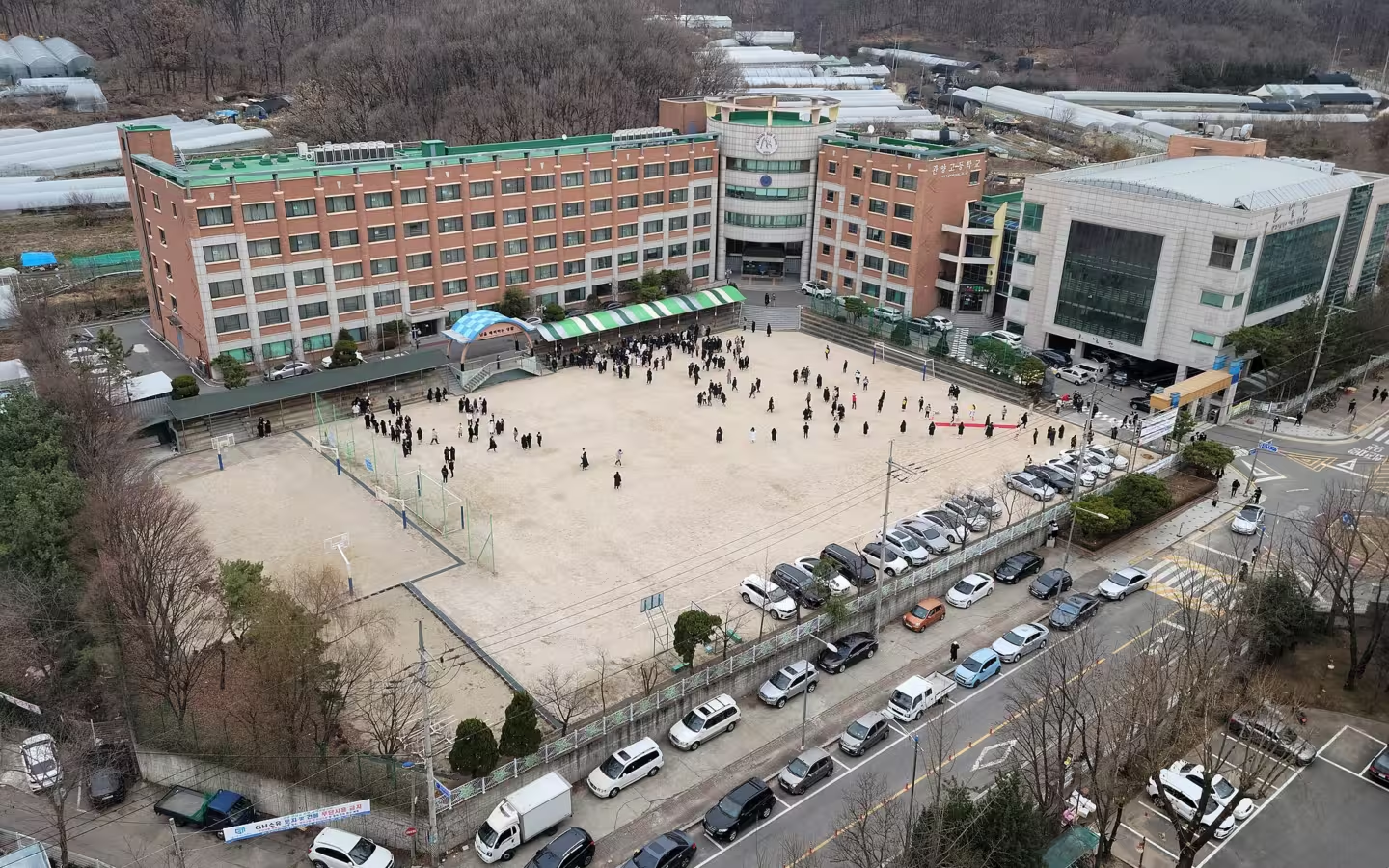
The government will assign more than 8,400 additional personnel, including staff responsible for smart-device checks and proctors in hallways, to 1,312 test centres for the CSAT on 19 November.