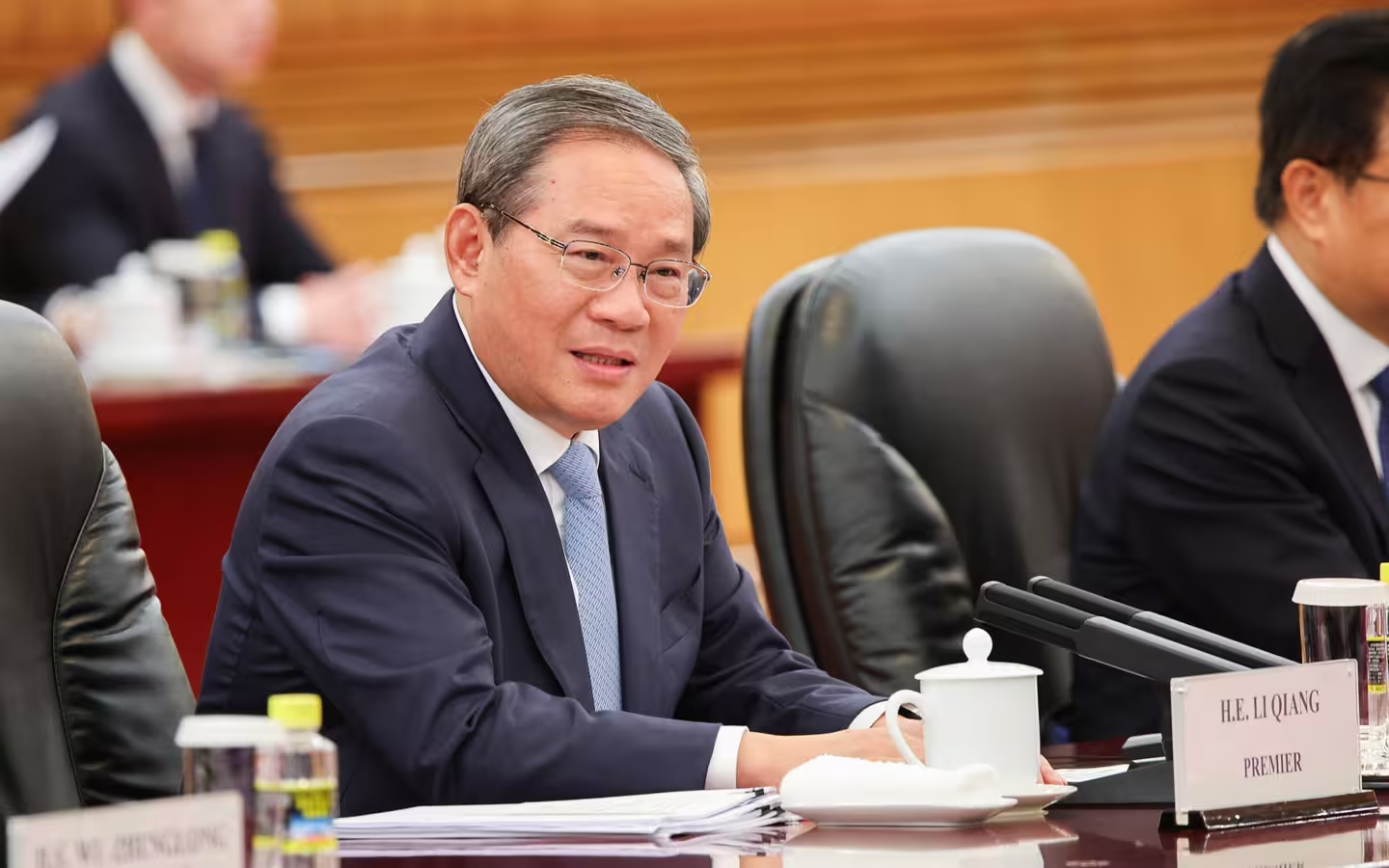
Chinese Premier Li Qiang called for deeper use of artificial intelligence in manufacturing during an inspection tour of Shanghai on 22 September 2026. He urged officials to develop more production and service platforms and pursue what he called “AI plus manufacturing”, according to CGTN’s account of the visit.
Key points
- Li called for manufacturing platforms covering industrial design, pilot testing and intelligent maintenance.
- He said the platforms should help companies, particularly smaller firms, upgrade at lower cost.
- The premier also urged more venture capital and “patient capital” for future industries with long development cycles.
Li’s directive follows the manufacturing conference
The Shanghai visit followed a national conference on advanced manufacturing in Beijing on 16–17 September. There, President Xi Jinping called for the sector to become “bigger and stronger”, while Li directed attention towards intelligent manufacturing, AI-enabled factories and advanced-manufacturing clusters, Rare Earth Exchanges reported. In Shanghai, Li called for decisions from the conference to be put into effect.
Xi had also called for more resilient and self-sufficient supply chains and faster development of a modern industrial system grounded in advanced manufacturing, the South China Morning Post reported. Li’s remarks in Shanghai addressed a more immediate question for manufacturers: how companies could gain access to the design, testing and maintenance services needed to upgrade their operations.
Li urged China to combine its manufacturing capacity with digital and intelligent technologies. He called for next-generation intelligent manufacturing and faster development of emerging and future industries alongside the continued growth of advanced manufacturing. Reuters reported that Li also urged wider digital transformation across industries. His comments concerned the direction of industrial development rather than a new rule for manufacturers.
Shanghai visit puts service platforms beside robots
At an AI application pilot test base in Shanghai, Li inspected special-purpose and industrial robots, including their use in complex settings. He said emerging industries such as AI were creating opportunities for technological innovation and brand upgrading in manufacturing. He also urged work on problems common to manufacturers, singling out industrial design, pilot testing, and intelligent operation and maintenance as areas for production and service platforms.
Li called for more such platforms to help companies, particularly small and medium-sized firms, modernise more efficiently and at lower cost, according to the South China Morning Post. The emphasis on services matters for firms that need technical assistance at several stages of production. Industrial design, a pilot test and ongoing maintenance each require different support, and Li named all three when describing the platforms he wanted built.
The directive puts smaller manufacturers within the advanced-manufacturing programme discussed by China’s leaders in September. It asks for facilities and services that firms could use to change how they operate, alongside the broader push for intelligent factories. Li’s call to address common manufacturing problems also gives the proposed platforms a wider remit than the individual robot applications he inspected at the Shanghai base.
Li seeks patient capital for future industries
Li also visited a Shanghai incubator for future industries, where he inspected products involving brain-computer interfaces and quantum computing. He described future industries as a “potential blue ocean” for advanced manufacturing and called for stronger basic research and progress on core technologies. Those priorities place research and financing alongside the service platforms in the industrial programme he set out during the tour.
Li urged an expansion of venture capital and “patient capital”, citing the long development cycles and high market risks of future industries. He also called for arrangements to increase investment in future industries while sharing the risks, the South China Morning Post reported. The financing appeal was directed at fields he discussed separately from the manufacturing services intended to help smaller companies upgrade existing operations.
Li called for research institutions, innovation platforms, companies and technology programmes to help attract and develop talent, the South China Morning Post reported. During the same Shanghai visit, he met executives from WorldSkills and said China would improve training, evaluation and incentives for skilled workers while sharing its skills-development experience and public resources with other countries.