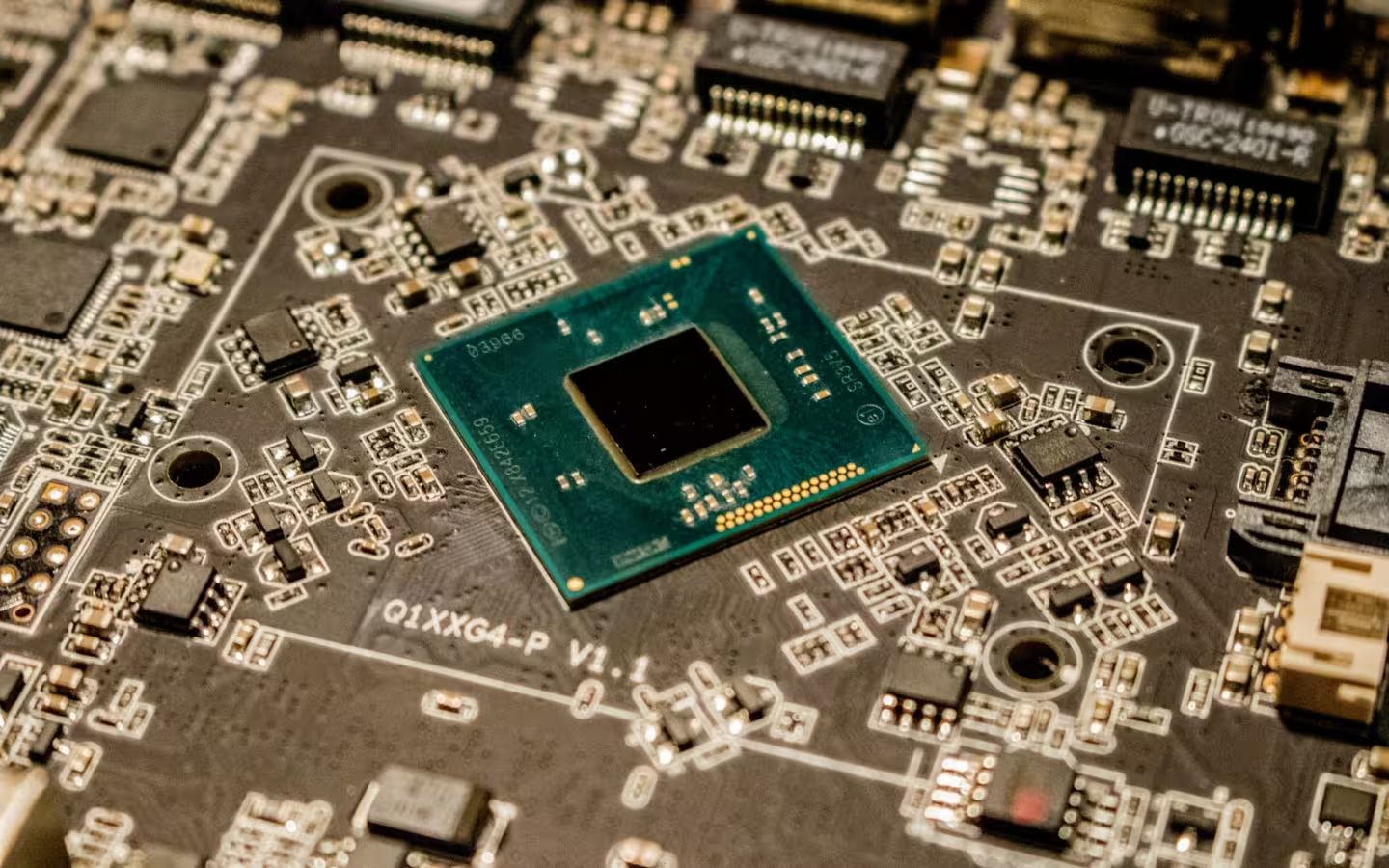
Malaysia unveiled six domestically developed semiconductor innovations on 16 October 2026 with estimated combined sales potential of RM300 million, Economy Minister Akmal Nasrullah Mohd Nasir said, The Edge Malaysia reported. Developed under the Malaysia Semiconductor IC Design Park, the designs are part of an effort to move beyond manufacturing chips designed elsewhere and towards creating and owning Malaysian technology. Akmal said the companies must still find customers, meet industry requirements and turn the designs into commercial products.
Key points
- The minister put the six designs’ estimated combined sales potential at RM300 million.
- The products cover AI computing and storage, industrial and automotive electronics, satellites and drones.
- Design parks in Puchong and Cyberjaya house 407 engineers across 20 companies.
- Akmal said customer adoption and industry qualification are the next hurdles.
MARS1000 and five other park designs
SkyeChip’s MARS1000 is an edge-AI processor intended for cameras, robots and factory systems, while MaiStorage’s aiDAPTIV+ offers storage solutions for AI personal computers and servers, Malay Mail reported. SiliconX unveiled a field-programmable gate array, a reprogrammable chip designed for industrial and automotive applications. It was described at the launch as the first homegrown device of its kind in Malaysia and Southeast Asia.
The remaining designs serve more specialised equipment. Infinecs’ Maxwell is an automotive-grade power regulator for vehicle electronics. Weeroc Space developed a power controller chip for satellites and other space systems, and Alphaswift’s FC Mini is a flight controller for autonomous drones. The range gives the companies several prospective markets rather than a single application for the park’s work, though Akmal said each design still needs to be developed into a commercially successful product.
Akmal described the shift in terms of ownership as well as production. Malaysia has spent more than 50 years building a semiconductor industry, beginning with assembly work in Penang and expanding into testing, packaging, equipment and manufacturing services, The Edge Malaysia reported. Under the 13th Malaysia Plan, the government is prioritising AI and high-value industries. Its National Semiconductor Strategy calls for stronger capabilities in integrated circuit design, advanced packaging and manufacturing equipment, alongside the development of 110 high-value Malaysian semiconductor companies.
Puchong and Cyberjaya house 407 engineers
Malaysia opened its first integrated circuit design park in Puchong in August 2024 and a second facility in Cyberjaya in November 2025. Selangor Menteri Besar Amirudin Shari said the two parks now house 407 engineers across 20 companies, including Malaysian firms and partners from Taiwan, France, Japan and Australia. The Puchong park was almost full, while the Cyberjaya facility was preparing to expand from one occupied floor to three, according to Malay Mail.
The National Semiconductor Strategy aims to train and upskill 60,000 engineers. A separate Arm On-Demand Training programme targets 10,000 Malaysians for specialised integrated circuit design skills over four years. Akmal said Malaysia was building on its existing strengths in packaging and testing through partnerships, investment and talent development. He cited collaboration with Arm Limited to gain access to intellectual property design, rather than treating the unveiling of locally developed chips as the end of that work.
Amirudin said the Advanced Semiconductor Academy of Malaysia had trained around 850 engineers in collaboration with more than 100 universities. He also cited the Ehsan Semiconductor Fund, which aims to raise RM100 million for investments in early-stage semiconductor start-ups and AI application companies. In his account, the parks’ development depends on bringing together talent, technology and capital — resources that must continue to grow if the firms based there are to build businesses around their designs.
The design initiative sits alongside Malaysia’s Budget 2027 plans for a sovereign AI cloud and more free subscriptions, previously reported by AI Affairs. The chip strategy addresses a different part of the technology chain: Akmal said Malaysia needed to design, develop and own technology as well as manufacture products locally. He distinguished products made in Malaysia from technology created and owned by Malaysian companies, and argued that the country needed both.
Akmal puts customers ahead of RM300 million
The RM300 million figure is an estimate of combined sales potential, not sales already secured. Akmal told the launch that customer adoption and industry qualification were the next steps for the six innovations. He said the government also needed to help develop markets for locally designed chips so that Malaysian products could attract customers and encourage further investment. Turning the designs into viable products would be a long journey, he told reporters.
That commercial task extends beyond the firms that built the chips. Akmal said federal and state governments needed to coordinate their work on the semiconductor industry rather than treat investments in different states as competing initiatives. Asked about Sarawak’s unveiling of a locally designed gallium nitride chip, he said states could contribute different expertise. He argued that investment in one state could create value nationally when supported by better coordination.