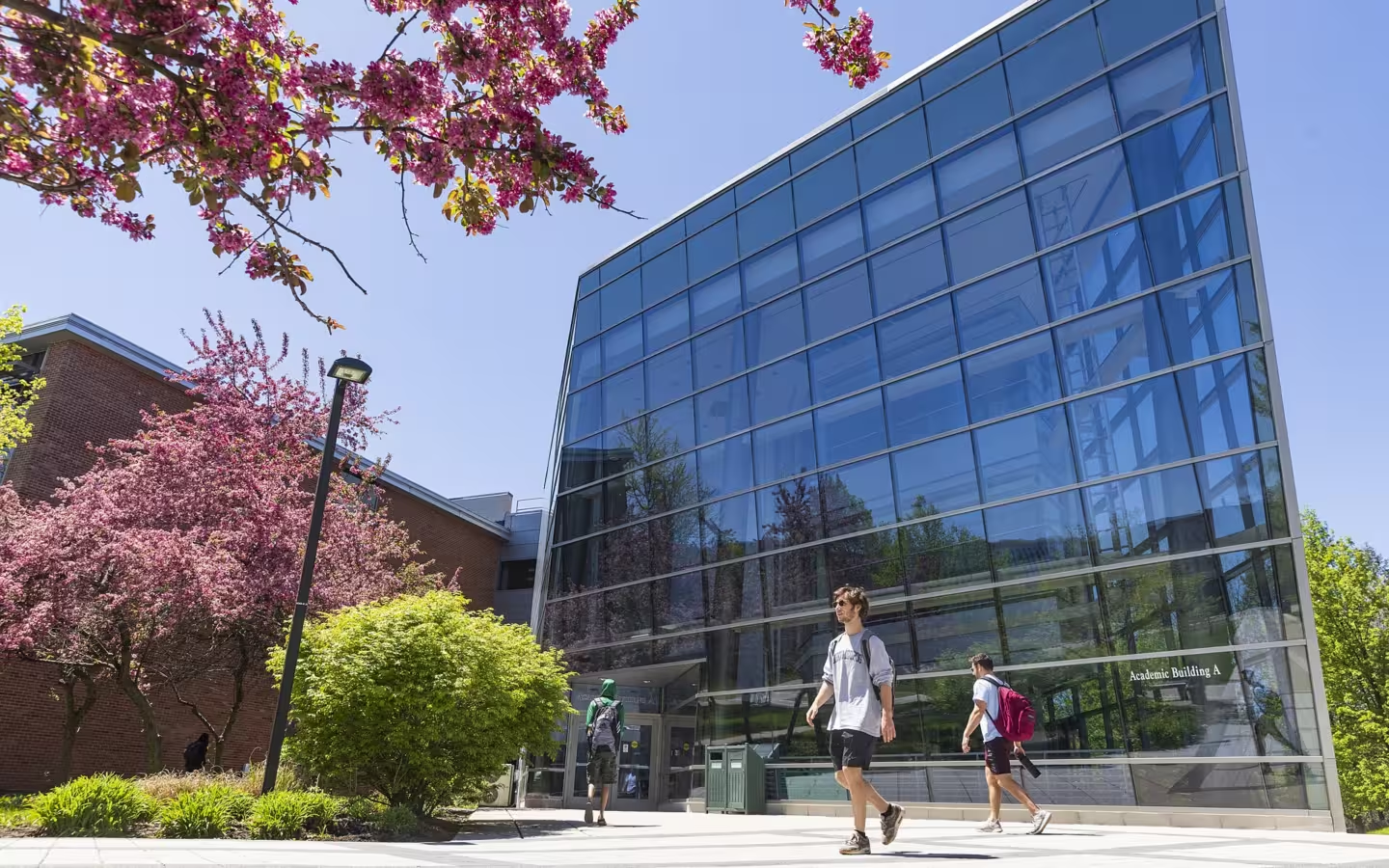
New York Governor Kathy Hochul launched the New York Center for AI Responsibility and Research at Binghamton University on 10 November 2026, giving researchers a state-backed base for independent testing of advanced AI systems. Her office also announced an online registration portal for large frontier AI developers under the RAISE Act, according to the announcement published by SUNY.
Key points
- The centre will bring together more than 80 researchers from institutions across New York State.
- Its planned work covers independent testing, foundational research and training AI safety experts.
- The centre is supported by Empire AI, a $500 million public-private research initiative.
- The Office of Digital Innovation, Governance, Integrity, and Trust has opened a registration portal for large frontier AI developers.
Binghamton centre sets out its testing work
The centre, known as NYCAIRR, will bring together more than 80 scientists from colleges and research institutions across New York State. Hochul’s office says their work will combine independent evaluation of frontier AI systems with foundational research and the training of AI safety experts. It also plans to develop measurements and standards for evaluating systems as they change.
Its research agenda includes investigating how advanced systems operate, devising safety and security tests, and checking whether they behave as intended. The centre also plans to study the use of AI in scientific discovery. Hochul’s office says the resulting work is intended to give public officials evidence for decisions about AI safety and accountability, alongside research relevant to medicine and critical infrastructure.
One of NYCAIRR’s first objectives is a national recruitment effort. The fields named by Hochul’s office range from mathematical theory and formal verification to hardware security, privacy, interpretability and biosecurity. Those plans put the measurement of systems alongside the study of their underlying behaviour: the centre is being asked both to test AI that exists and to build methods for assessing systems that follow it.
Hochul framed independent testing as a check on developers’ own accounts of their products. “The stakes are too high to simply take AI companies at their word,” she said in the announcement. Her office describes the initiative as a statewide effort, centred at Binghamton University, rather than a testing programme run by an individual laboratory.
Morrisett and Wing will direct NYCAIRR
Greg Morrisett, Dean and Vice Provost of Cornell Tech, and Jeannette Wing, Executive Vice President for Research at Columbia University, will serve as interim co-directors. Hochul’s office says they will set the scientific agenda, oversee independent evaluations and develop a network of researchers who continue to work at their home institutions. The centre is based at Binghamton, but its planned research network extends across the state.
The centre is supported by computing power from Empire AI, Hochul’s $500 million public-private initiative for AI research. Empire AI Board Chair Tom Secunda said independent tests would help researchers investigate what powerful systems can do and how to use them safely. The initiative’s computing capacity is part of the centre’s planned work, while the $500 million figure describes Empire AI as a whole.
Hochul first announced NYCAIRR in January with a $30 million philanthropic gift from donors led by Secunda, a Binghamton alumnus and Bloomberg LP co-founder. SUNY paired that gift with an initial $25 million research investment, and Hochul’s office also identified operating capital from New York State. The 10 November launch named the centre’s interim co-directors and identified Binghamton University as its base.
DIGIT opens the RAISE Act portal
Alongside the centre’s launch, the Office of Digital Innovation, Governance, Integrity, and Trust, or DIGIT, opened an online portal for large frontier AI developers to register. Hochul’s office presents the portal as a route for those companies to comply with the RAISE Act’s safety, transparency and reporting requirements. The research centre and the portal have different functions: one is organised around testing and scientific work, while the other handles developer registration.
Hochul’s office says the RAISE Act requires large frontier AI developers to meet safety, transparency and reporting standards. For companies within that category, the portal is the practical step announced on 10 November. For the researchers at NYCAIRR, the stated task is to develop and conduct independent evaluations, using the statewide network and Empire AI computing support described in the same announcement.