Paris prosecutors opened several investigations on 22 September after complaints about women being filmed on the street without consent using smart glasses, AFP reported. The Paris public prosecutor’s office said the complaints concerned privacy violations and pointed to videos of women being posted on social media.
Key points
- Paris prosecutors opened several investigations over complaints about filming women without consent and publishing the footage online.
- The prosecutor’s cybercrime division tested smart glasses in September to identify other possible offences.
- France’s data protection authority has received fewer than 10 complaints involving smart glasses at work.
- Australia is considering restrictions on camera-equipped smart glasses in Commonwealth workplaces.
Paris prosecutors examine filming and contact
The prosecutor’s office described a social media trend in which women are filmed on the street with smart glasses without agreeing to it, then have the recordings published online. The complaints have brought conduct that may be difficult for a passer-by to detect before a camera starts recording into a criminal investigation. Prosecutors did not identify the brands involved, AFP reported.
Under the French law cited in connection with the complaints, the privacy offence carries a maximum of two years in prison and a 45,000-euro fine. Prosecutors have also opened sexual-assault investigations in cases where the acts involved non-consensual sexual contact. That distinction matters: the additional investigations concern alleged contact, rather than treating every recording as sexual assault.
The prosecutor’s cybercrime division tested smart glasses in September to look for other offences the devices might enable. One possibility described in the reporting was the theft of a cryptocurrency wallet’s recovery phrase, which could allow someone to take the funds. The testing broadens the office’s examination beyond the complaints about filming, although the reported investigations began with those complaints.
Earlier in September, e-Enfance, which operates France’s national hotline for victims of online abuse, raised concerns about videos made with camera-equipped glasses and shared online. In Britain, a petition has called for a ban on sales after footage of girls and women filmed secretly appeared online. Those campaigns concern the ease of making and distributing recordings, while the Paris office is investigating complaints under criminal law.
CNIL receives questions from French employers
France’s data protection authority, CNIL, has received fewer than 10 complaints about smart glasses being used at work. Businesses are also contacting the authority more often to ask whether they can stop employees wearing them in the workplace, Reuters reported. Those questions put employers in a different position from people filmed on the street: they must decide what equipment staff may wear around colleagues and others before a complaint arises.
CNIL issued a public warning in June about cameras and microphones in frames that resemble ordinary glasses, Science & Technology News reported. Nacera Bekhat, a CNIL official, described “real challenges” in telling people when they are being recorded and obtaining consent where it is required. A device worn like ordinary eyewear gives the person operating its camera control over when recording starts, while people nearby must first recognise that a camera is present.
Manufacturers use a light to indicate that recording is under way. Ines Legendre, a legal expert at e-Enfance, objected to treating that signal as permission: “Seeing a light come on doesn’t mean that you consent to being filmed, nor to have your image distributed to thousands of people afterwards.” The distinction between seeing a recording indicator and agreeing to publication is central to complaints about footage put online.
Meta responds as smart-glasses sales grow
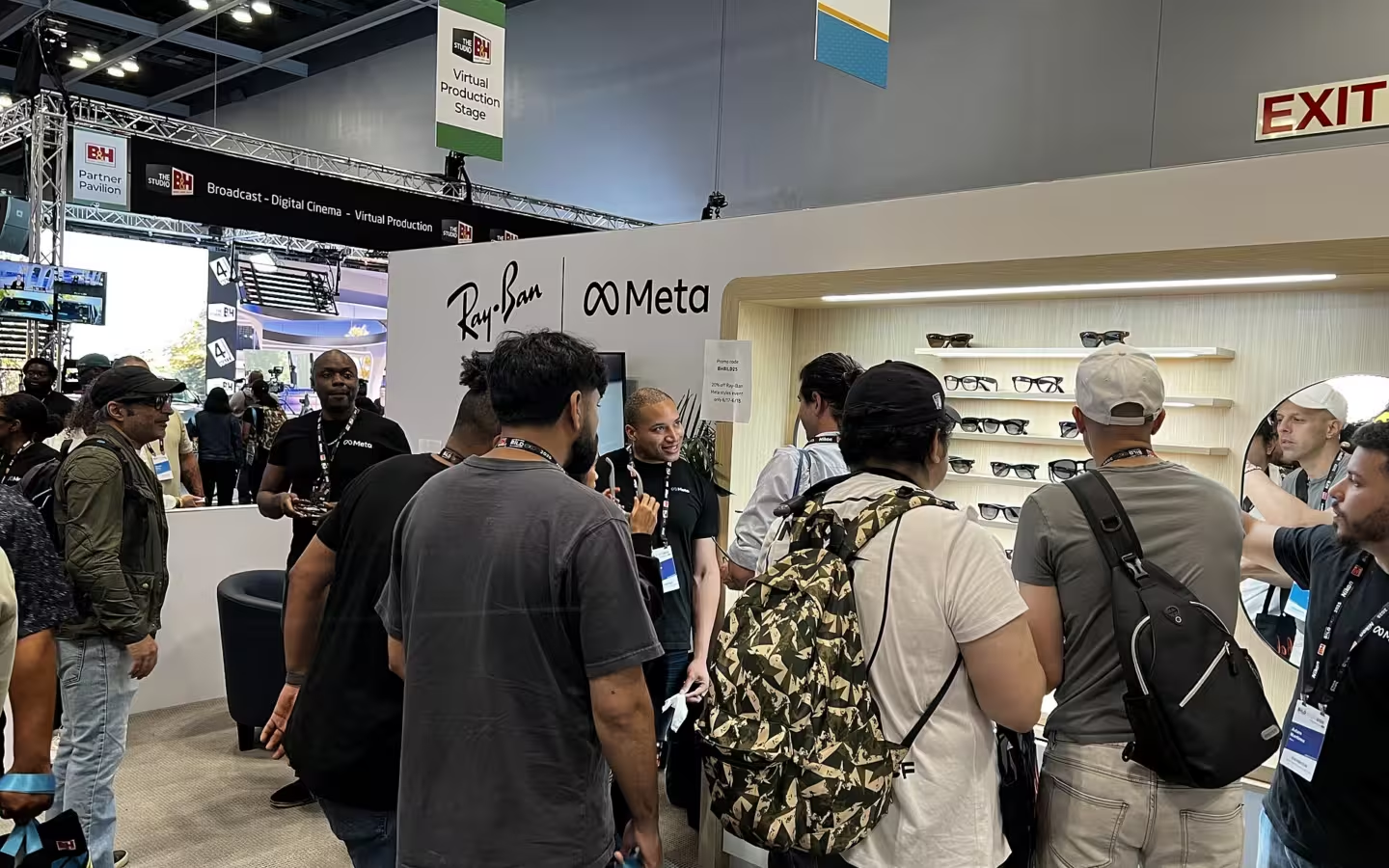
Meta’s smart glasses are developed with EssilorLuxottica, and Meta sold seven million pairs in 2025. Its AI-enabled models account for around 76 per cent of global sales, Reuters reported. The Paris prosecutors have not named a manufacturer in their investigations, so the size of Meta’s business does not identify the glasses used in the alleged offences.
A Meta spokesperson said privacy had been “built in… from the ground up” and that protections would improve as the glasses gained capabilities. That is the company’s account of its design. An earlier AI Affairs report covered Meta’s opt-out for visual-data training and contractor review, a choice available to the wearer rather than to someone recorded nearby.
Ines Girard of the Hubertine Auclert Centre argued that asking people at risk of being filmed to watch for recording devices places the burden on those already exposed to online abuse. Her objection reaches beyond the recording light: a person walking past the wearer has no comparable control over the camera or a later decision to upload the footage.
Australia weighs a Commonwealth workplace restriction
Responses outside France are taking different forms. Some cinemas in Britain have prohibited smart glasses, while a German consumer group has filed a criminal complaint against Meta and other manufacturers under data protection law. The French proceedings concern alleged conduct by people using the devices; the German complaint is directed at companies selling them.
Australia said on 17 September that it was considering barring camera-equipped smart glasses from Commonwealth workplaces, Reuters reported.