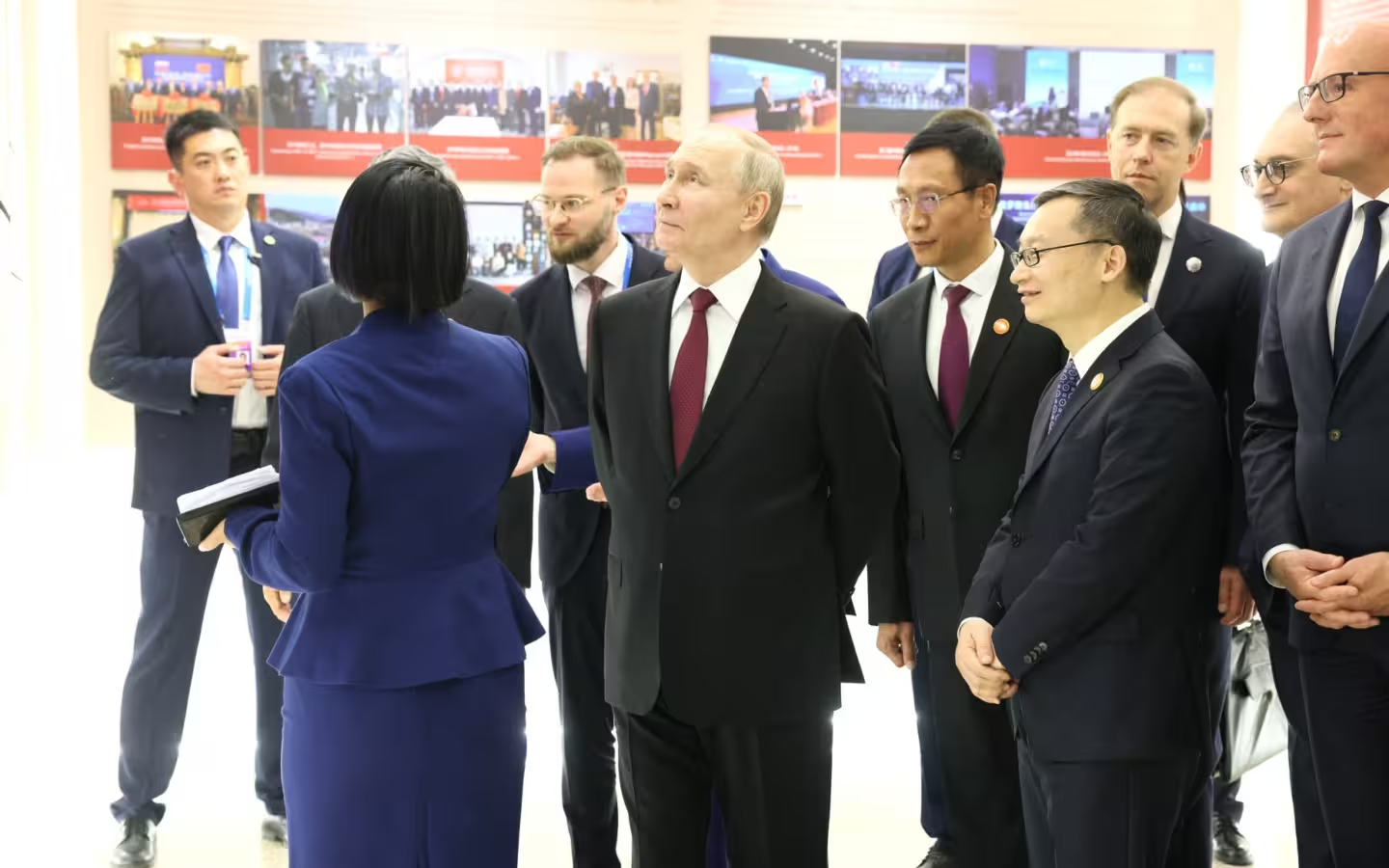
Russia wants common rules for implementing AI discussed at the Asia-Pacific Economic Cooperation (APEC) leaders’ meeting in Shenzhen, Russian Ambassador to China Igor Morgulov said in an interview with the Chinese business newspaper 21st Century Business Herald, TASS reported on 16 November. Morgulov said Moscow expected decisions that would strengthen regulatory stability in the region. The 33rd APEC Leaders’ Meeting is scheduled for 18–19 November in China.
Key points
- Morgulov called common, clear rules for digitalisation and AI implementation a Russian priority at the Shenzhen meeting.
- He said Russia expected concrete decisions intended to strengthen regional regulatory stability.
- Brookings analyst Kyle Chan said the United States and China had agreed in principle to an AI incident notification mechanism.
Morgulov puts common rules on Russia’s agenda
Morgulov described rules for digitalisation and the implementation of artificial intelligence as an “absolute priority” for Russia, according to TASS. His formulation joins two subjects that governments can approach differently: the wider terms under which digital systems operate and the conditions for putting AI into use. He called for rules shared across the region and said Russia expected concrete decisions from the Shenzhen meeting.
Morgulov’s stated objective is regulatory stability, and his proposed route is agreement on common rules. That leaves participating governments with a choice about how specific an agreement should be. Shared principles would give them more room to set domestic requirements than common obligations governing the implementation of AI.
APEC brings regional leaders together to discuss cooperation. In Shenzhen, Russia is seeking an outcome on how AI is put into use, alongside its wider call for clear rules on digitalisation. Morgulov’s expectation of concrete decisions puts the question of what governments might agree to at the meeting itself.
Chan favours selective US–China incident reports
In a 12 November Brookings preview of the Shenzhen meeting, analyst Kyle Chan said the United States and China had agreed in principle to establish an AI incident notification mechanism. He argued for a channel through which each side could choose to share nonsensitive technical information, rather than a fixed requirement for comprehensive disclosure. That proposal concerns communication between two governments, not common regional rules for implementing AI.
Chan suggested that exchanges could cover the models or tools involved in an incident, how they were misused or behaved unexpectedly, and which safeguards or corrective steps worked. He argued that each government should be able to decide what information it was comfortable sharing. His proposed arrangement would therefore leave the choice of what to disclose with the participants, rather than set a comprehensive reporting duty from the outset.
Chan urged low expectations for US–China AI talks. In his account, rapid improvements in AI capabilities create pressure to act, but deep distrust could derail discussions if expectations rise too quickly. He favoured limited information-sharing as an initial step. AI Affairs previously reported Bessent’s call for US–China cooperation on AI risks despite their rivalry. Chan’s proposed channel gives the two governments a specific task on which to begin.
Shenzhen brings wider APEC priorities together
AI governance will sit alongside other questions about regional cooperation. Writing on 9 November, The Diplomat said the Shenzhen APEC meeting would address stronger supply chains and regional economic integration. Its contributor, Sukegawa Seiya, argued that substantive agreements would be difficult at a forum attended by both the United States and China amid tensions over supply networks. He favoured identifying practical areas in which the region could cooperate.
Morgulov is asking APEC leaders to pursue common rules for AI implementation. Chan’s suggested US–China channel would instead let two governments start by sharing selected technical details about incidents. The distinction is one of scope and discretion: Moscow wants a regional discussion of rules, whereas Chan favours leaving the choice of information to each participant in a bilateral channel.
Presidents Xi Jinping, Vladimir Putin and Donald Trump are due to meet in Shenzhen on 19 November, Seoul Economic Daily reported, citing China’s foreign ministry. The newspaper said AI was among the issues expected to arise at their talks.