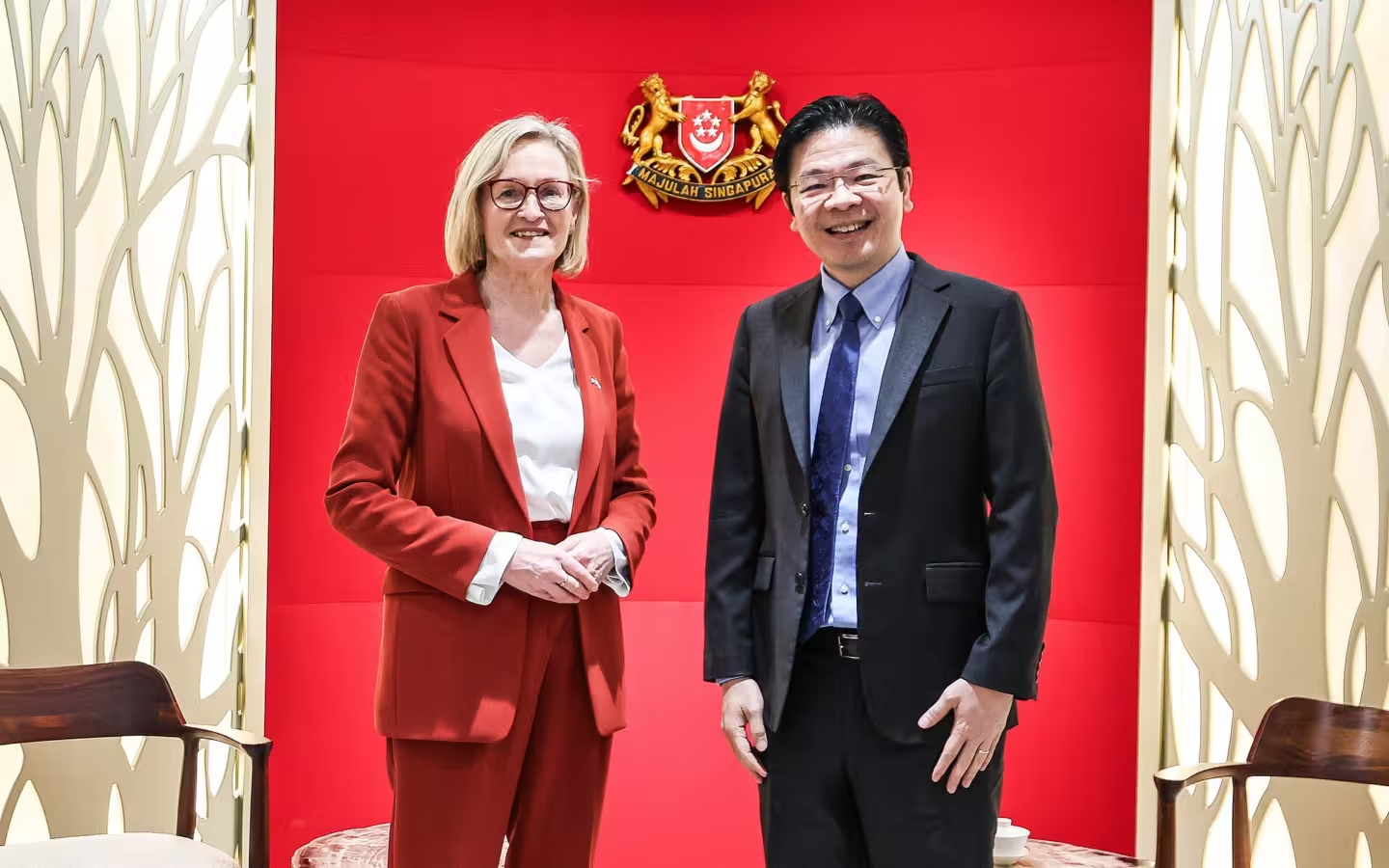
Singapore’s government is studying whether new schemes are needed to encourage companies to train young workers as AI takes over routine tasks, Prime Minister Lawrence Wong said on 12 October. Speaking at DBS’s Asia Future Forward conference, he warned that the technology could break the “bottom rung” of the career ladder, leaving young people without enough early-career learning, CNA reported.
Key points
- Wong said the government is studying training and mentoring for young workers across sectors.
- He urged employers to be more deliberate about providing both as AI replaces routine work.
- Among Singapore companies that had adopted AI, 6.2 per cent reported reduced headcount and 8.5 per cent reported lower hiring activity in a Ministry of Manpower report.
- The government is exploring whether new schemes are needed to make companies pay attention to training young workers.
Wong puts early-career learning before automation
Wong raised the concern in a dialogue with DBS Group chief executive Tan Su Shan. He recalled taking notes, drafting speeches and preparing slides for his superiors when he was a young civil servant. Such tasks gave him a way to learn, he said, even though they were routine. “AI will replace all of that routine work, but we should be careful not to automate away the learning that comes from it.”
His warning was about the path into work as well as the number of jobs available. “We are concerned that there may be that bottom rung of the career ladder that’s broken and young people may not get sufficient training,” Wong said. He called on employers to be more deliberate about training and mentoring younger staff, while the government studies how that happens across sectors.
Wong, who is also finance minister, said officials are considering whether additional programmes are necessary to make firms take young workers’ training seriously. He also urged employers to use AI for its productivity benefits. “But we also want to make sure that employers pay attention to training and continue to nurture the next generation,” he said.
The distinction matters in the example Wong gave. Notes, drafts and slides were work done for someone more senior, but he said the process of doing them had value for the junior employee. His appeal to employers concerned the training that accompanies such work, rather than preserving each routine task. The schemes under consideration concern whether companies give that training attention as their work changes.
Ministry of Manpower records reduced hiring
In an April Ministry of Manpower report, 6.2 per cent of Singapore companies using AI said their headcount had fallen, while another 8.5 per cent said they were hiring less, CNA reported. Most of the other companies said they had redesigned jobs, created AI-related positions or moved workers into new roles, among other responses.
Those responses place Wong’s concern alongside changes already reported by employers. Reduced hiring can affect the availability of a first role, while a redesigned role can change the tasks through which a new worker learns. The ministry’s figures concern companies that had adopted AI, and the headcount and hiring figures describe different responses reported by those companies.
Wong’s account of his own early assignments gave a concrete example of why training is part of the government’s study. A company may gain from handing a routine draft to AI, as he expects employers to do, while needing another way for a junior worker to practise preparing work for a superior. His call for deliberate mentoring puts that responsibility with employers as the government considers schemes to encourage it.
Wong sets limits on Singapore’s use of AI
At the same dialogue, Wong said technology should benefit all Singaporeans. “We are not doing technology at all costs,” he said. “We are not trying to be an AI-driven society. We are trying to be a better society enabled by AI.” He also said Singapore would not compromise critical systems, sensitive information or human responsibility, and that people should make critical decisions.
Wong welcomed the US agreement on voluntary AI standards, which President Donald Trump said on 29 September had been reached after he met top technology executives at the White House. The leading AI laboratories do not all agree on what form those standards should take, CNA reported. “Even if it’s voluntary at first, I think it’s a good start,” Wong said.
He suggested that standards could be developed further through an independently appointed international governing board and an independent audit process. Recognition from investors, customers and the wider market would give frontier laboratories more reason to participate, he said. Wong favoured international rules for developing AI safely, citing standards in aviation, finance and nuclear power, but considered such rules unlikely in the near term.

.jpg)