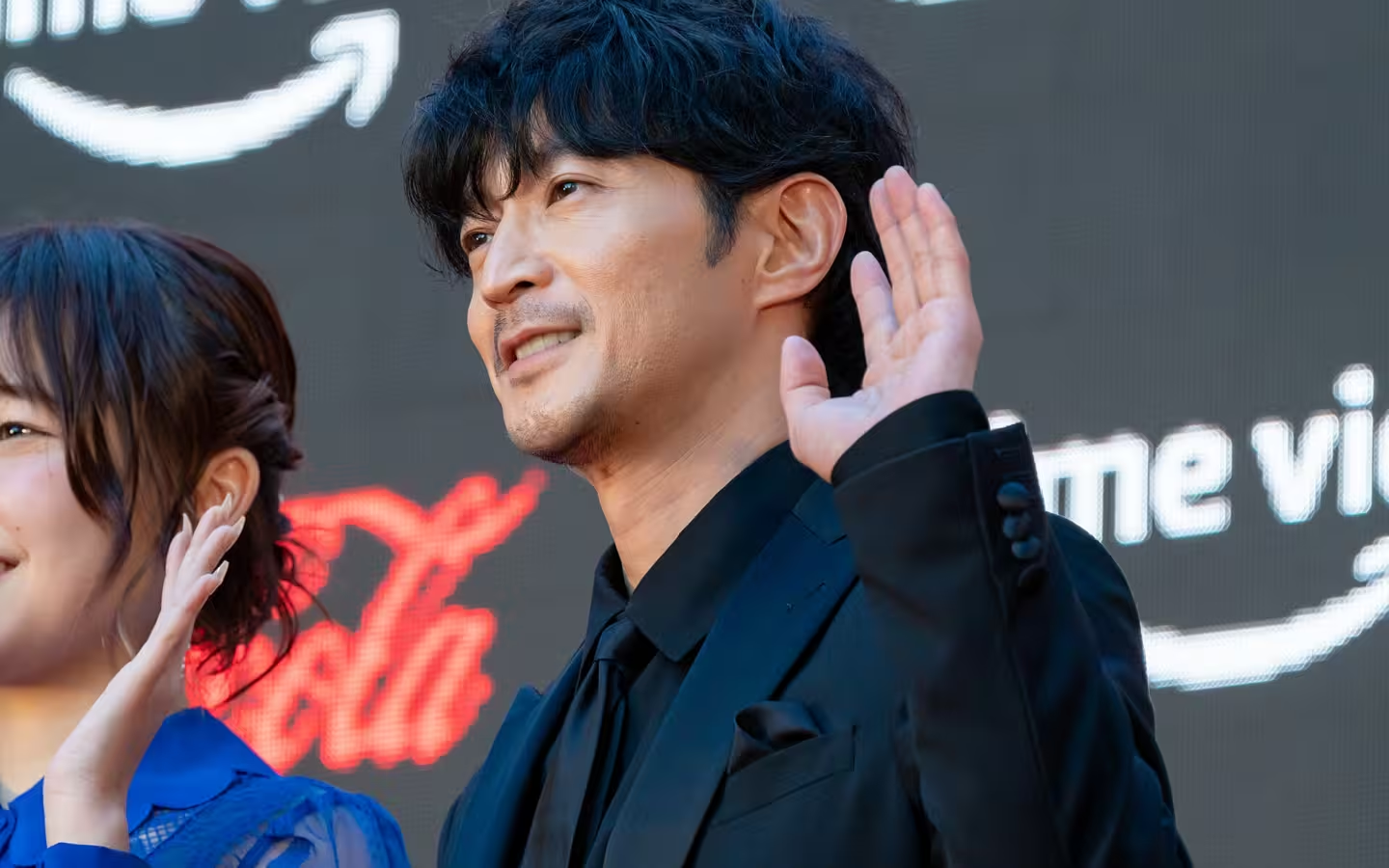
The Tokyo District Court dismissed voice actor Kenjiro Tsuda’s demand that TikTok remove videos he says used an AI imitation of his voice on 30 September, while ruling that a voice can be protected by publicity rights. Presiding Judge Aya Takahashi rejected the removal demand because the videos had already been deleted, The Japan Times reported.
Key points
- Judge Aya Takahashi ruled that publicity rights can protect a person’s voice, but dismissed Tsuda’s demand to remove videos that were already deleted.
- Tsuda’s complaint concerned 188 videos posted between July 2024 and September 2025 by an account with about 210,000 subscribers.
- TikTok disputed that the narration copied Tsuda and argued that the account and video data had been deleted.
- Justice Ministry guidance issued in August says voices should receive protection under existing publicity rights.
Takahashi recognises voice under publicity rights
Publicity rights concern a celebrity’s control over the commercial use of their identity, including their name and image. Takahashi’s ruling places voice within that protection. Tsuda’s was the first lawsuit filed in Japan alleging infringement of voice rights through generative AI, according to The Japan Times. The court nevertheless granted him no removal order: the videos he wanted TikTok to take down were already gone.
Tsuda filed the case against the platform operator in November 2025. His lawyers argued that the disputed narration infringed his publicity rights. They also invoked the unfair competition prevention law, alleging an unauthorised use of product labels. Those were distinct arguments about the use of the voice and the identity associated with it, brought against the platform that carried the videos.
Japan has no statute that expressly protects a person’s voice, AFP reported in an article published by the Kuwait Times before the ruling. The case therefore asked the court to apply existing rights to a form of imitation Tsuda’s lawyers said had been produced with generative AI. The reported ground for dismissing his removal demand was deletion of the videos, rather than TikTok’s contention that the voice belonged to someone else.
Tsuda’s complaint concerned 188 videos
According to the complaint, one account posted 188 videos narrated in a voice imitating Tsuda’s between July 2024 and September 2025. It had about 210,000 subscribers, and the videos averaged roughly 1.47 million views each. The complaint put the creator’s monthly earnings at between ¥500,000 and ¥750,000, The Japan Times reported. Viewers commented that the narration sounded like Tsuda.
Tsuda’s team said an analysis of the audio led them to conclude that generative AI had been used intentionally to produce a voice resembling his. That conclusion was the claimant’s evidence, not an agreed account of how the narration was made. TikTok argued that the person behind the account had used generative AI to learn a friend’s voice and described the result as a generic male voice.
The videos combined images with narration about urban legends, occult subjects and conspiracy theories, AFP reported. The account used a profile picture resembling a character Tsuda voiced in Jujutsu Kaisen. Tsuda’s lawyers argued that the account drew its audience through an association with the actor. TikTok challenged that account of the voice and, in its defence to the unfair competition claim, questioned Tsuda’s national fame.
TikTok also argued before the ruling that it provided a forum for users’ expression rather than creating their posts. It sought dismissal of Tsuda’s complaint on the ground that the account and its video data had already been deleted. Takahashi dismissed the demand for removal on the basis that the videos were gone.
Justice Ministry guidance preceded the ruling
A Justice Ministry panel issued non-binding guidance in August saying voices, like images, should fall under publicity rights. The ministry described a voice as a symbol of a person’s identity and addressed existing protections for a person’s likeness as well, AFP reported. The guidance preceded the district court’s decision but did not itself create an express statutory right over voices.
Performers had pressed for protection before the judgment. Yuko Sasaki, executive director of the Japan Actors Union, said an actor’s voice takes years of training to develop and that she supported Tsuda. Voice actors involved in the No More campaign have opposed the use of generative AI to imitate performers without permission. Campaign member Bin Shimada warned that unrestricted imitation on social platforms could damage younger actors’ prospects.
The International Federation of Actors raised a related concern in 2025. In many countries, it warned, copyright and data protection laws were not being adapted adequately to protect performers from AI-generated clones.

.jpg)