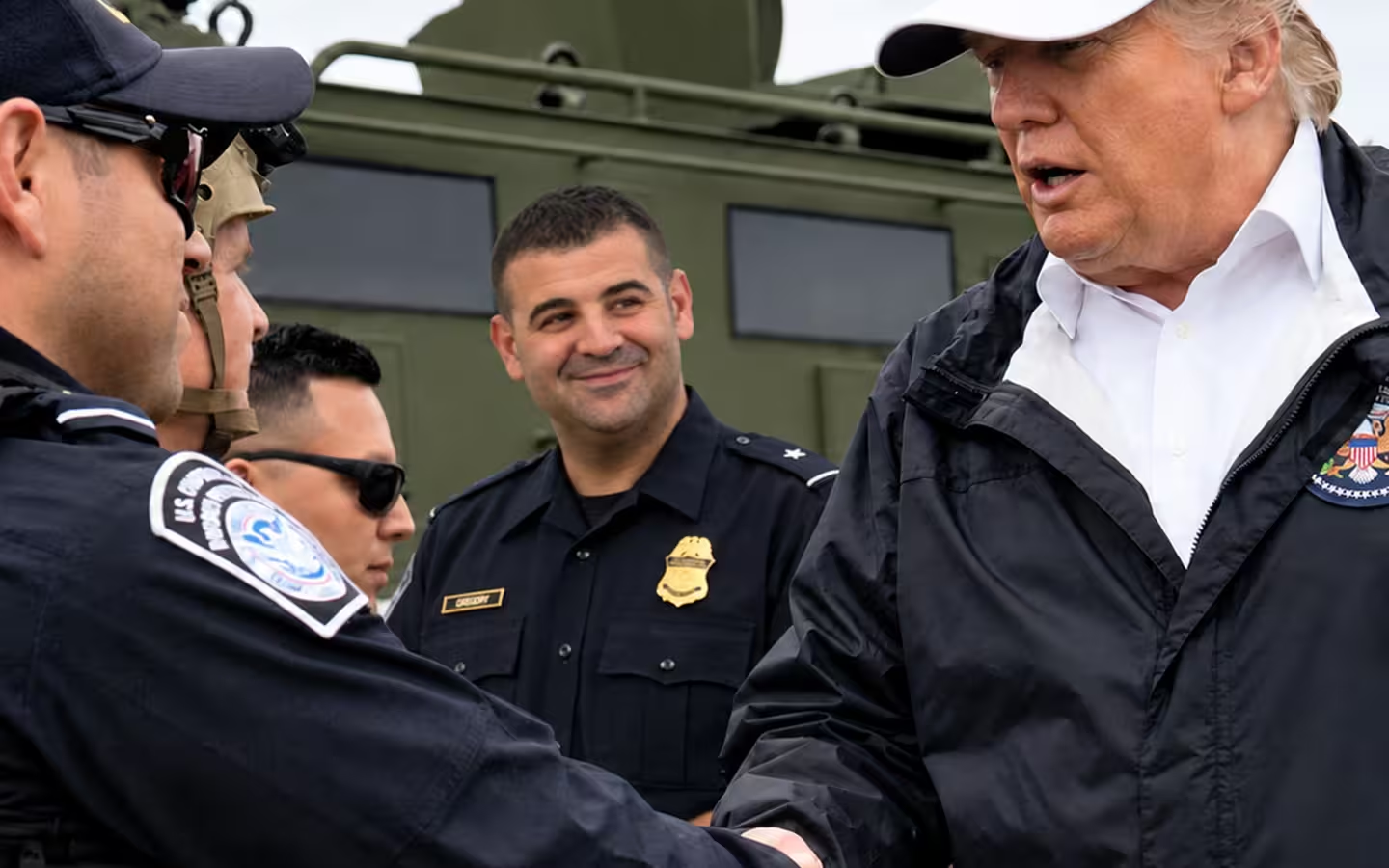
US President Donald Trump said AI risks could be managed and that he was open to safeguards in a CBS 60 Minutes interview on 8 November, Reuters reported. Asked whether the United States should accept those risks to stay ahead of China, he said, “I don’t mind guardrails,” while opposing regulation that he said could put the country in “a deep second position”.
Key points
- Trump described AI risks as manageable and said he was open to working with Democrats on safeguards.
- He opposed restrictions that he said could leave the US behind China, which he claimed had no comparable guardrails.
- In September, Trump dismissed AI safety fears as a hoax, according to Crypto Briefing.
Trump’s condition on US guardrails
Trump’s answer left room for federal safeguards while making their effect on US competition with China his stated limit. He said he would be willing to work with Democrats on measures for the technology. The question put to him asked whether staying ahead of China required the United States to accept AI’s risks. His response treated those risks as manageable.
Trump also claimed that China faced no equivalent restrictions. “China has no guardrails,” he said, according to Breaking the News. In the same account of the interview, he said “brilliant people” were monitoring domestic technology companies. Those remarks put monitoring and the competitive effect of regulation alongside his willingness to accept safeguards.
The distinction matters for the companies that would be subject to any federal rules. Trump expressed a preference about how safeguards should affect US AI development, rather than describing a particular obligation for developers. Crypto Briefing reported that no specific bill, framework or agency action was announced in connection with the interview.
Trump’s September position on AI safety
In September 2026, Trump dismissed concerns about AI safety as a hoax, Crypto Briefing reported. He then presented himself as the principal guardrail the industry needed and criticised industry figures seeking more government oversight. His willingness in the CBS interview to work with Democrats on safeguards is a change in what he is prepared to discuss, even as his objection to restrictions that might benefit China remains.
Trump has previously favoured technology companies policing themselves over sweeping government restrictions, Reuters reported. Those positions concern where responsibility for AI safety sits: with companies operating under existing law, or with government setting additional requirements. His interview answer allowed for the latter, subject to his stated competitive condition.
Trump had already backed the Department of Justice and FBI as AI guardrails, as AI Affairs reported. He had also rejected an international agreement to manage AI risks. The CBS remarks place his openness to safeguards within those earlier choices about who should oversee the technology and whether rules should be agreed beyond the United States.
He told CBS he could accept guardrails, but said he did not want regulation to leave the United States in “a deep second position” behind China.