The United States filed a crossclaim for declaratory relief against the NAACP and its Mississippi State Conference on 23 October 2026 in the US District Court for the Northern District of Mississippi. The filing asks the court to hold that the federal government can dismiss their Clean Air Act citizen suit against X.AI and MZX Tech over gas-fired turbines at a Southaven data centre, even though the organisations want to proceed. It follows a ruling denying the government’s request to end the case.
Key points
- The United States asks for a declaration that the Clean Air Act gives it a right to dismiss a citizen suit in which it intervenes.
- Its crossclaim argues that Article II reserves decisions about federal enforcement, including civil penalties and permitting, to the Executive Branch.
- The NAACP organisations seek penalties of $124,426 per day of violation and an order restricting operation of the turbines unless X.AI obtains required permits.
- Judge Debra M. Brown allowed federal intervention on 19 October but denied the government’s earlier request to dismiss the suit.
Article II and the government’s dismissal claim
The 23 October filing changes the question before the court from a request to dismiss the NAACP’s case into a crossclaim against the organisations bringing it. The United States invokes Federal Rules of Civil Procedure 7(a)(1) and 13(g) for the pleading. It asks for a declaration about the Clean Air Act’s citizen-suit provision: in the government’s proposed reading, the Environmental Protection Agency Administrator’s right to intervene in such a case under 42 U.S.C. § 7604(c)(2) includes a federal right to dismiss it.
The United States argues that Article II places authority to seek civil penalties and enforce federal permitting requirements exclusively with the Executive Branch. On that account, the government must be able to decide that a particular enforcement action conflicts with its priorities, including when a private organisation has brought the action under a federal statute. The crossclaim says the NAACP organisations should not be allowed to pursue this suit over the government’s objection.
That proposed authority would reach a case in which the plaintiffs seek penalties paid to the US Treasury. The filing identifies the government’s objection to the NAACP’s action as one based on federal policy and the public interest. The government asks the district court to grant declaratory relief under 28 U.S.C. §§ 2201 and 2202, rather than treating its intervention as limited to presenting its position in the existing lawsuit.
The NAACP’s claims over Southaven power
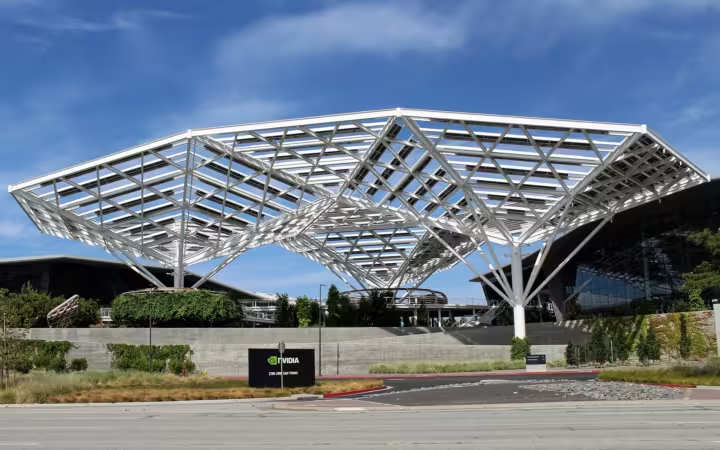
The NAACP and its Mississippi State Conference filed the citizen suit on 14 April against X.AI Corporation and MZX Tech LLC. According to the government’s crossclaim, MZX Tech is an X.AI subsidiary that owns and operates the power source at 2875 Stanton Road South in Southaven. The equipment supplies an X.AI data centre used to support Grok. The NAACP’s complaint alleges that the gas-fired turbines lack permits and approvals required by the Clean Air Act and Mississippi’s State Implementation Plan, which sets out the state’s measures for meeting federal air-quality requirements.
The government’s filing describes further allegations concerning emissions limits, pollution controls, monitoring, reporting and records. It says the plaintiffs seek civil penalties of $124,426 per day of violation, payable to the Treasury, as well as an injunction that would require X.AI to stop operating the turbines unless it obtains the permits the plaintiffs say are necessary. Those are remedies the NAACP seeks, rather than penalties or restrictions the court has imposed.
The United States says the Mississippi Department of Environmental Quality determined that the State Implementation Plan did not require Clean Air Act permits for the turbines and declined enforcement. It also argues that restrictions on the data centre’s power supply would severely affect tools used by Department of War personnel. In support of that argument, the filing makes claims about Grok’s national-security uses and the department’s reliance on a Grok Gov Model. Those are assertions in the government’s case for stopping the suit, not findings on the NAACP’s pollution allegations.
Brown’s 19 October ruling
US District Judge Debra M. Brown allowed the United States to intervene for the EPA Administrator on 19 October but denied its bid to dismiss the citizen suit, NeoTeo reported. Brown held that neither the Clean Air Act’s intervention provision nor Federal Rule of Civil Procedure 41 gave the government unilateral authority to end the plaintiffs’ case. The order left the alleged environmental violations undecided.
The government had moved to intervene and dismiss on 15 June. As AI Affairs reported on the dismissal ruling, the judge rejected the bid to end the NAACP’s air-pollution suit against X.AI.
Brown also directed the EPA to file a pleading meeting Federal Rule of Civil Procedure 24(c), according to the crossclaim. The United States says it is suing on its own behalf and on behalf of the EPA Administrator, Lee M. Zeldin. Because it intervened as a plaintiff rather than a defendant, the government says it need not admit or deny the NAACP’s allegations against X.AI or state defences to those claims.