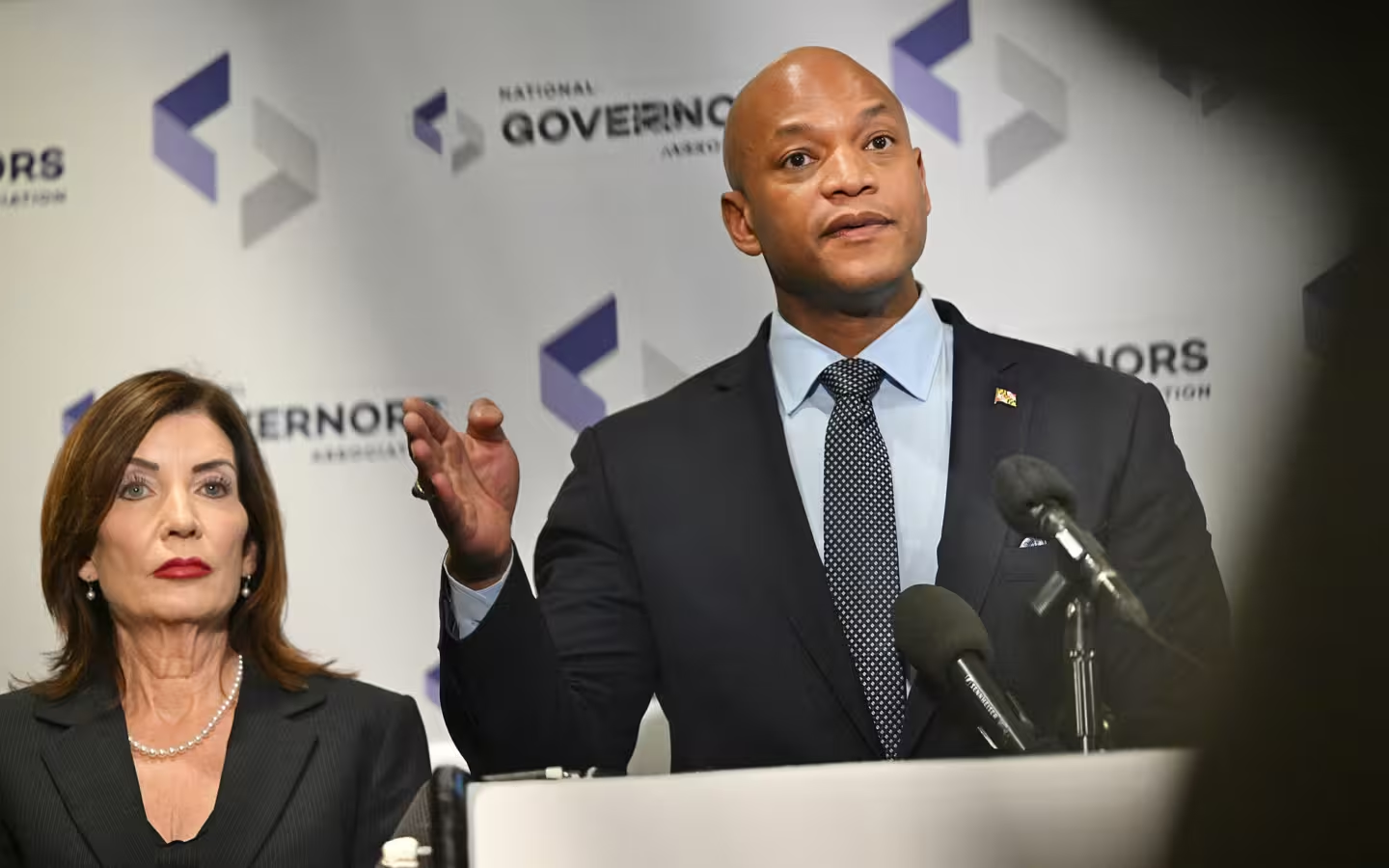
2 October 2026 — Maryland governor Wes Moore is forming a bipartisan group of governors to develop an AI framework, with Indiana’s Republican governor Mike Braun as his partner in the effort, the Associated Press reported on 1 October. Moore, a Democrat and chair of the National Governors Association, said states needed to act in the absence of federal leadership on AI.
Key points
- Moore said Braun, his co-chair at the National Governors Association, would work with him on an AI framework.
- Governors in five states have taken steps on AI standards in the past month, while Congress has left Washington without AI legislation.
- President Donald Trump and technology leaders signed a voluntary accord that he called “morally binding”.
- Moore said parts of Maryland’s 2024 AI executive order are already “antiquated now”.
Moore and Braun take up an AI framework
Moore described the governors’ effort after speaking at an innovation conference in Baltimore. He said governors from both parties were planning to take part, although he named Braun as the partner who would help develop the framework. His case for organising them was directed at both branches of the federal government: Congress had left Washington until after November’s midterm elections without addressing AI legislation, and Moore found the White House’s approach inadequate.
“The federal government has a unique leadership role that they have to play and that includes both the White House and Congress,” Moore said in the interview. “In the absence of that, the governors cannot just sit on our hands.” His proposed framework comes amid state actions that already differ in form. Over the past month, the governors of Maryland, California, Illinois, Oregon and Virginia have used executive orders or other measures in pursuit of AI standards.
The state activity extends beyond those five governors. Utah governor Spencer Cox and Texas governor Greg Abbott, both Republicans, have taken steps to restrict data-centre development. The Associated Press described states as more active on AI governance than Washington, while observing that their authority is limited when the technology operates across national and international boundaries. Moore’s plan would bring governors into a shared discussion, but the actions they have taken so far remain actions of individual states.
Trump’s accord relies on voluntary reviews
Trump and technology leaders signed a voluntary accord during the week of 28 September. Trump called it “morally binding”, and it will include internal and external reviews. After meeting the executives at the White House, he praised what he called the industry’s “tremendous self-policing”. He has also dismissed fears about AI as a “hoax” and stressed competition with technology developed in China.
Moore called the White House meeting a “billionaire boys club”. He questioned who had pressed there for greater transparency or regulatory safeguards and said the meeting had done nothing to persuade him that the governors’ work was unnecessary. His criticism concerns who takes part in setting the terms of oversight as well as the choice to rely on an agreement with industry.
Congress has seen activity short of legislation. Senator Bernie Sanders, an independent from Vermont, held a briefing with lawmakers and experts in September. Senator Josh Hawley, a Missouri Republican, has begun an investigation into OpenAI. Lawmakers have reached little agreement on a legislative response, the Associated Press reported. That leaves Moore seeking common ground among governors whose existing measures cover different aspects of AI and the infrastructure that supports it.
Maryland’s data-centre order and 2024 AI rules
Maryland offers an example of the powers Moore can exercise directly. In September, he signed an executive order establishing new rules for data centres in the state. He has also asked state lawmakers to repeal a tax exemption enacted before he took office. AI Affairs previously reported on Maryland’s reviews of large data centres and the proposed repeal of the tax break.
Data centres have become a contested part of governors’ AI agendas. Trump continues to support their development, while Moore has grown more critical of them. State executives can act on projects within their borders even as the AI systems those facilities support are used far beyond them. Maryland’s order and Moore’s request to legislators also involve different powers: he signed the rules governing data centres, but has called on lawmakers to change the tax exemption.
Moore faces a separate problem with rules already on Maryland’s books. He signed an AI executive order in 2024, yet said in the 1 October interview that elements of it are “antiquated now”. He attributed that assessment to the pace at which the technology is changing.


.jpg)