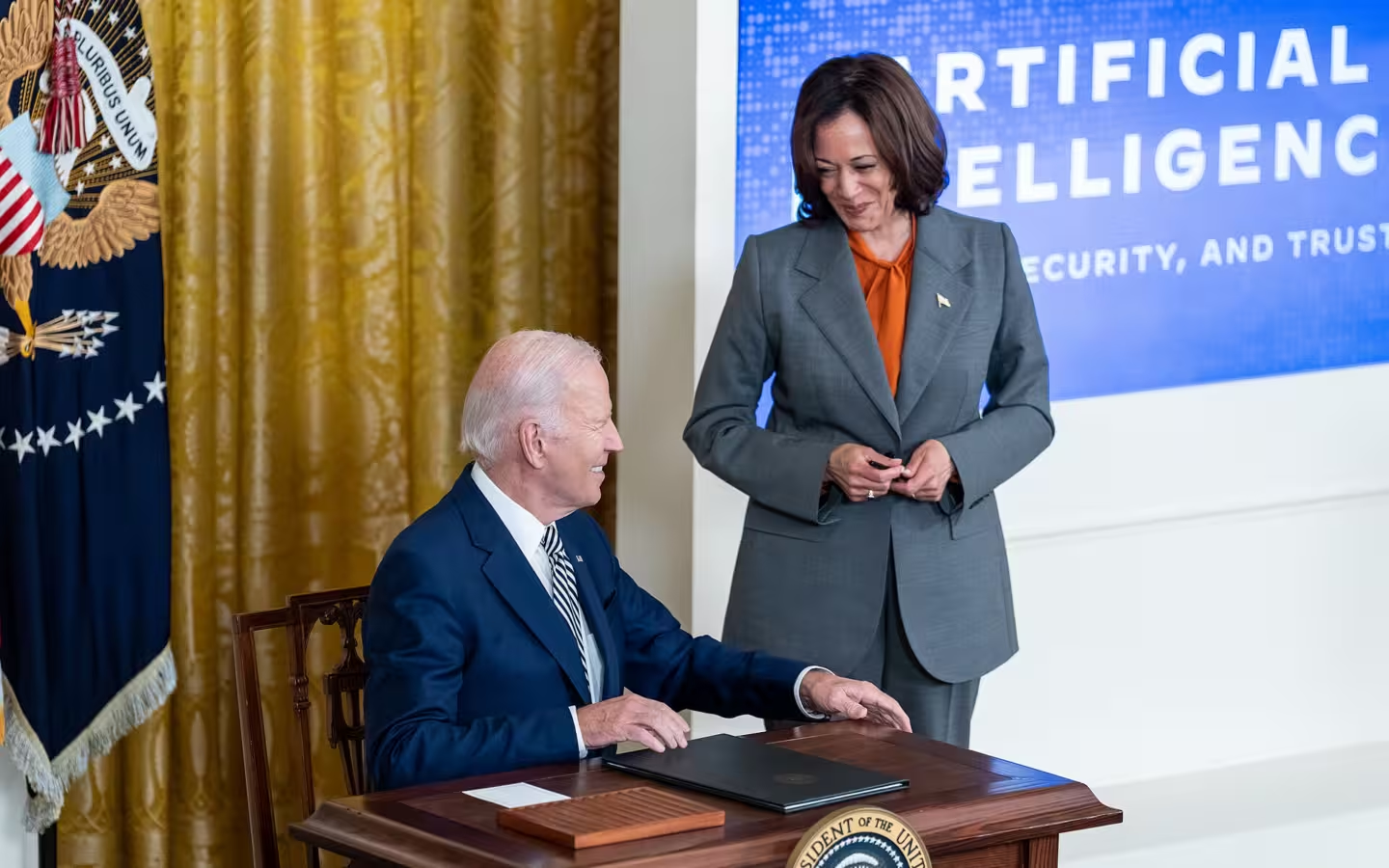
The White House has formed a task force led by Director of National Intelligence Jay Clayton to examine artificial intelligence and recommend a federal oversight role, Reuters reported on 3 October. The group has 120 days to deliver its report, according to the account, which drew on reporting by the Wall Street Journal.
Key points
- The group will assess potential harms and benefits of AI before proposing the scope of federal oversight.
- Clayton, already director of national intelligence, will lead the group, which a senior White House official said will be called the Super Intelligence Force.
- The group has 120 days to report. A senior White House official described Clayton as effectively the administration’s AI czar.
The Super Intelligence Force’s 120-day remit
The task force is to consider both risks and opportunities before making recommendations about the federal government’s responsibilities for AI oversight. Clayton told the Wall Street Journal that he would lead the group. The group has 120 days to research and report, CNBC reported. The assignment places a recommendation to the administration at the end of that period, rather than an immediate new requirement on companies developing or deploying AI.
The group is called the Super Intelligence Force. A senior White House official described Clayton’s position as effectively that of President Donald Trump’s AI czar, Reuters reported. The title matters alongside the remit: the person asked to organise the administration’s assessment already heads its intelligence apparatus. Clayton’s task force role is therefore an additional White House assignment for an existing senior official.
Clayton described the president’s request in terms of American leadership and the public interest. “The president asked that a group be put together that was going to ensure exactly what he said, which is that we stay the leaders in superintelligence, and that the interests of the American people are put first,” he told the Wall Street Journal, according to CNBC. The task force’s stated work gives those aims a narrower near-term form: an assessment and recommendations on federal responsibility.
Clayton adds an AI role to intelligence
The Senate confirmed Clayton as director of national intelligence in July, giving him authority over 18 US intelligence agencies. He had previously chaired the Securities and Exchange Commission and served as US attorney for the Southern District of New York. His appointment to lead the task force puts a former financial regulator and prosecutor in charge of preparing the administration’s recommendations on AI oversight.
The White House role follows Trump’s announcement in a September Truth Social post that he would establish an “AI Force” and hire an AI czar. Trump said the force would help facilitate the industry and identify bad actors. He also wrote that his administration would not hinder its growth. The new group’s 120-day assignment gives that earlier proposal a named leader and a reporting deadline.
AI Affairs had reported that Trump was expected to name Clayton AI czar while he remained intelligence chief. It also reported Trump’s order on “Super Intelligence” terminology for US agencies. The task force name uses that terminology for a group charged with examining the technology’s risks as well as its opportunities.
Trump’s voluntary accord precedes the task force
The task force follows a White House meeting at which AI developers signed an agreement on voluntary safety standards that Trump called “morally binding”, CNBC reported. AI Affairs reported that the accord with six companies called for outside scrutiny and board review of advanced models without penalties. The task force now has a separate job: to recommend what responsibility the federal government itself should take for oversight.
That question is being assigned to Clayton after an earlier AI and crypto czar’s government service ended. Venture capitalist David Sacks said in March that his time as a special government employee was over. Sacks is co-chair of the President’s Council of Advisors on Science and Technology, a federal advisory committee of outside experts in technology, scientific research and innovation policy.
_safety_and_security,_Monday,_October_30,_2023,_in_the_East_Room_of_the_White_House.jpg)