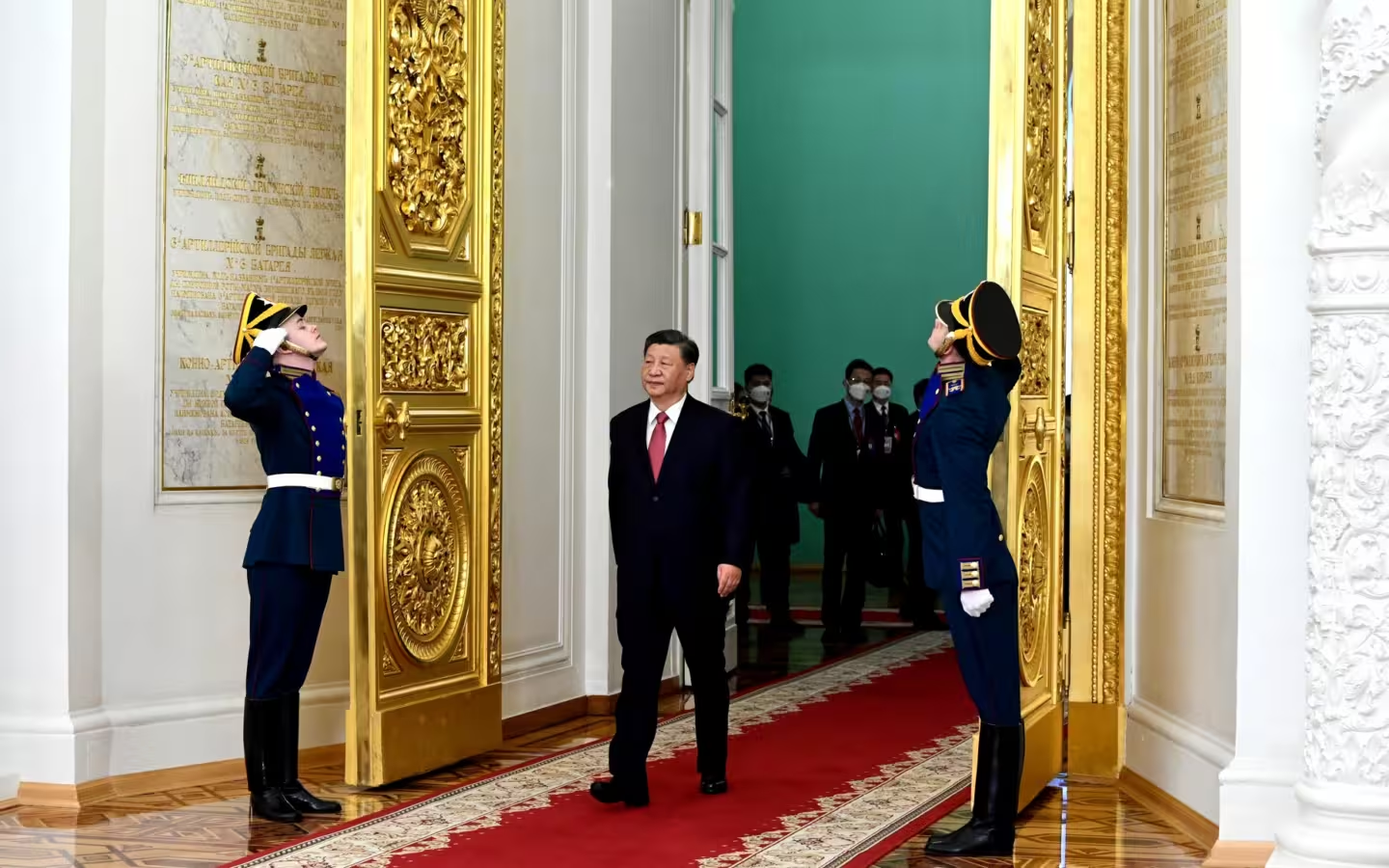
Chinese President Xi Jinping called for the US and China to keep AI development under human control during remarks delivered in President Donald Trump’s presence at the White House on 24 September, Rediff reported. The call came as the US had proposed a mechanism for the two countries to notify each other of AI incidents.
Key points
- Xi said both countries had a responsibility to develop and manage AI for the public good while keeping its development under human control.
- The US proposed a bilateral AI incident notification mechanism during talks between the countries’ finance ministers before the summit.
- Xi also called for peaceful coexistence and competition kept within bounds.
Xi places AI within US-China cooperation
Xi made the remarks at a White House ceremony during his second state visit to the United States. In his opening comments, he said he had accepted Trump’s invitation to continue their friendship, broaden cooperation and improve the well-being of people in both countries. Trump, welcoming Xi, said the two leaders would work towards a better future for their countries.
On AI, Xi said the US and China had “the capability and responsibility to develop and manage AI for good and ensure that the development of AI is always under human control and serves the well-being of the people”. He presented human control as a responsibility shared by the two governments, alongside the wider relationship he wanted them to pursue.
Xi called for peaceful coexistence and said both countries stood to benefit from cooperation while losing from confrontation. He said competition should be healthy and kept within bounds, describing it as “a race of catching up with one another, not a wrestle in which when either wins, or loses”. He also urged the two countries to avoid the “Thucydides Trap”, the prospect of conflict between a rising power and an established one.
That appeal extended to military communication. Xi said the two armed forces should maintain regular dialogue and improve arrangements for crisis communication and prevention. His AI remarks sat within the same opening address, rather than a separate announcement of an agreement on the technology.
US proposes AI incident notifications
The US proposed a mechanism for notifying China of AI incidents during a meeting of the countries’ finance ministers before the summit. A notification arrangement would address communication between the governments, whereas Xi’s call concerned the broader development and management of AI. The proposal was discussed ahead of the leaders’ meeting, Rediff reported.
The countries’ finance ministers met, with the US putting forward the AI incident notification mechanism. Separately, AI Affairs reported that US Treasury Secretary Scott Bessent had emerged as a frontrunner for a White House AI czar position.
White House ceremony faces television boycott
The summit took place amid a dispute over access for US news organisations. Major US television networks did not carry live coverage of the meeting or White House ceremonies. Their boycott followed the administration’s decision to bar CNN, MS NOW and Politico from White House grounds, Rediff reported.
A federal judge had ordered the administration to restore the journalists’ access, but the order was not followed. Other networks joined the boycott in solidarity with the barred organisations. ABC News, assigned to provide pool coverage on 24 September, had a camera crew at the White House but stood down.
Bessent sets out the trade truce
Trade was another part of the summit’s agenda. Ahead of the Xi-Trump meeting, Bessent said the two countries had agreed to extend their trade truce, which began in South Korea in 2025. He said a larger agreement remained possible, as did another extension of the truce.
During the previous year’s trade dispute, peak baseline US tariffs reached 145 per cent and China’s reciprocal levies reached 125 per cent. Following Trump and Xi’s meeting in South Korea, mean US import duties dropped to about 47 per cent, while mean Chinese duties stood in the mid-30s. A US Supreme Court ruling in February overturned many of Trump’s tariffs, leaving taxes on Chinese goods more varied.
Trump and Xi could reach a larger trade agreement by January, Bessent said, or decide to extend the truce again.

.jpg)