AMD forecast fourth-quarter revenue of $17 billion, plus or minus 3%, above analysts’ $16.3 billion average estimate, in a company statement on 3 November, Bloomberg reported. The outlook gives investors a new measure of sales at a chipmaker competing with Nvidia for AI data-centre business.
Key points
- AMD’s $17 billion fourth-quarter revenue forecast, plus or minus 3%, exceeded the $16.3 billion analyst average.
- AMD has also projected a CPU market exceeding $200 billion by 2030, a market estimate rather than a company sales target.
- Separate forecasts point to faster server CPU shipments in 2026 and 2027, while AMD is developing rack-scale AI systems.
AMD’s $17 billion quarterly forecast
The 3% range is part of AMD’s forecast, rather than an adjustment to the analysts’ estimate. Bloomberg described AMD as a key challenger to Nvidia in AI chips and said the forecast indicated that demand for data-centre processors remained strong. The $16.3 billion figure is the average estimate for the same quarter, giving the company’s outlook a direct comparison with market expectations.
The outlook follows a period in which investors were also watching demand for conventional server processors. AI Affairs previously reported that AMD shares fell after Intel’s earnings exposed server-chip and PC pressures. AMD’s new guidance covers its total revenue for the fourth quarter, while its broader data-centre plans span both CPUs and the systems it is developing for AI workloads.
Su’s $200 billion CPU projection
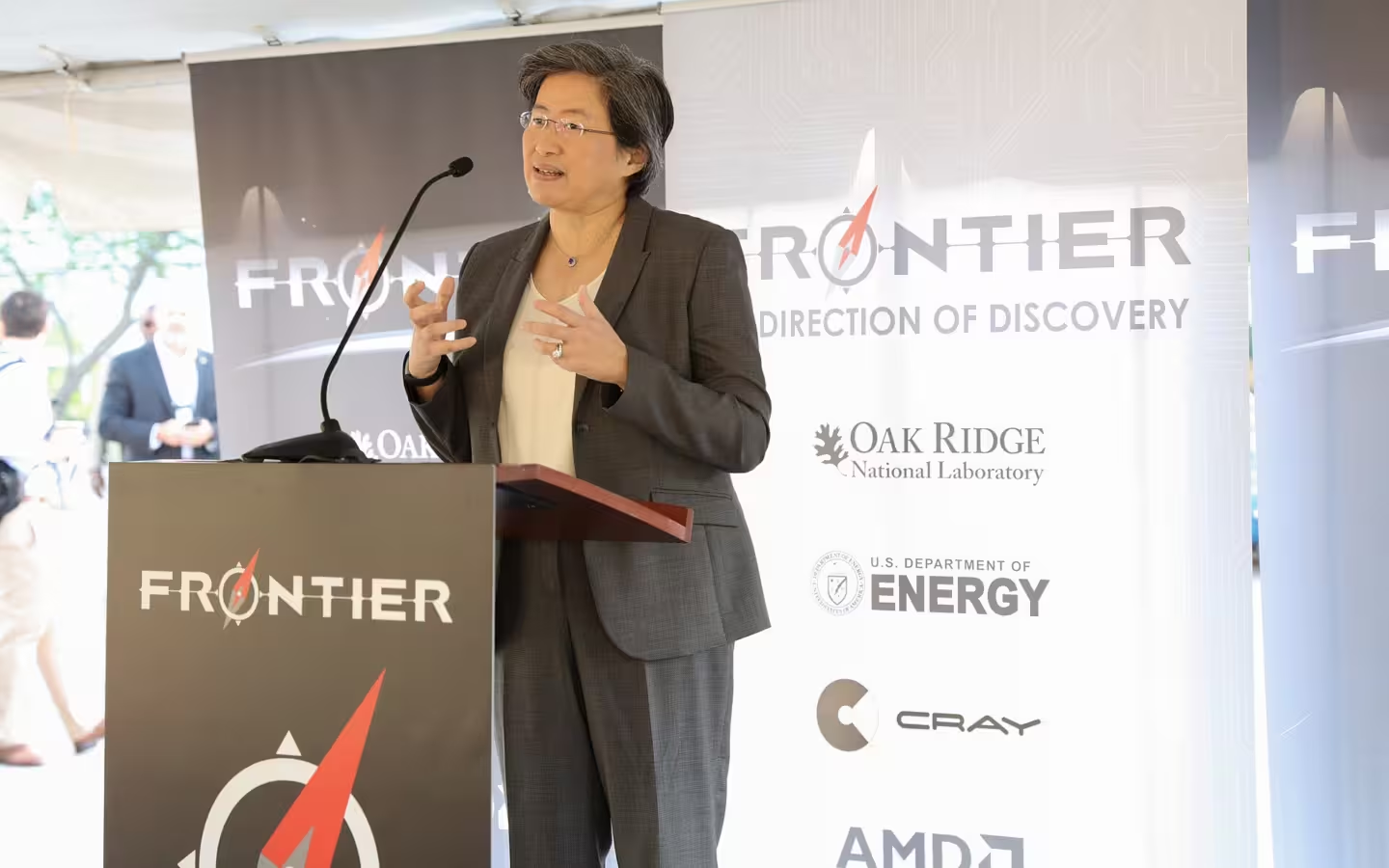
AMD chair and chief executive Lisa Su told the OCP Global Summit on 12 October that the company believed the total addressable CPU market would exceed $200 billion by 2030, Tech Insider reported. She put the projected compound annual growth rate at approximately 50% over the next four or five years. That projection concerns spending across the CPU market, not AMD’s own revenue.
Su said AMD had raised its estimate of that market three times in nine months. She also described inference — running AI models to produce responses — as about 60% of the market going forward, according to the report. Those are AMD’s expectations for future demand. The fourth-quarter guidance, by contrast, is a sales forecast for the company itself.
TrendForce forecast that global server CPU shipments would grow 31% in 2026 and 43% in 2027, after 9% growth in 2025, Tech Insider reported. The research firm attributed the expected increase to inference and agentic AI services, which use server processors alongside other computing hardware. Its shipment figures measure units rather than revenue and extend beyond the quarter covered by AMD’s guidance.
TrendForce also estimated AMD’s share of server CPUs at about 27% in 2026, according to the same account. Its estimate puts AMD’s position in that market beside a forecast for faster overall shipments. The share is an estimate for 2026, while the projected 43% shipment increase concerns the following year.
Helios testing and AMD’s processor range
AMD is pursuing AI infrastructure sales through Helios rack-scale systems as well as individual processors. AI Affairs previously reported AMD’s planned $1 billion Meta investment as Helios systems entered testing. Testing places the systems in a different stage of adoption from the fourth-quarter revenue forecast, which is a company-wide sales figure.
At the 12 October summit, AMD said Helios systems were moving into a production ramp, Tech Insider reported. The company also introduced Helion, a rack blueprint for agentic AI. Its wider offering includes EPYC server CPUs, Instinct GPUs, Pensando networking and ROCm software, giving buyers components for more than one part of an AI data-centre system.
On the CPU side, AMD’s Genoa and Turin processors remained its main shipment drivers in 2026. The Venice EPYC 9006 family had entered small-scale mass production, using TSMC’s 2-nanometre process. Those products sit in the server market for which TrendForce projected higher shipments, alongside AMD’s work on complete AI systems.
TrendForce projected cloud-provider capital spending above $1.5 trillion in 2027 and growth in AI-server shipments approaching 36%. It also forecast that Arm-based processors would account for about 30% of server CPUs in 2027.