Bell Canada had completed framing on three of four halls at its $1.7-billion, 300-megawatt AI data centre southeast of Regina by 1 October, The Canadian Press reported.
Key points
- Bell expects the first two halls to operate in the first half of 2027, with CoreWeave and Cerebras as anchor tenants.
- Bell plans to expand the site to 1.2 gigawatts, a project that would cost $50 billion and require a dedicated natural gas plant.
- Saskatchewan Crown investments minister Jeremy Harrison said about 500 workers are on the construction site at any given time.
- The Opposition NDP has sought a moratorium on large-scale data centres, citing insufficient public consultation.
Bell targets two operating halls in 2027
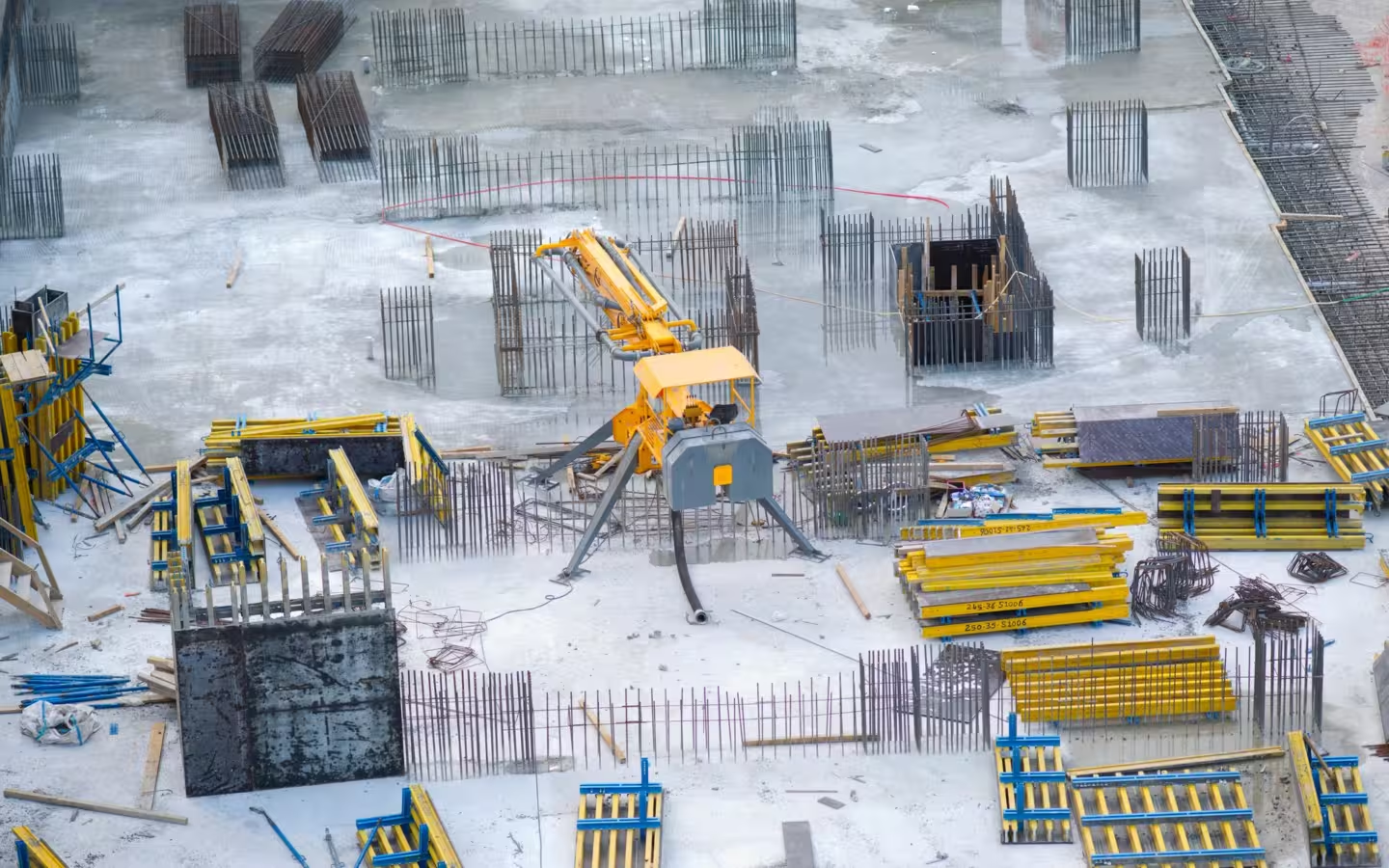
Construction is under way on a 65-hectare site southeast of Regina. Panelling on one wall is nearing completion, alongside the framing finished for three halls. Crews were moving heavy equipment around the structures on 1 October, with trailers, pipes and other construction materials spread across the site.
Harrison, Saskatchewan’s Crown investments minister, said there were 500 workers on site at any given time. He and Bell representatives visited the project as work continued around them. The centre is planned to have four data halls at its initial 300-megawatt scale.
John Watson, Bell’s group president, said the first two halls are set to begin operating in the first half of 2027. CoreWeave and Cerebras are the anchor tenants.
Bell has also pursued a separate Canadian AI infrastructure partnership. It signed a memorandum of understanding with Cisco on sovereign AI infrastructure, as AI Affairs reported. At the Saskatchewan site, Bell has identified tenants and a start-up period for the first halls.
A 1.2-gigawatt expansion needs its own plant
Bell plans to increase the centre’s capacity from 300 megawatts to 1.2 gigawatts. That expansion would cost $50 billion and require a dedicated natural gas plant, The Canadian Press reported. Watson said the planned expansion would be nearby and described it as “probably twice as large as this one”.
The $50-billion proposal is separate from the $1.7-billion facility now being built. Watson said there is no schedule for the expansion. The dedicated plant is a requirement of the larger project, rather than a reported part of the first two halls’ planned start-up in 2027.
Harrison said the expansion could support 500 permanent jobs at the site and up to 3,000 jobs off site and in the community. He also said Bell would move its AI fabric headquarters to Regina, adding 100 management jobs in the city. Those figures are projections for the project’s broader development, while Harrison’s count of 500 workers describes construction activity at the site.
Saskatchewan consultation and Bell’s cooling plans
The project has drawn protests over concerns about its environmental effects and demand on the electricity grid. Critics have also objected to what they describe as a lack of public consultation before the centre was approved. The Opposition NDP has called for a moratorium on large-scale data centres, arguing that consultation has been inadequate.
Sally Housser, the NDP’s energy critic, called for town hall meetings in the areas most affected by the project. She said residents were concerned about their power bills and the effect of the development on where they live. Asked about town halls, Harrison said elected representatives spoke for their constituents and that he believed the project had broad support.
Bell says the centre will not cause power rates to rise. Watson has said its cooling system will circulate fluid in a closed loop rather than draw on groundwater. Bell has also said it plans to work with the University of Regina on research that could include using heat from the facility in greenhouses.