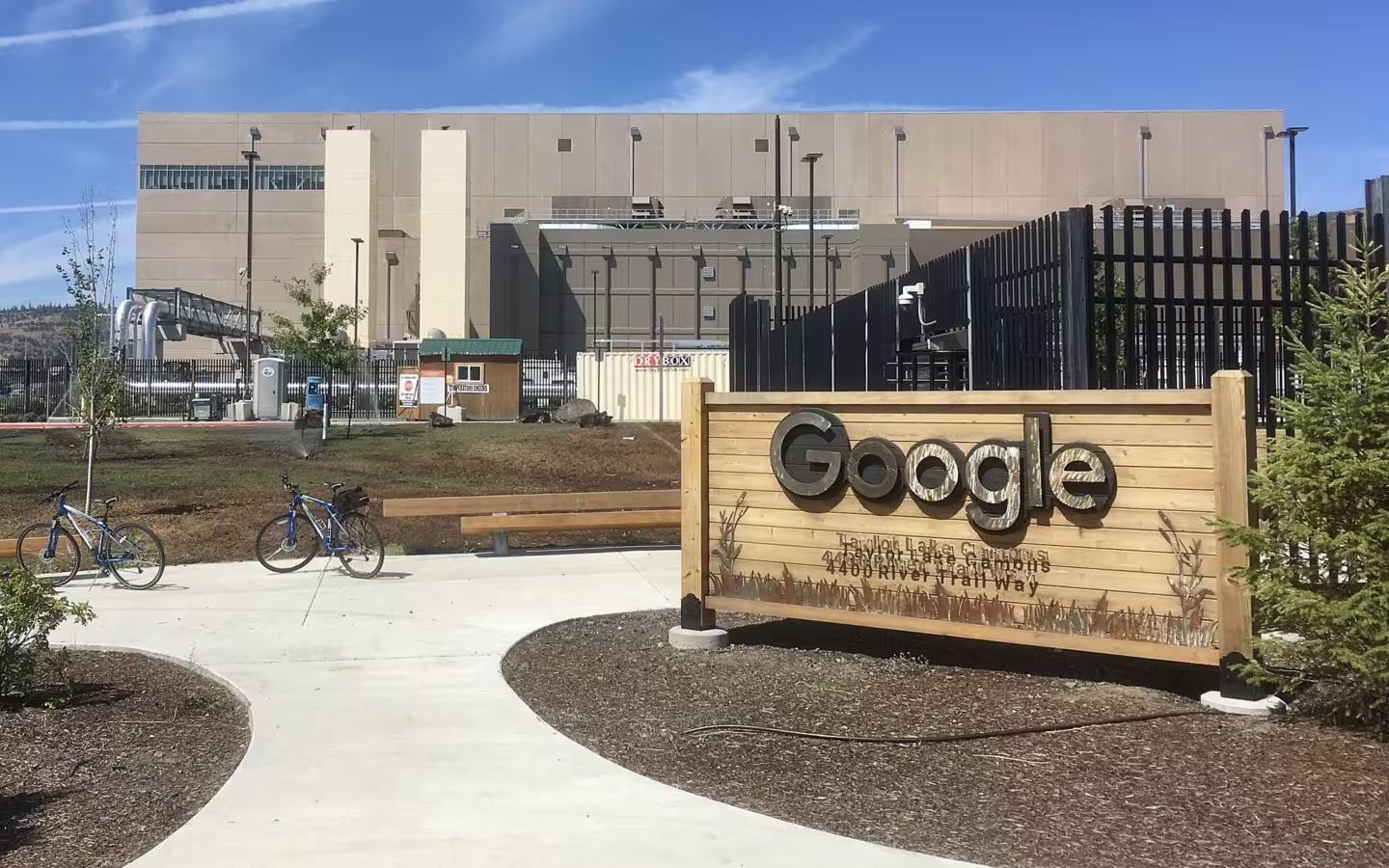
Google signed a power purchase agreement on 17 November for 50 megawatts of geothermal electricity from Quaise Energy’s Project Obsidian in central Oregon, a deal worth upward of $500 million, Quartz reported, citing The Wall Street Journal. Quaise said the power could reach Google’s three data centre campuses in The Dalles as early as 2030.
Key points
- Quaise puts the cost of developing Project Obsidian at roughly $350 million.
- Its planned drilling method combines conventional equipment with a millimetre-wave device; the technology is unproven at commercial scale.
- Google also has a 396-megawatt geothermal agreement with Fervo Energy in Utah.
Project Obsidian carries a $350 million price tag
The companies did not disclose a sale price, Oregon Public Broadcasting reported. The agreement is Quaise’s first commercial geothermal deal, according to the broadcaster. Quaise put the project’s development cost at roughly $350 million.
Project Obsidian sits on the southern flank of Newberry Volcano. Quaise is a Texas-based geothermal developer working to extract heat from rock deep beneath the site. Magma close to the surface makes higher temperatures more accessible there.
Superhot rock geothermal systems inject cold water deep underground, where it absorbs heat before returning as steam to drive a turbine. The target rock approaches 800 degrees Fahrenheit. Unlike wind and solar generation, geothermal power can run continuously.
Quaise expects Project Obsidian to support 200 to 400 construction jobs and more than 50 permanent engineering and operations jobs. The company also says its grid upgrades are intended to improve reliability for local consumers, with royalties from electricity sales expected to benefit the region.
Quaise plans two drilling stages at Newberry
Quaise plans to drill roughly 2.5 miles with conventional equipment, then use a gyrotron to extend the wells to 3 miles, citing The Wall Street Journal. The device directs millimetre-wave energy at rock to vaporise it, rather than cutting through it with a mechanical drill head.
Quaise said conventional drilling would be used in the project’s first phase to reach superhot conditions at commercial scale. It expects to introduce millimetre-wave drilling in a second phase. The technology remains unproven at commercial scale.
Carlos Araque, Quaise’s president and chief executive, described the agreement as “Google basically putting their thumb on the scale” in comments to The Wall Street Journal reported by Quartz. Lucia Tian, Google’s head of advanced energy technologies, called geothermal a “clean, firm” resource in comments to Oregon Public Broadcasting.
Google’s Oregon operations have reached 83% carbon-free energy, according to Quaise. Oregon requires companies developing data centres to acquire renewable energy to comply with state environmental regulations.
Google also has a 396-megawatt Fervo deal
The Quaise agreement follows another Google geothermal purchase. In September, Fervo Energy signed a 396-megawatt power purchase agreement with Google for output from its Cape Station project in Utah, intended for a potential data centre there.
Fervo says it could begin selling round-the-clock geothermal electricity from Utah later in 2026. Under the Fervo agreement, Google has an option for roughly 600 megawatts of additional power by June 2030.