San Francisco-based Linq announced $90 million in funding led by Andreessen Horowitz on 18 November, with the money intended for messaging, voice and computer-use infrastructure for AI agents, according to the company’s press release.
Key points
- The Series B comes 289 days after a $20 million Series A, The Tech Buzz reported.
- Andreessen Horowitz co-founder Ben Horowitz will join Linq’s board, the company said.
- Linq says its platform has processed more than 1 billion messages.
- The company is adding phone calling and computer use to its messaging services.
The $90 million round and Linq’s board
The financing is a Series B that comes 289 days after Linq’s $20 million Series A, The Tech Buzz reported. The publication also reported that Linq did not disclose a valuation.
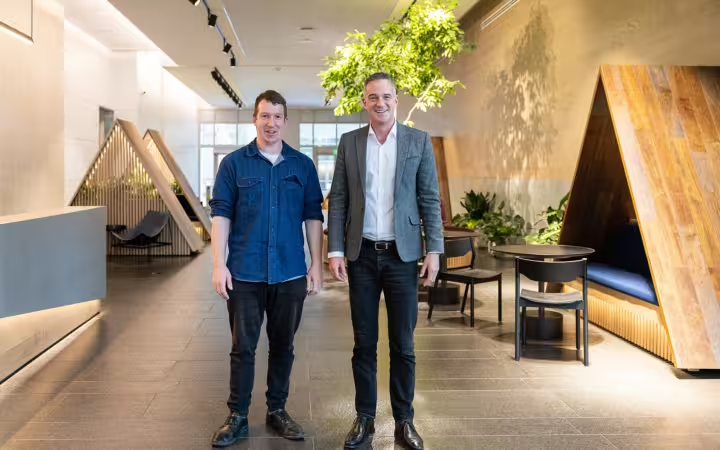
Linq said existing investors TQ Ventures, Mucker Capital and Abstract participated alongside new investors Anthos and Left Lane Capital. Ben Horowitz, Andreessen Horowitz’s co-founder and general partner, will join Linq’s board of directors, the company said. Its co-founders are chief executive Elliott Potter, chief technology officer Patrick Sullivan and president Jared Mattsson.
The company said it would put the funding towards its messaging service and a broader product line built through software, hardware infrastructure and partnerships. That plan extends Linq beyond the messaging APIs through which it first served developers building AI assistants.
DoorDash orders through Linq messaging
Linq says it has processed more than 1 billion messages and provides messaging infrastructure to DoorDash, Town and Tomo, among other customers. It says its status as an Apple Messaging Service Provider allows it to help enterprises deploy customer-facing agents through Apple’s messaging channel.
DoorDash uses the service to let customers choose food, assemble a cart and complete an order in one conversation, according to Linq. Aryan Shah, DoorDash’s head of AI research, said Linq supplies the messaging infrastructure for that ordering experience. The use described by DoorDash covers checkout as well as the earlier stages of an order.
Linq began as a digital business card and lead-capture tool before moving into messaging APIs and then infrastructure for AI agents, The Tech Buzz reported. The publication said its messaging services let agents operate through iMessage, SMS and RCS. Linq’s funding announcement places that established messaging product alongside tools intended to let agents make calls and operate software.
HD Calling and computer use widen Linq’s platform
Linq said its HD Calling for Agents product adds voice calling to the platform. Its computer-use service gives agents access to physical computing infrastructure so they can interact with software and complete tasks. Those products extend the company’s work from carrying conversations to providing the tools an agent uses after a customer makes a request.
Potter said Linq’s aim is to give developers infrastructure for customer-facing agents that use existing tools. Horowitz described the investment in terms of agents communicating and carrying out work. The company’s stated spending plans include further investment in messaging as well as the software, hardware and partnerships behind the newer products.
Linq launched HD Calling to let agents place phone calls, and Kernel, a browser-use company, is among the first customers using its computer-use capability.