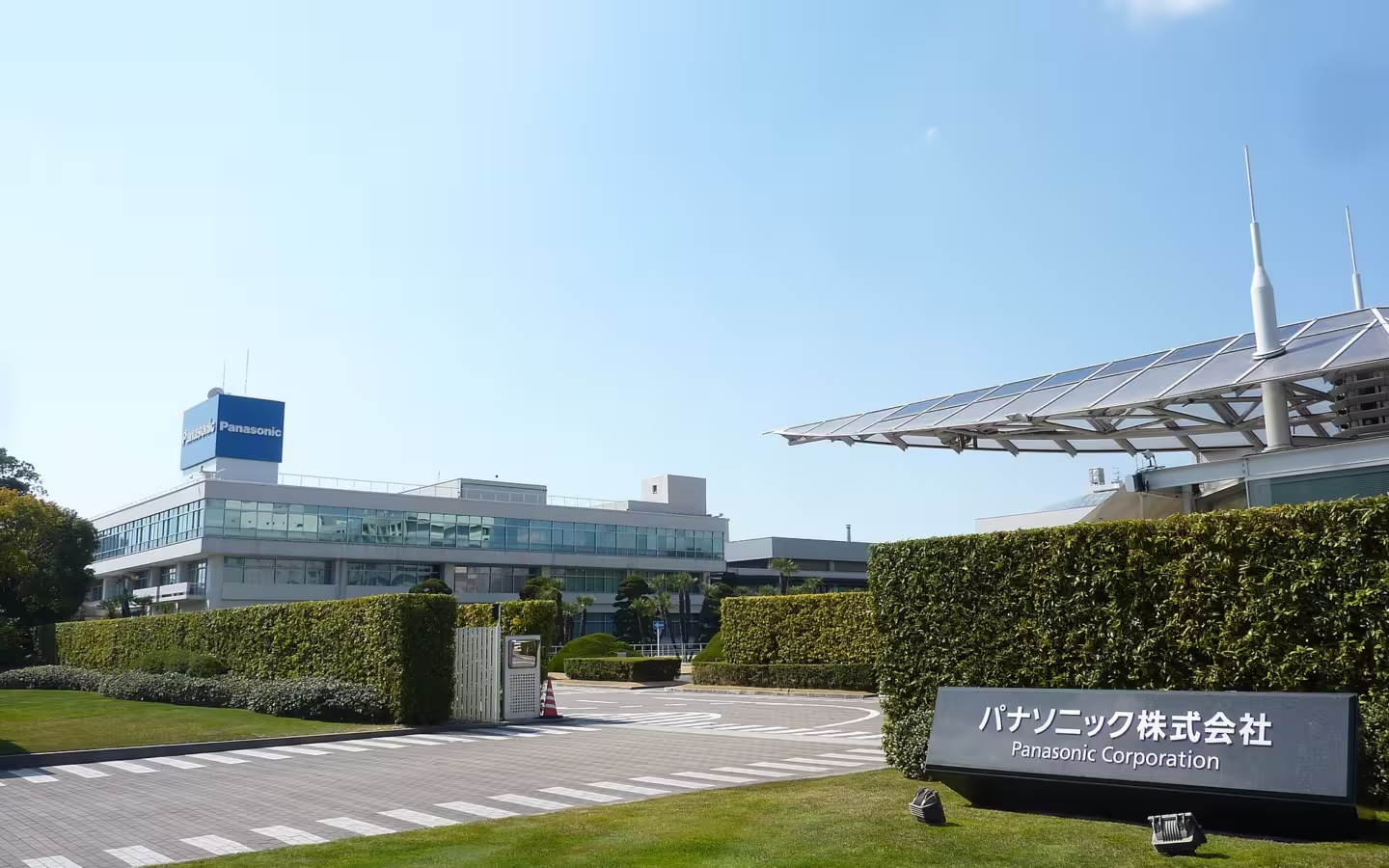
Panasonic Energy, the battery unit of Panasonic Holdings, projects $5.5bn in fiscal year sales of cylindrical lithium-ion batteries for data centre backup power, according to a Nikkei Asia report published on 18 September 2026.
Key points
- Panasonic Energy says data centre sales are now driving its growth
- The company envisions $5.5bn in annual battery sales for data centres
- Cylindrical lithium-ion batteries originally developed for EVs are being deployed as backup power units
- The projection reflects how AI infrastructure demand is pulling EV supply chains into stationary storage
- The figures are company targets, and independent verification of the revenue trajectory has not been disclosed
What the projection covers
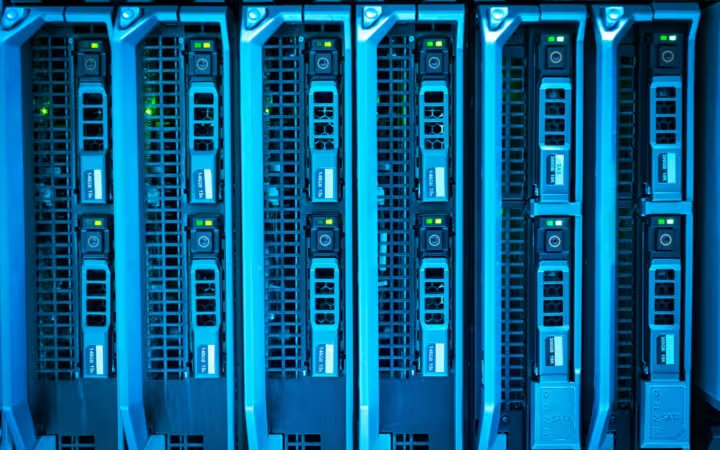
The $5.5bn figure is a company target for fiscal year revenue from batteries sold into data centres, not a signed contract or order book. Panasonic Energy states that sales to data centres are now the primary growth driver for the division, which is best known for supplying cylindrical cells to Tesla for electric vehicles. The batteries are the same form factor used in automotive packs, repurposed for uninterruptible power supply (UPS) systems inside AI data centres. The report does not disclose the current run-rate, the margin profile of the stationary business, or the split between new capacity and replacement demand.
Capital allocation and competitive position
Panasonic Energy’s pivot illustrates how the AI build-out is absorbing industrial capacity originally funded for transport electrification. The company has invested heavily in cylindrical cell production in Japan and the United States, including the Kansas factory backed by U.S. Department of Energy loans. Redirecting a meaningful share of that output to stationary storage changes the revenue mix and the risk profile: data centre operators typically procure on multi-year frameworks with service-level agreements, whereas automotive contracts are tied to vehicle production schedules. The company has not stated whether stationary margins are higher or lower than automotive, nor whether the Kansas ramp includes dedicated lines for data centre cells.
Comparable exposure across the supply chain
Other major cylindrical cell suppliers — including LG Energy Solution, Samsung SDI and CATL — have also signalled interest in stationary storage for data centres, but few have put a public revenue target on the segment. LG Energy Solution’s Arizona plant includes ESS modules, and CATL has marketed its “Tener” liquid-cooled battery cabinets for grid and backup applications. Panasonic’s $5.5bn target, if achieved, would represent a material share of the global stationary lithium-ion market, which BloombergNEF estimated at roughly $30bn in 2024. The comparison is imperfect because Panasonic’s figure is a forward target while the market estimate is historical, but it indicates the scale of the spillover the company expects.
What has to become true for the target to hold
Three conditions must be met. First, AI data centre capex must sustain the current trajectory long enough for battery procurement to move from pilot deployments to recurring, multi-gigawatt-hour annual orders. Second, Panasonic must defend its cylindrical form factor against prismatic and blade alternatives that competitors argue are better suited to stationary racks. Third, the company must demonstrate that stationary margins support the valuation implied by a $5.5bn revenue line — a figure that would represent a significant portion of Panasonic Energy’s total sales, which were ¥1.2tn ($8.1bn) in the fiscal year ended March 2025. The next test is the company’s half-year results, due in October 2026, where management may break out stationary revenue for the first time.