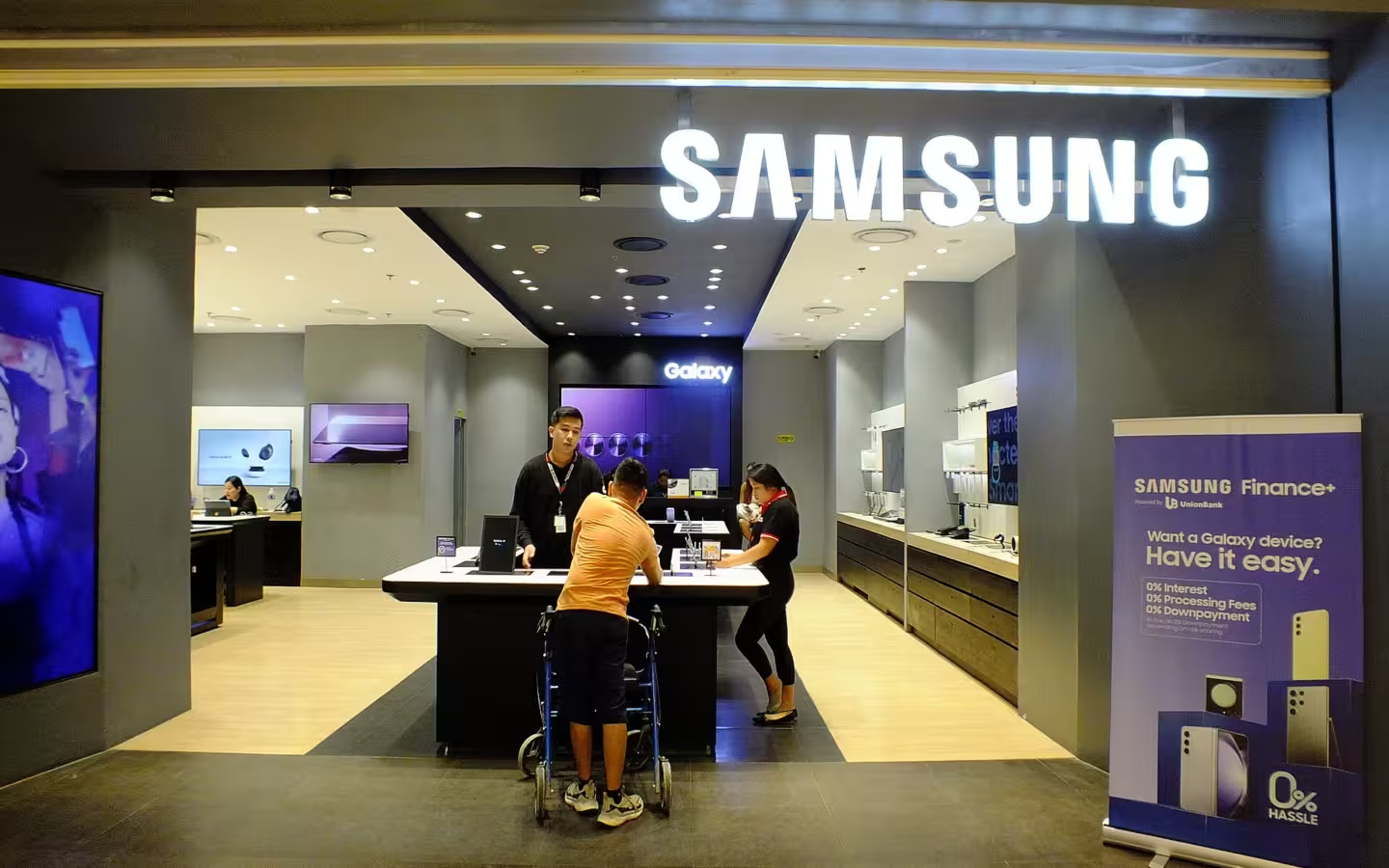
Samsung Electronics projected a 783% year-on-year rise in third-quarter operating profit to 107.4 trillion won ($80.17 billion) on 8 October, above an analyst estimate of 106.1 trillion won, Reuters reported. The estimate for the July-September period appeared in a regulatory filing, according to the report.
Key points
- Samsung estimated third-quarter operating profit at 107.4 trillion won, against an LSEG SmartEstimate of 106.1 trillion won.
- The analyst estimate had been reduced by 7.7% since the end of August.
- SK Securities analyst Han Dong-hee estimated a 76% memory-chip operating margin, flat with the preceding quarter.
- J.P. Morgan expects Samsung’s high-bandwidth memory market share to reach 34% in 2026, from 20% in 2025.
Samsung clears a reduced profit estimate
Strong memory earnings driven by demand for artificial intelligence chips underpinned Samsung’s projection, Reuters reported. The company’s figure is an estimate of operating profit across its businesses rather than a separate result for memory chips.
Before the company’s announcement, the LSEG SmartEstimate stood at 106.1 trillion won ($79.1 billion), according to a 7 October Reuters preview. That measure drew on forecasts from 21 analysts and gave greater weight to those with stronger forecasting records. It had fallen by 7.7% since the end of August.
Samsung recorded operating profit of 12.17 trillion won in the equivalent quarter a year earlier. The pre-announcement forecast would have marked its fourth consecutive quarter of record operating profit, according to the preview. Chipmakers expected a memory shortage that began more than a year earlier to last into 2027 and possibly through 2028.
Han Dong-hee expects a flat chip margin
SK Securities analyst Han Dong-hee estimated Samsung’s memory-chip operating profit margin at 76% for the third quarter, unchanged from the preceding quarter. Memory-chip price increases had slowed during the period, while the South Korean won had strengthened against the dollar.
The won gained 14.3% against the dollar in the third quarter. That reduces the value of overseas earnings when they are brought back to South Korea. Higher chip prices have also raised costs for makers of smartphones and other consumer electronics, weighing on demand for those products.
TrendForce expects contract prices for conventional DRAM to rise 10% to 15% in the fourth quarter from the third, compared with a roughly 60% increase in the second quarter. Avril Wu, its senior vice president for research, said suppliers were cautious about further sharp increases that could hurt demand for consumer electronics.
Long-term supply agreements offer chipmakers guaranteed sales but can restrict price increases through contractual ceilings, Wu said. Samsung said in July that it aimed to put about two-thirds of its memory output under long-term contracts. That would make the terms of those agreements important to how much of a further rise in chip prices reaches its earnings.
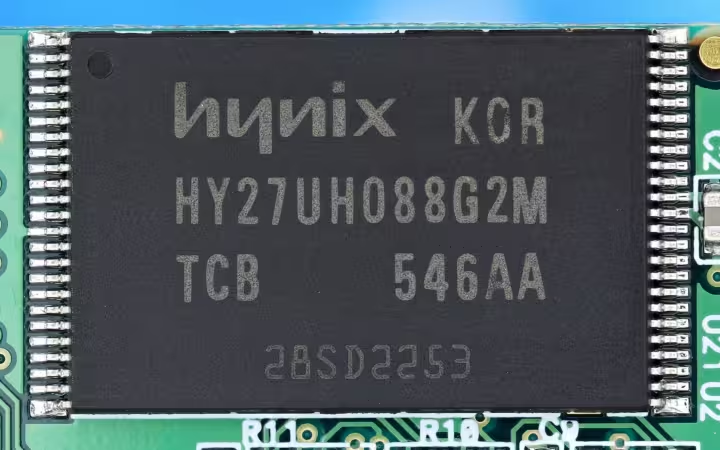
Samsung expands HBM4 shipments against SK Hynix
Samsung has expanded shipments of its HBM4 high-bandwidth memory chips after delays in qualifying products for Nvidia. It is expected to increase HBM sales as it narrows the gap with market leader SK Hynix. HBM is used in AI data centres.
An AI Affairs report on Samsung’s HBM capacity described an executive’s expectation that the chips would take nearly 30% of DRAM wafer capacity, potentially restricting the supply of conventional memory.
Samsung also faces competition in lower-end memory products from Chinese suppliers. Kinngai Chan, senior research analyst at Summit Insights Group, said checks by his firm indicated that more original equipment and design manufacturers were adopting Chinese DRAM and NAND.
J.P. Morgan estimates Samsung’s share of the HBM market will rise to 34% in 2026 from 20% in 2025. It forecasts SK Hynix’s share falling to 46% from 60% over the same period.


.jpg)