Temasek chief investment officer Rohit Sipahimalani identified an unwinding of the AI trade as the biggest market risk, while noting that roughly half of Russell 3000 stocks were at least 20% below their June highs, CNBC reported on 7 October 2026.
Key points
- Sipahimalani said a reversal was not imminent, though markets could encounter bumps in 2027.
- He cited tighter regulation prompted by safety concerns and inadequate returns for AI customers as possible triggers.
- About half of Temasek’s AI exposure is in listed assets. Sipahimalani would ideally raise that share to around 70% to 75%.
Russell 3000 weakness beneath AI gains
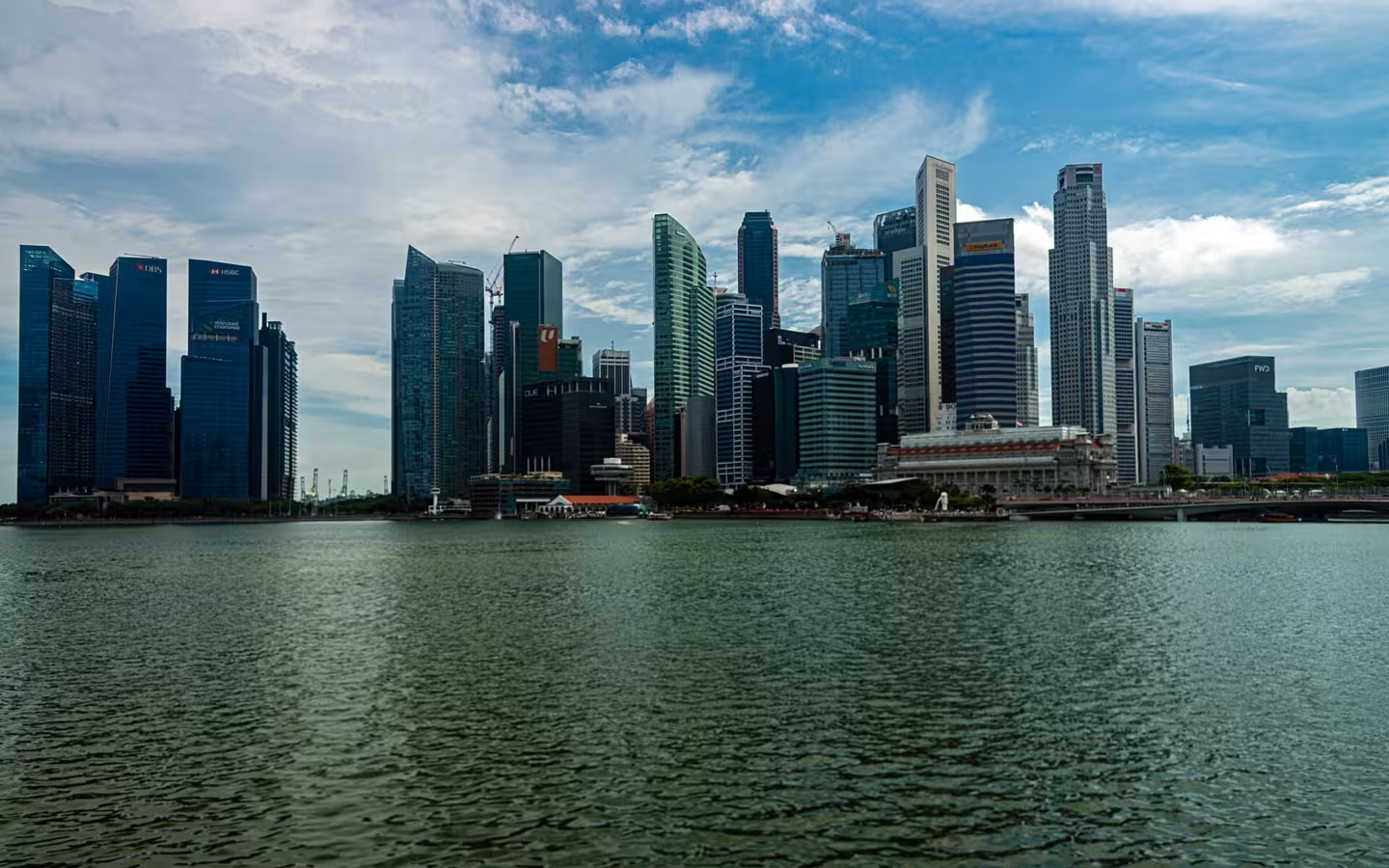
Sipahimalani made the remarks at the Milken Institute Asia Summit in Singapore. He said AI had helped keep US shares near record highs despite a surge in Treasury yields, pointing to earnings from major companies tied to the technology.
The S&P 500 had remained around record territory as borrowing costs rose, supported by what Sipahimalani called “AI and the earnings momentum around the key players”. His account of the index’s strength centred on the companies benefiting from that spending.
The broader market looked different in the measure he cited. Roughly half of Russell 3000 stocks were at least 20% below their June highs, Sipahimalani said. He contrasted the S&P 500’s strength with weakness among Russell 3000 stocks when describing the market’s reliance on a smaller group of winners.
Sipahimalani did not describe a reversal as imminent. He said markets could nevertheless face bumps in 2027. His warning concerned the consequences of an AI trade that had become important to US equity performance, rather than an expectation of an immediate retreat.
Regulation and customer returns could test the trade
Safety concerns leading to tighter regulation could trigger an unwinding, Sipahimalani said. Another was evidence that customers were failing to earn sufficient returns on their AI spending. Both would challenge the expectations behind investment in companies linked to the technology.
Customers’ returns on AI spending were a possible source of weakness, while earnings from major companies tied to the technology had helped support US shares, Sipahimalani said. He cited earnings momentum among major companies tied to AI as support for share prices while identifying customer returns as a possible source of weakness.
Temasek remains positive on AI over the longer term and has continued to increase its investments in the sector, according to CNBC. Sipahimalani paired that stance with a preference for holdings the Singapore state-owned investment company could change more readily as the industry develops.
Temasek seeks 70% to 75% listed exposure
About half of Temasek’s AI exposure is currently in publicly traded assets, Sipahimalani said. He would ideally increase the proportion to around 70% to 75%. The proposed change concerns the mix of its AI investments, giving the firm more room to adjust its positions than it has with private assets that can be harder to exit quickly.
Sipahimalani described the ability to change course as important in a fast-moving industry. “Things could change quite easily, and you have to be able to pivot,” he said. His preferred public-market share reflects that approach even as Temasek continues to invest in AI.
Temasek has also invested in private AI model developers including OpenAI and Anthropic. Sipahimalani said the size of its exposure to those companies would differ from its exposure in areas where the firm had greater flexibility.