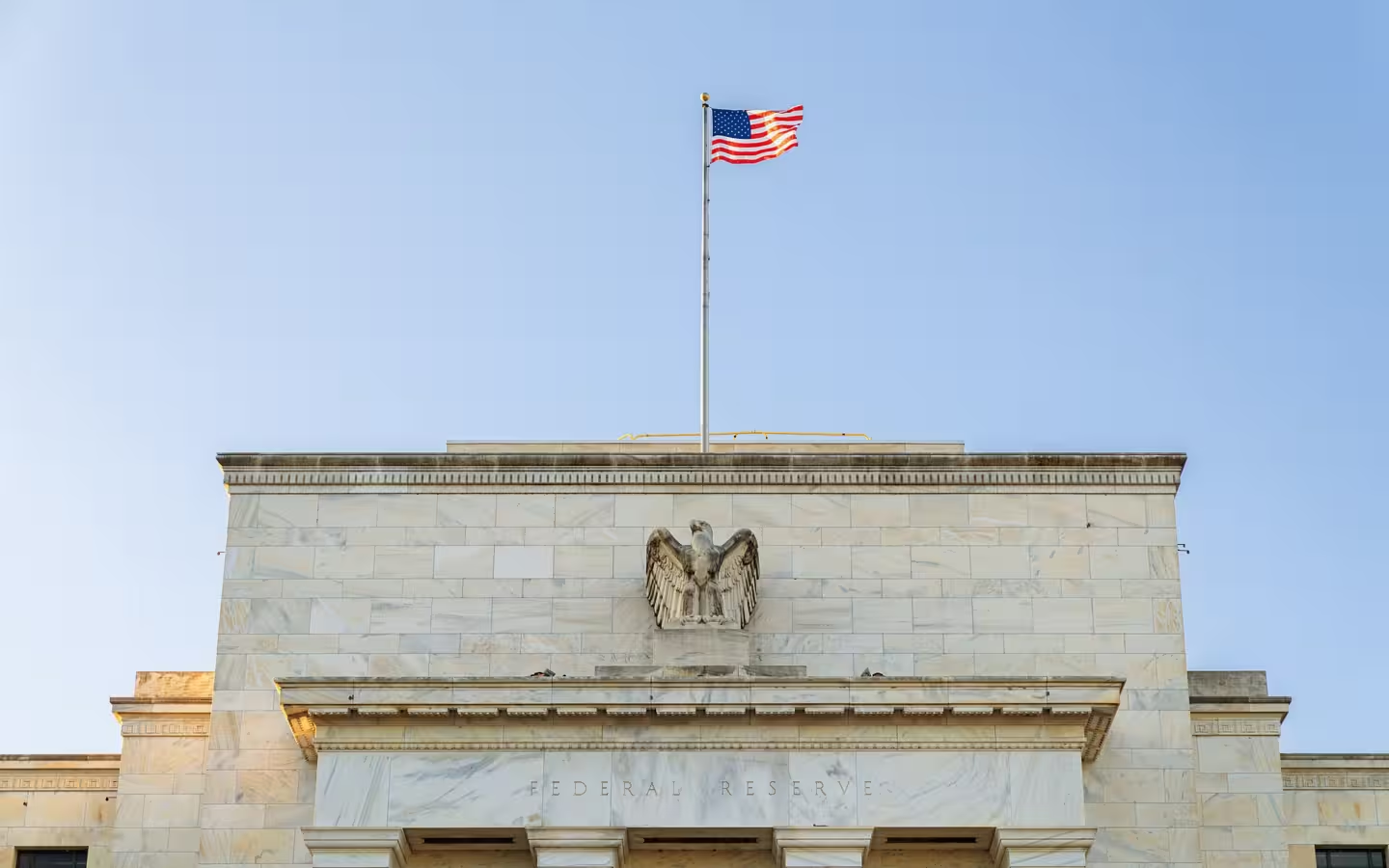
The Federal Reserve released its semi-annual Financial Stability Report on 13 November, with AI the most-cited risk to the US financial system among its surveyed contacts, Reuters reported. The share citing AI rose from 50% in the May survey to 87%, as the Fed examined a rapid increase in borrowing for data centres and other advanced computing infrastructure.
Key points
- AI was cited by 87% of surveyed contacts, up from 50% in May.
- Respondents raised concerns about cyberattacks, complex financing and a possible market correction.
- Advanced computing-related debt issuance reached $680 billion by October 2026.
- The Fed’s data indicates that debt, guarantees and leases yet to begin could exceed $3 trillion.
AI rises from 50% to 87%
The Fed gathered the survey responses in September and October. Contacts pointed to cyberattacks and complicated arrangements for financing AI projects, as well as the possibility that slower AI earnings could set off a broad market correction.
A correction in risk assets was the next most-cited concern, named by 52% of respondents. Higher long-term interest rates drew 48%, while cyberattacks and the sustainability of government debt each drew 43%. The survey records what contacts worry about, rather than a finding that any of those outcomes will occur.
The responses predate Nvidia chief executive Jensen Huang’s departure on 12 November. Separately, AI Affairs reported a Bank of Japan warning that AI market shocks and cyberattacks could reach banks.
Advanced computing debt reaches $680 billion
Advanced computing-related debt issuance reached $680 billion by October 2026, five times the amount issued in all of 2023. That borrowing now makes up nearly a third of investment-grade corporate debt issuance by nonfinancial companies, compared with less than 6% three years earlier.
The Fed compared the pace of AI infrastructure borrowing and investment with the broadband telecom investment cycle of the late 1990s. It said the current cycle could soon exceed that one.
On the Fed’s data, the potential exposure extends beyond debt issuance: debt, guarantees and leases that have yet to begin on advanced computing infrastructure could exceed $3 trillion. That is a wider set of commitments than the $680 billion issuance figure, not another measure of debt sold by October.
Fed examines circular financing in data centres
Long-term contracts, leases and guarantees allow large technology firms to support projects financed by smaller third parties, while hyperscalers and graphics card designers can also invest through equity, Reuters reported. The Fed described these connections as “circular financing”.
The Fed said those arrangements could let the largest firms absorb losses if the market turns, limiting damage to the wider financial system. It also said the firms’ exposure could be “substantially larger” than their balance-sheet liabilities indicate.
Investor enthusiasm for AI has helped keep valuations high across a range of assets, according to the Fed. It said an unexpected fall in corporate earnings could bring a market decline, tighter credit and less investment, weighing on the economy.
The Fed also found that leverage among hedge funds, particularly the largest firms, remains at its highest level since it began collecting those data in 2013.