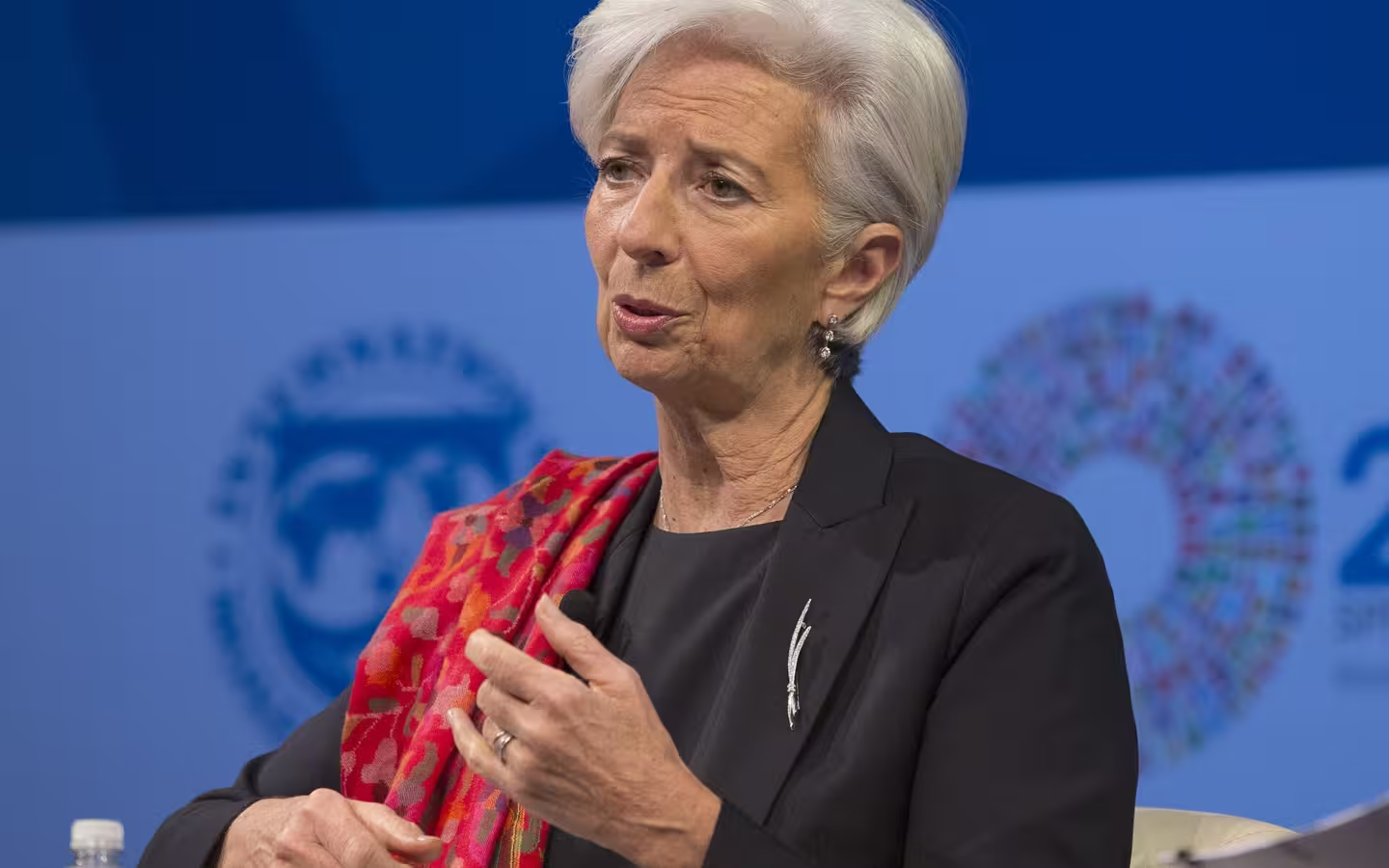
European Central Bank President Christine Lagarde called for Europe to develop its own AI capabilities in Frankfurt on 1 October, Bloomberg reported. She warned that reliance on models developed elsewhere could leave Europe vulnerable, putting access to tools important to its financial resilience in other hands.
Key points
- Lagarde wants Europe to develop AI capabilities and take a place in the technology’s supply chain.
- At an earlier appearance in Vienna, she put Europe’s share of global AI computing capacity at approximately 5%, against approximately 75% in the US.
- Lagarde said euro-area households hold approximately €440 billion in US technology companies.
- She called for more European savings to reach domestic technology companies.
Lagarde’s Frankfurt warning centres on access
Lagarde said Europe should be an indispensable participant in the AI supply chain. In her formulation, access to essential tools should not depend on “a switch controlled elsewhere” — a concern she tied specifically to financial resilience.
That makes the warning more concrete than a general call to build European AI companies. Lagarde’s concern in Frankfurt was whether Europe can keep using tools it regards as vital if the models behind them are developed abroad.
Europe holds 5% of AI computing capacity
Lagarde had put figures to that dependence at an earlier appearance in Vienna: the US hosts approximately 75% of global AI computing capacity, while Europe hosts approximately 5%, EU Perspectives reported on 15 September. She warned that reliance on foreign technology in banking, healthcare, transport and public administration could give overseas providers political or commercial leverage.
The scale of a European build-out would be substantial. Europe could need to put up to €600 billion into chips and data-centre capacity over the next decade, according to EU Perspectives. That is an estimate of potential spending, rather than a commitment to spend it.
Lagarde also put the potential gain in view. She said rapid AI adoption could raise European productivity by as much as 4% over the next decade, helping to offset the effects of an ageing population and a shrinking workforce.
€440 billion in US technology holdings
Lagarde’s Vienna warning also concerned where European money goes. She said euro-area households hold approximately €440 billion in US technology companies, and compared their investments with European financing of American railways in the 19th century, when most of the economic benefits stayed in the US.
Large US technology companies issued more than $100 billion in bonds in 2025 to finance AI infrastructure, EU Perspectives reported. The borrowing can affect financing costs beyond the US because European long-term interest rates tend to follow US yields.
European households save approximately €1.4 trillion each year. Lagarde argued that more of that money should reach European technology companies, while the EU’s Savings and Investments Union aims to direct private savings towards European businesses.
European investment in AI is already taking shape in individual deals. Dutch chip-equipment manufacturer ASML led a $2 billion funding round for French AI company Mistral and became its largest shareholder.



.jpg)