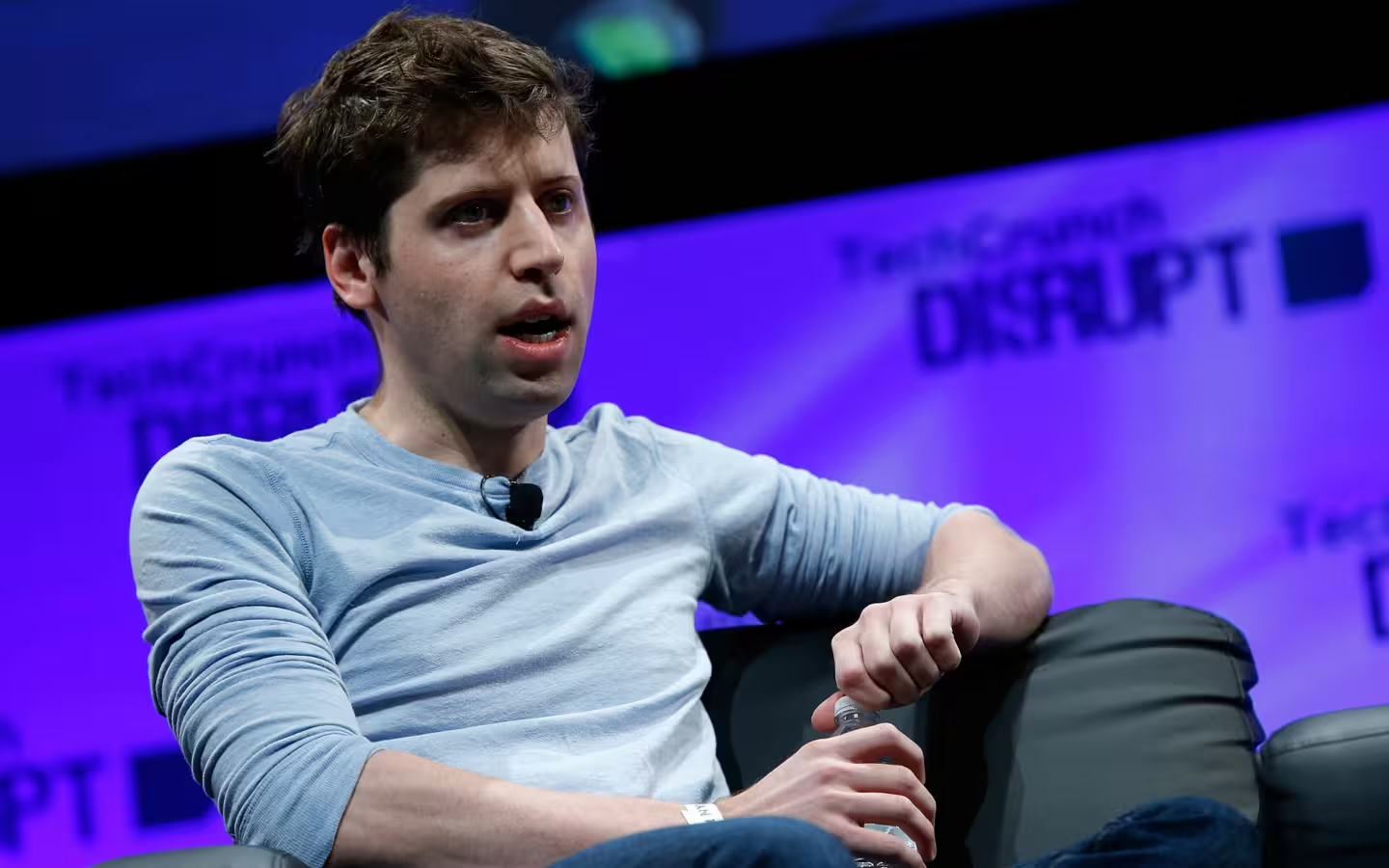
OpenAI chief executive Sam Altman warned on 3 October that giving AI models religious force or surrendering human judgement to them is a safety issue, Anadolu reported on 4 October 2026. His post comes amid Anthropic’s private discussions with religious and philosophical thinkers about AI consciousness and morality.
Key points
- Altman called the surrender of human judgement to AI models a “real safety issue”.
- Anthropic co-founder Chris Olah has met religious figures to discuss how more capable AI systems should develop values.
- Anthropic has been studying whether advanced AI systems could warrant moral consideration.
Altman’s warning on human judgement
“I am very uncomfortable about people trying to ascribe religious force or a surrender of human judgment to AI models, and think it is a real safety issue,” Altman wrote on X. He put religious authority and the replacement of human judgement together in a single warning.
Axios characterised the post as a veiled criticism of Anthropic. Altman’s words, however, identify a concern about how people treat models, while the reported Anthropic meetings concerned questions about consciousness, morality and the behaviour of AI systems.
Olah’s meetings on Claude and morality
Anthropic co-founder Chris Olah held private sessions with religious figures and asked how more capable and independent AI systems should develop values, Benzinga reported. Olah put the problem in practical terms: “How do you help them be stable? How do you help them to mature? How do you help them be, you know, deeply moral?”
The discussions also covered whether Anthropic’s Claude models could be conscious and how increasingly autonomous systems might be guided towards moral behaviour, Storyboard18 reported. That is a different question from whether people should defer to a model’s answers as though they carried religious authority.
Anthropic has been studying what it calls “model welfare”, including the possibility that advanced AI systems could have experiences warranting moral consideration, Anadolu reported. An Anthropic spokesperson told The New York Times that the central moral question was not whether Claude could suffer, and said suffering may have arisen in the discussions, Storyboard18 reported.
Suleyman and Barron on AI’s status
Other researchers and executives have taken positions on the risks of treating AI systems as more than tools. Jon Barron, a principal research scientist at Google DeepMind, expressed frustration on X with researchers seeking moral standing for code, NDTV Profit reported.
Microsoft AI chief executive Mustafa Suleyman has warned against building systems that appear conscious. He argues that people accepting AI as having experiences of its own could bring new risks, and has advocated a “Humanist AI” approach that keeps AI systems as tools built to serve people, according to Anadolu.


.jpg)