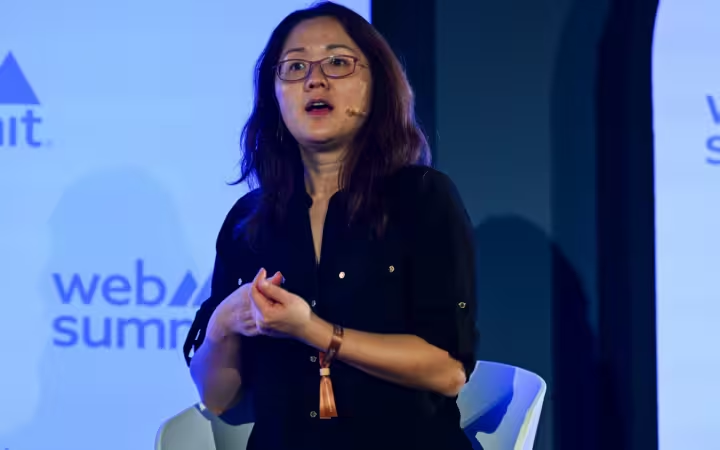
Tencent chief AI scientist Yao Shunyu said at a Hong Kong science event on 7 November that AI systems would soon have biological capabilities sufficient to inflict harm, The Next Web reported. Yao also said Anthropic makes a strong case for keeping top models closed, while arguing that open models can help defenders.
Key points
- Yao warned that AI’s biological capabilities are approaching a threshold at which models could cause harm.
- He credited Anthropic’s case for closed models but said open models could also strengthen defences.
- Tencent says its newly released Hy4 model was trained on defensive security data rather than material on exploiting software flaws.
Yao’s warning at the Hong Kong symposium
Yao spoke at a science symposium organised with the Hong Kong Academy of Sciences and the Future Science Prize, MLQ.ai reported. Tencent named him chief AI scientist in December 2025 after he worked at OpenAI; he reports to Tencent president Martin Lau.
“The cyber abilities of [AI] models and soon [the] bio ability of models will reach a threshold where it’s actually possible to do harm,” Yao said. He urged Chinese companies releasing models that others can download and modify to treat safety seriously.
Yao also warned that biological risks may be harder to manage than cyber risks. The distinction matters for Tencent: the company released its flagship model Hy4 on 4 November, bringing its own approach to model safety into focus.
Anthropic’s closed-model case meets an open-model defence
Yao said US companies such as Anthropic make a strong case for restricting access to top models. He nevertheless argued that a mix of open and closed approaches may work best, because defenders can also use models released openly.
That position gives both sides of the access debate a practical safety argument. Yao’s concern is that models could be used to do harm, while his case for openness rests on their potential use by people trying to prevent it.
A report presented at the World Internet Conference warned that improving AI capabilities in tasks such as pathogen design were “potentially creating major public health risks”, Maeil Business Newspaper reported. Tencent, Huawei and Alibaba Group took part in drafting it.
The UK has also committed £100 million to an AI Biosecurity Lab with OpenAI and Anthropic. Yao’s remarks bring the question of who gets access to capable models into that wider discussion of biological risk.
Tencent’s Hy4 tests its safety approach
Tencent said in its Hy4 launch announcement that it trained the model on defensive security data and excluded material on exploiting software flaws, The Next Web reported. That is a training choice, rather than the closed-model approach Yao said Anthropic advocates.
Tencent also said Hy4 has strong basic biological knowledge but performs less well than leading models at designing experiments. The company based that assessment on internal expert reviews.
In its account of Hy4’s biological capabilities, Tencent said the model remains far below a high-risk threshold because it cannot turn basic knowledge into actionable protocols, Maeil Business Newspaper reported.