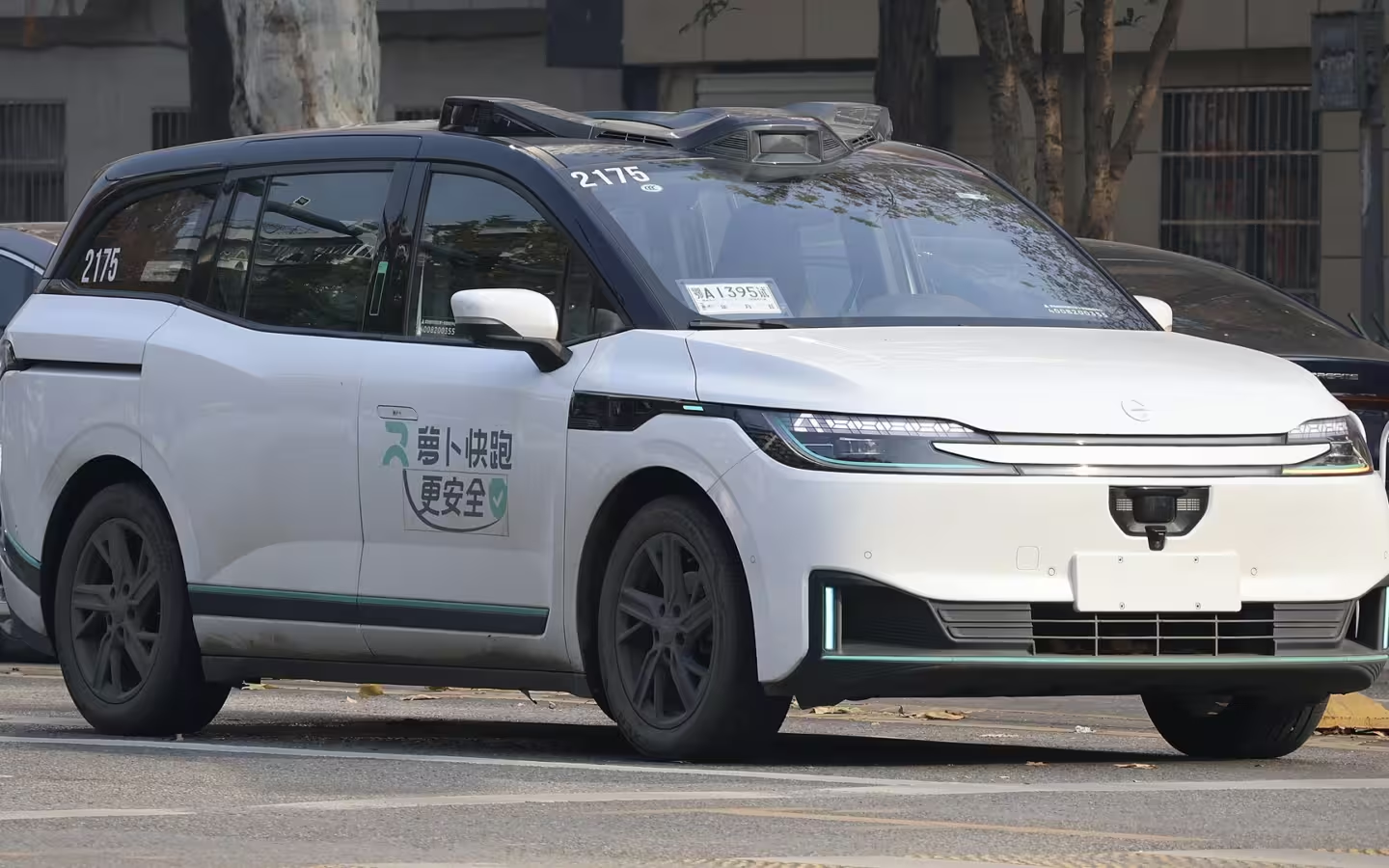
Baidu launched Apollo World, an AI simulator for training its Apollo Go robotaxis, on 3 November 2026, when its Intelligent Driving Group demonstrated how a virtual road scene changes as a vehicle steers, brakes and accelerates, the South China Morning Post reported. The company is using it to practise encounters with road hazards that are difficult to capture safely during ordinary driving.
Key points
- Baidu says Apollo World can generate up to 100,000 km of simulated driving daily.
- The system produces camera and lidar feeds that change in response to a virtual vehicle’s actions.
- A demonstration included cyclists crossing intersections and dogs running into a robotaxi’s path.
- Baidu says it is already using the simulator to train Apollo Go robotaxis for global operations.
Apollo World builds journeys from virtual roads
Apollo World can create a complete virtual journey rather than present driving software with a fixed recording of one road scene, according to Baidu executives. As the simulated vehicle acts, the system generates synchronised camera images and lidar readings — the laser-based distance measurements a vehicle uses to sense its surroundings. The distinction matters during a hazard: braking or turning changes what happens next, so the software needs to encounter the consequences of its own response.
Yang Ze, a distinguished architect and head of world models at Baidu’s Intelligent Driving Group, demonstrated scenes in which cyclists cut across intersections and dogs ran into a robotaxi’s path. Engineers could alter how the virtual road users behaved to test the driving software under different conditions. Yang said he wanted the model to progress from simulating an isolated situation to simulating the completion of an entire driving task.
A taxi ride through an intersection could involve a cyclist crossing unexpectedly. A changing virtual scene would let driving software practise its response to that sort of encounter, then face a different version when the cyclist’s behaviour changed. It could create opportunities to rehearse a hazard without waiting for that hazard to occur on a road.
Baidu says Apollo World can produce up to 100,000 km of simulated driving each day, an amount it compares with about three years of road testing by an autonomous vehicle carrying a safety driver, Reuters reported. The distance describes how much virtual driving the company says the system can generate. The demonstration described by the South China Morning Post involved particular hazards and the simulator’s real-time responses to driving actions.
Shenzhen and Hong Kong test changing roads
Baidu also simulated trips in Shenzhen and Hong Kong with changing levels of traffic. The platform is important to Baidu’s work on road networks that cross borders, the South China Morning Post reported. Such journeys bring different road conditions into the same training problem, beyond the hazards that might arise at a single junction.
Wang Liang, chief architect at Baidu’s Intelligent Driving Group and chairman of the Apollo technical committee, said adapting robotaxis to different places had previously involved writing local road rules into the software by hand, a process he described as difficult to scale. He pointed to Chongqing’s layered roads, driving on the left in London and Hong Kong, and driving behaviour in Dubai as examples of the variation vehicles must handle. Baidu’s newer architecture instead trains models to turn what the vehicle senses into driving actions.
That approach gives the simulator a second job alongside generating unusual hazards: it can present the driving model with roads and traffic that differ by location. The same feedback between action and simulated surroundings applies when a vehicle negotiates a route as when it responds to a dog entering its path. Baidu’s Shenzhen and Hong Kong demonstration put that route-level work in view.
Apollo Go trains for operations abroad
Baidu says Apollo World is already training its Apollo Go fleet for operations abroad. Apollo Go is China’s largest robotaxi service operator, Reuters reported, in a market that also includes WeRide, Pony.ai and Momenta Global. Morgan Stanley estimates that China’s robotaxi fleet could reach 1 million vehicles by 2035.
Simulation addresses one cost of developing those services: Frank McCleary, an autonomous mobility and urban transport expert at the consultancy Arthur D. Little, told Reuters that companies still face spending on model training and vehicles. He said the pace of a launch depends on how well the technology adapts to, understands and learns to drive in a new environment.
Other autonomous-driving companies are developing similar kinds of environment model. Alphabet-owned Waymo introduced one in February 2026 using Google DeepMind’s Genie 3 to generate camera and lidar feeds for dangerous conditions. Nvidia presented OmniDreams in June 2026 as a model for evaluating driving software through real-time interaction. At Baidu, Yang said data collected by Apollo Go vehicles on actual roads is fed back into Apollo World to improve the simulator.