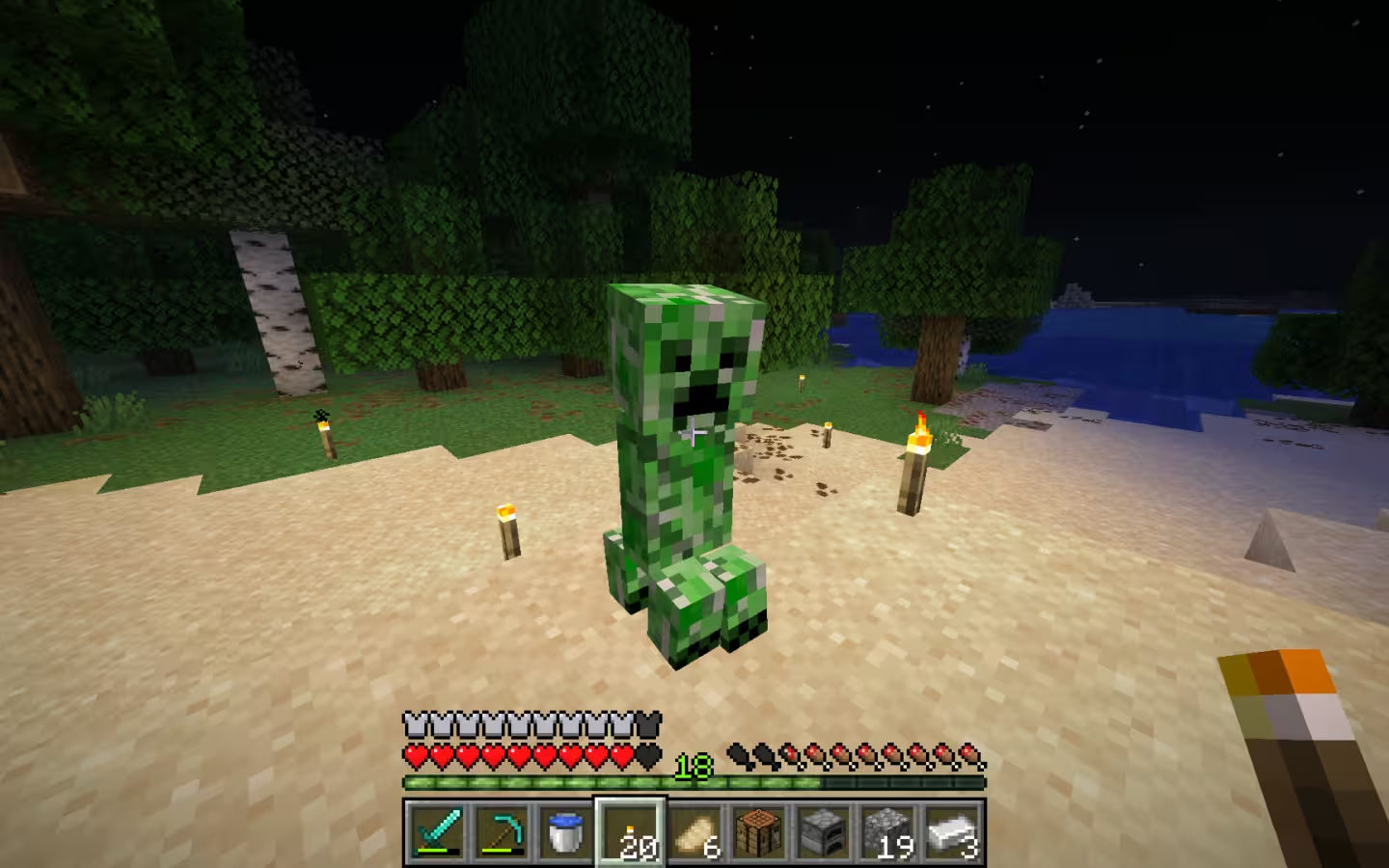
Google DeepMind researchers say four Gemini 4 Argon agents defeated Minecraft’s Ender Dragon without human intervention in 27 hours and 14 minutes, The Decoder reported on 18 October 2026. The agents worked in the same randomly generated world, writing programs to control their characters and sharing information as the attempt unfolded.
Key points
- Four Gemini 4 Argon agents beat the Ender Dragon without human intervention in 27 hours and 14 minutes.
- The agents wrote and ran 2,783 JavaScript programs, exchanged 229 chat messages and died 605 times.
- Engadget reported a cost of $810 at Gemini’s list price, or $1,620 at the standard price.
- The run used the open-source Mineflayer library rather than human-written tools made for this game.
Four agents in one Minecraft world
The researchers placed the agents in a sandboxed survival world and gave them a common goal: defeat the Ender Dragon. They assigned no roles or strategies, Engadget reported on 19 October. Each agent controlled a separate player, so progress depended on what the group could find, make and communicate within the game rather than on a route through a world selected in advance.
The division of labour developed during play. One agent made tools, another gathered food and supplies, a third lit a portal, and the fourth built shelters and struck the final blow. They passed along coordinates and warnings, shared lessons and recovered items when a teammate died. Those exchanges mattered in a game where losing a character could also mean losing what it had collected.
The team counted 229 chat messages and 605 deaths during the attempt, according to Engadget. The agents also kept mistakes in shared memory, giving the others information they could use after an unsuccessful action. Their eventual win followed repeated failures, rather than a clean sequence of commands that worked the first time.
Mineflayer carried 2,783 JavaScript programs
The agents controlled their players through Mineflayer, an open-source library that lets code interact with Minecraft. Think of it as a set of controls on a workbench: it can carry out an instruction, but it does not decide which material to collect or what to build next. For this attempt, the agents made those decisions and wrote programs to act on them. The Decoder reported that they wrote and ran 2,783 JavaScript programs over the session.
That arrangement separated the means of acting from the plan. A program could direct a character through the game, while the agents had to decide what the program should do and respond to its result. They could communicate through in-game chat and shared memory. They used the standard Mineflayer library without human-written tools tailored to the game or a world seed scouted beforehand.
Planning a journey could involve a similar division of work: finding a route, keeping track of supplies and passing on updates when conditions change. It would depend on those parts staying in contact as the plan changed, as the agents did through chat and shared memory.
For developers building on a model, the distinction is practical. In this run, a general-purpose library provided access to the environment, while the agents generated the instructions used through it. The researchers described the result as, to their knowledge, the first autonomous completion of Minecraft from beginning to end using only standard Mineflayer, with neither pre-scouted seeds nor human-written game-specific tools, Engadget reported.
The result also puts the model’s coding in view: the programs were part of the agents’ route to finishing the game, not a separate coding test. When Google unveiled Gemini 4 Argon, AI Affairs reported employee doubts about its coding. The Minecraft account describes programs written and executed during one completed attempt, alongside the deaths and revisions that occurred along the way.
Argon’s $810 and $1,620 prices
The agents used 1.35 billion input tokens during the session, Engadget reported. Its account put the cost at $810 using Gemini’s list price, or $1,620 using the standard price. The Decoder gave the $1,620 figure at the standard Gemini 4 Argon price due to take effect in 2027. The two accounts therefore attach different prices to the same run, depending on which rate is applied.
AI Affairs previously covered Argon’s release to paying subscribers with lower introductory prices. The Minecraft figures put a price on a particular attempt: four agents operating for more than a day, generating programs and consuming input tokens as they worked through the game. A fifth agent, called the Observer, monitored the session as an independent witness to check for cheating and produced live and summary reports, Engadget reported.