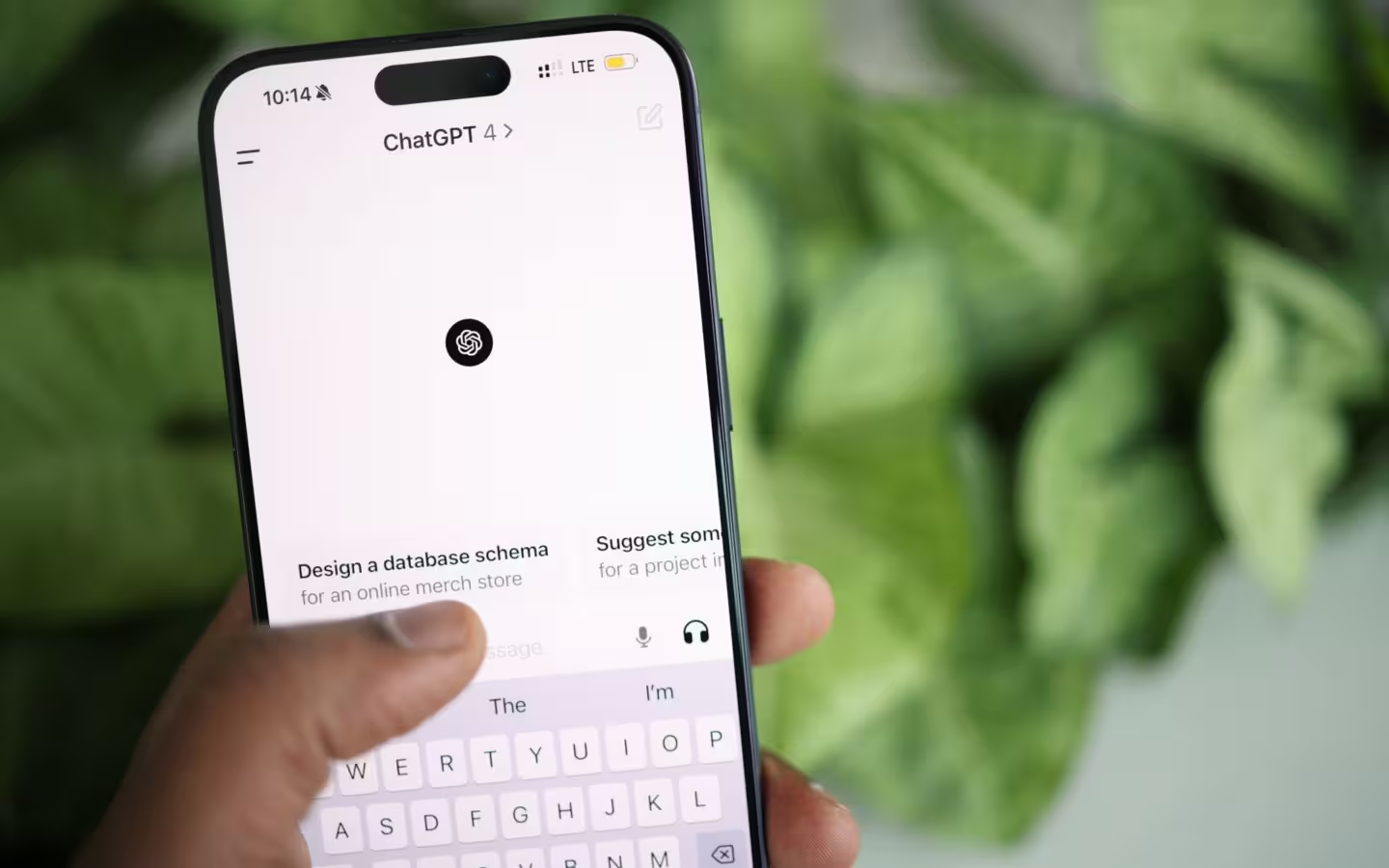
OpenAI announced on 23 September 2026 that it is bringing voice-based task features to the ChatGPT mobile app, allowing people to start work such as drafting documents or summarising emails by speaking, TechCrunch reported. The mobile Work tab will be available to Plus and Pro subscribers for tasks including creating documents, drafting emails and summarising Slack messages.
Key points
- Plus and Pro subscribers will be able to start Work tab tasks by voice on their phones.
- Free and Go users will get access to plugins and connected apps.
- OpenAI says voice conversations will have richer text output, with easier switching between speaking and typing.
- A conversation begun on mobile can be resumed on desktop.
ChatGPT’s Work tab reaches phones
The Work tab is the part of ChatGPT in which a request can become a task: OpenAI’s examples include making a document, preparing an email and producing a summary of Slack messages. Adding voice changes how those requests can begin on a phone. Instead of entering an instruction as text, a subscriber will be able to say what they want done. Tekedia describes the distinction as a move from an assistant that responds to questions towards one that carries out steps in a workflow.
Drafting an email could begin with a spoken request rather than a typed one. Summarising messages could likewise start while a phone is in hand, with the result available as text if the conversation moves from voice to the screen. Those possibilities follow from the tasks OpenAI has described and its planned changes to voice output; the request would still need to identify the work to be done.
For Plus and Pro subscribers, the mobile expansion also covers building sites, creating presentations, using ChatGPT’s cloud browser and reaching other areas of the service, including finances. Those are different kinds of work from composing a reply: a presentation or site is an output to create, while a browser or a connected area provides somewhere else to work. OpenAI places them alongside the document, email and message tasks available through Work.
The access OpenAI describes for Free and Go users has a different scope. They will get plugins and connected apps, while the Work tab tasks described for phones are assigned to Plus and Pro. For a company building a connected app or plugin, that distinction identifies an entry point for Free and Go users as well as the separate set of mobile Work tasks offered to paying subscribers. The announcement names the tiers by feature, rather than describing one common voice-workflow experience for every account.
GPT-Live’s desktop path to mobile
OpenAI released its conversational model GPT-Live in July, then brought it to desktop, enabling people to carry out Work tab tasks by speaking and to make apps through the Codex tab, TechCrunch reported. The phone release extends the Work side of that arrangement to another device. It also puts a spoken instruction at the beginning of tasks that the company had already brought to its desktop workspace.
OpenAI says mobile voice conversations will produce richer text output, and that users will be able to move more easily between speaking and typing. The pairing matters for the tasks it has named: a document or an email may start with speech, but its words can then be read on the screen. A voice conversation therefore need not remain only a spoken exchange while work moves through the app.
OpenAI also says a conversation started on a phone can be resumed on desktop. That is a handoff of the conversation, alongside the change in how a task is initiated. Dataconomy reported both the device handoff and the richer text output as parts of the mobile rollout. Together, they describe a route from a spoken request on a phone to continued work at a desktop, without making the phone the only place the conversation can proceed.
Anthropic joins Cowork and Chat
Anthropic has also made it easier to carry work between mobile and desktop, and has combined its Cowork and Chat interfaces. OpenAI is keeping chat and workspaces separate, TechCrunch reported. Both companies are addressing the move between devices, but their interface choices differ: Anthropic has brought its conversational and work areas together, while OpenAI continues to give work its own space within ChatGPT.
That separation is visible in the mobile feature OpenAI has chosen to extend. Voice conversations gain richer text output and a route between phone and desktop, while document creation, email drafting and Slack summarisation sit in the Work tab for Plus and Pro subscribers. On desktop, the company’s earlier GPT-Live integration also placed app-building by voice in the Codex tab.