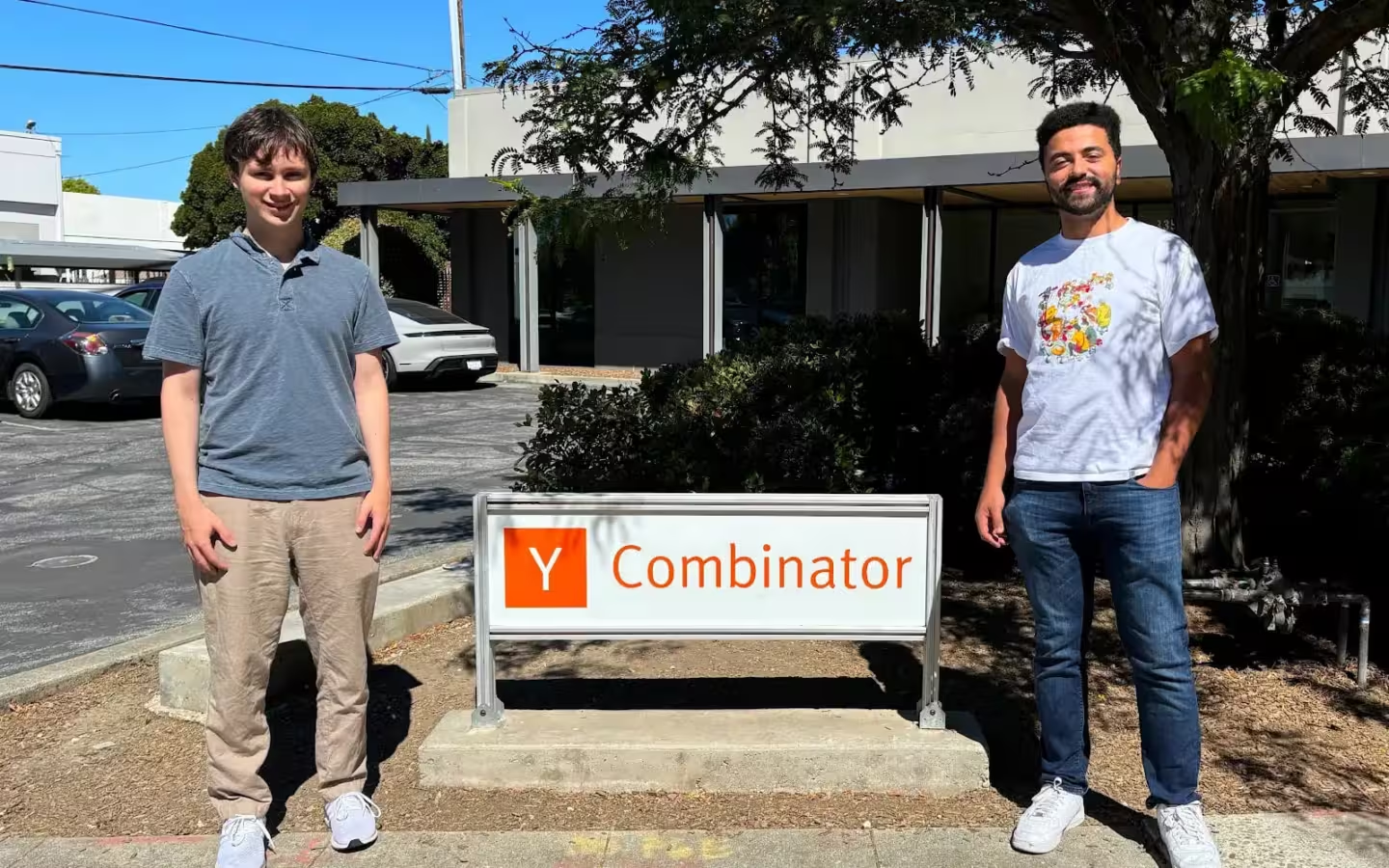
VideoGen, a San Francisco start-up that builds AI tools for video creation, announced its first in-house video model on 19 October. The company says VideoGen Model 1 turns a single prompt into a finished video of several shots, up to ten minutes long. Anton Koenig, who founded the company with David Grossman in Y Combinator’s summer 2024 batch and is its chief executive, spoke to AI Affairs before the release.
Key points
- VideoGen says Model 1 plans and generates up to ten minutes of video from one prompt, carrying characters, locations and story details from scene to scene.
- Koenig told AI Affairs the model sits slightly below ByteDance’s Seedance 2.5, at close to 80% of its performance. No benchmark backs that estimate yet.
- The company says Model 1 will cost more than 50% less than comparable models. Official pricing, official benchmarks and third-party validation are still in progress.
- A limited rollout to private partners starts on 19 October, and applications open the same day for a $1 million pool of free AI credits.
- VideoGen did not give AI Affairs access to the model, and AI Affairs could not verify the company’s claims.
Model 1 plans a ten-minute video shot by shot
Length is the main news. Morphic lists Seedance 2.5, the model Koenig measures Model 1 against, at up to 30 seconds in one native pass. Model 1 reaches ten minutes by planning a video as a sequence of shots and carrying context from each shot to the next.
The planning is done by what VideoGen calls an “AI thinking harness”, which works out the screenplay, dialogue, shots and pacing around the prompt. The company describes Model 1 as “one of the only models in its class with thinking built in”. Koenig said the harness pre-generates responses and that a set of LLM nodes inside the model improves the prompt. A set of LLM judges runs in two modes, one that thinks and one that is fast.
Koenig said Model 1’s weights run to tens of billions of parameters, enough that a GPU would run out of memory. To keep shots visually and spatially consistent, VideoGen passes context between them in the model’s latent space, he said.
VideoGen says Model 1 was trained on realistic film, animation, cartoons, adverts, social media videos and training videos. Koenig said the company trained several versions of the model, among them realistic, anime and cinematic ones, and routes each request to one of them at runtime. The model is optimised for storytelling and short films, he said.
A year ago, everyone was skeptical that it could make something film-worthy, and now, it’s close.
Anton Koenig, founder and chief executive, VideoGen
Koenig puts Model 1 just behind Seedance 2.5
On quality, Koenig placed Model 1 slightly below Seedance 2.5, at close to 80% of its performance. There is no benchmark behind that figure yet. VideoGen says it has carried out internal validation, and that third-party validation, official benchmarks and official pricing are under way. Koenig said a whitepaper on the model is available.
The company’s case rests on price. VideoGen says Model 1 will cost more than 50% less than comparable models, naming Seedance 2.0 and 2.5, Gemini Omni Flash 1.1 and Flux 3. It credits anonymised patterns from its own platform, whose tools it says have produced more than ten million completed videos, with helping deliver “near state-of-the-art quality for significantly lower costs”.
VideoGen lists the research behind the model as joint audio-video attention, bfloat16 inference with experiments on model loading and precision settings, and post-training experiments with low-rank adapters for text-to-video and image-to-video generation. An experimental eight-step adapter cut the mean time to render a clip by 58.2% against the same system’s 28-step baseline, the company says.
Until the model reaches users and VideoGen publishes its prices, that saving is the company’s own figure. VideoGen did not give AI Affairs access to the platform before the release, and AI Affairs could not verify any of the claims the company makes for Model 1.
$1 million in credits for filmmakers and studios
Applications for a $1 million pool of free AI credits open on 19 October to creators, filmmakers and studios, students and amateurs included. VideoGen says it will weigh applicants’ creative work, whether they have a viable distribution plan and whether they are willing to credit VideoGen. Koenig said the credits would be given away over three to five months, with applicants judged on creativity.
Filmmakers and studios are the first audience for the ten-minute model, Koenig said, and a version for marketing is in training. Enterprise customers can also run Model 1 on their own inference infrastructure. “We can deploy the weights directly on customers’ inference,” he said.
Koenig traced much of the film industry’s early resistance to AI video to the Hollywood writers’ strike, after which, he said, “the whole industry kinda went on pause”. The industry has started to recover, he said. “We’re seeing that it’s changing. The quality has gone up a lot.”