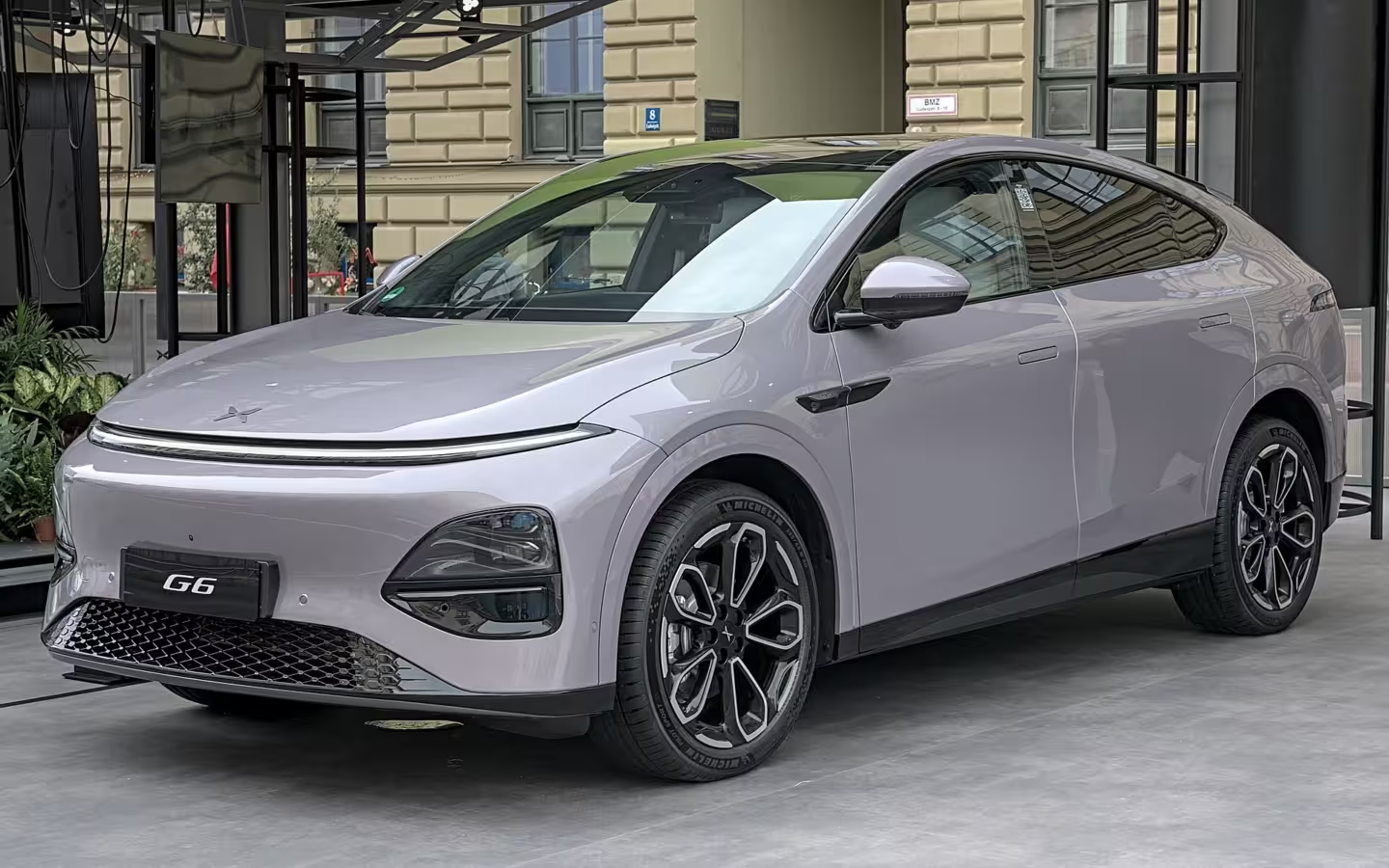
XPeng and Banma Intelligence unveiled a vehicle cockpit system designed to run a 30B-class AI model inside the car on 30 September at the 2026 Yunqi Conference, Gasgoo reported. The system combines XPeng’s Turing AI chip with Banma’s AutoOmni model, so core functions can operate without a network connection.
Key points
- XPeng rates each Turing chip at 750 TOPS of effective computing power.
- The partners say conversation, multimodal interaction and knowledge questions can run locally.
- News and weather remain cloud-assisted services.
AutoOmni puts core cockpit functions in the car
The partners describe the design as on-device first and cloud assisted. Banma’s AutoOmni model is intended to handle continuous, multi-turn conversation, perception and interaction across different kinds of input, offline knowledge questions and complex task planning within the vehicle, Pandaily reported. Cloud services would instead supply less frequently needed information, including news and weather.
That division determines which requests depend on reception. A locally processed question need not make a trip to a remote computer before an answer comes back. XPeng and Banma say the arrangement is intended to keep core cockpit functions responsive in tunnels and underground garages, where a signal can be weak or absent. They also say keeping processing in the vehicle helps in overseas markets where coverage is uneven or privacy rules require data to remain there.
Asking a question in a tunnel could still bring an answer if it fell within the offline knowledge function the partners describe. A follow-up could draw on the locally handled conversation, while a request for current weather would still depend on the cloud-assisted service. The difference would become apparent when the connection dropped.
Gasgoo reported that the proposed arrangement is also intended to reduce dependence on cloud connections and continuing operating costs. For a company putting the system into a vehicle, the distinction reaches beyond where answers are generated: the partners are offering the chip, the in-car operating system and the model together, rather than leaving those parts to be assembled separately.
XPeng pairs 30B-class AutoOmni with Turing
XPeng rates its self-developed Turing chip at 750 TOPS of effective computing power per chip, according to Gasgoo. TOPS expresses a rate of calculation; a model’s parameter count describes the collection of values it uses to produce an output. The two figures therefore describe different parts of the job: the model that must run and the processing capacity available to run it.
Size matters here because cockpit models running in the vehicle are mostly in the 4B or 7B parameter range, according to a Xinhua account of Banma’s conference forum reported by Pandaily. XPeng’s intelligent computing centre head, identified as Michael, said the joint system shows that a 30B-class model can run stably on an automotive-grade chip. That assessment is his account of the partners’ system, rather than a reported result from a production vehicle.
The Turing chip is designed for three XPeng product lines: AI cars, AI robots and flying cars. In the cockpit arrangement, XPeng supplies that computing foundation and Banma supplies the operating-system and model layers. The companies are presenting the combination to automakers as a package, with the vehicle handling frequent requests and remote services reserved for information that changes outside it.
Banma adds AutoOmni 2.0-23B-A3B
Banma also introduced AutoOmni 2.0-23B-A3B at the conference. It is a mixture-of-experts on-device model with about 3B active parameters, Pandaily reported. In this kind of model, only part of the model is active for a given task, so its active parameter count differs from the size indicated in its name.
Banma said its new model can perform everyday cockpit tasks on a par with cloud models tenfold larger. It also says it works with more than 60% of automakers whose on-device cockpit models have entered production. Both are Banma’s claims: the first concerns how its new model performs, while the second concerns the reach of its existing vehicle partnerships.
The joint XPeng-Banma package is intended for mid- to high-end vehicle models. Neither company has named a production model or launch date, Pandaily reported.


_IAA_2025_DSC_2057.jpg)