Elsevier pledged 4,000 complimentary AI-tool licences and an estimated €1m a year in funding and in-kind support to the European Commission’s AI in Science Enablers Initiative on 15 October, the company said.
Key points
- Elsevier says European researchers, healthcare professionals and students can apply for licences across four of its products.
- The estimated €1m annual commitment combines funding and in-kind support, according to the company.
- Elsevier also pledges at least three institutional collaborations and training for approximately 10 students and researchers each year.
Four Elsevier products receive 1,000 licences each
Elsevier says it will make available 1,000 licences each for LeapSpace, ClinicalKey AI, ClinicalKey Nursing AI and Complete Anatomy. The recipients it names are European researchers, healthcare professionals and students. The company directs people seeking complimentary access to an application portal on its website.
LeapSpace is Elsevier’s AI workspace for research tasks across a project, according to the company. Its allocation is intended for early-career and senior researchers. Elsevier also proposes a Europe-wide Challenge involving LeapSpace, to be developed with the Commission.
The clinical allocations address different users. Elsevier describes ClinicalKey AI as a decision-support tool that can connect through electronic health records and an application programming interface, bringing research evidence into clinical work. It says ClinicalKey Nursing AI is designed for nurses’ decisions at the point of care and for their professional development.
Complete Anatomy is the fourth product in the pledge. Elsevier describes it as a three-dimensional anatomy platform. Allocating the licences across these products puts research workspaces, clinical decision tools and anatomy education within the same initiative, with access offered to their respective research, healthcare and student users.
€1m annual pledge includes research partnerships
Elsevier says its estimated €1m a year comprises funding and in-kind support for research collaborations and AI training. The figure is the company’s stated annual commitment. Its product licences are described separately from that funding and in-kind allocation.
The company pledges at least three new collaborations each year with European research institutions. It says those projects will draw on its specialists in data science, ethics and software development, as well as access to its content and knowledge-discovery tools. That support forms part of Elsevier’s stated contribution to the partnerships.
Elsevier also says it will participate in AIRIS, a Horizon-funded project supporting the use of AI to generate hypotheses in biomedicine. A separate commitment is to establish a Centre on Hybrid Intelligence for Trustworthy Research with the University of Amsterdam and Vrije Universiteit Amsterdam.
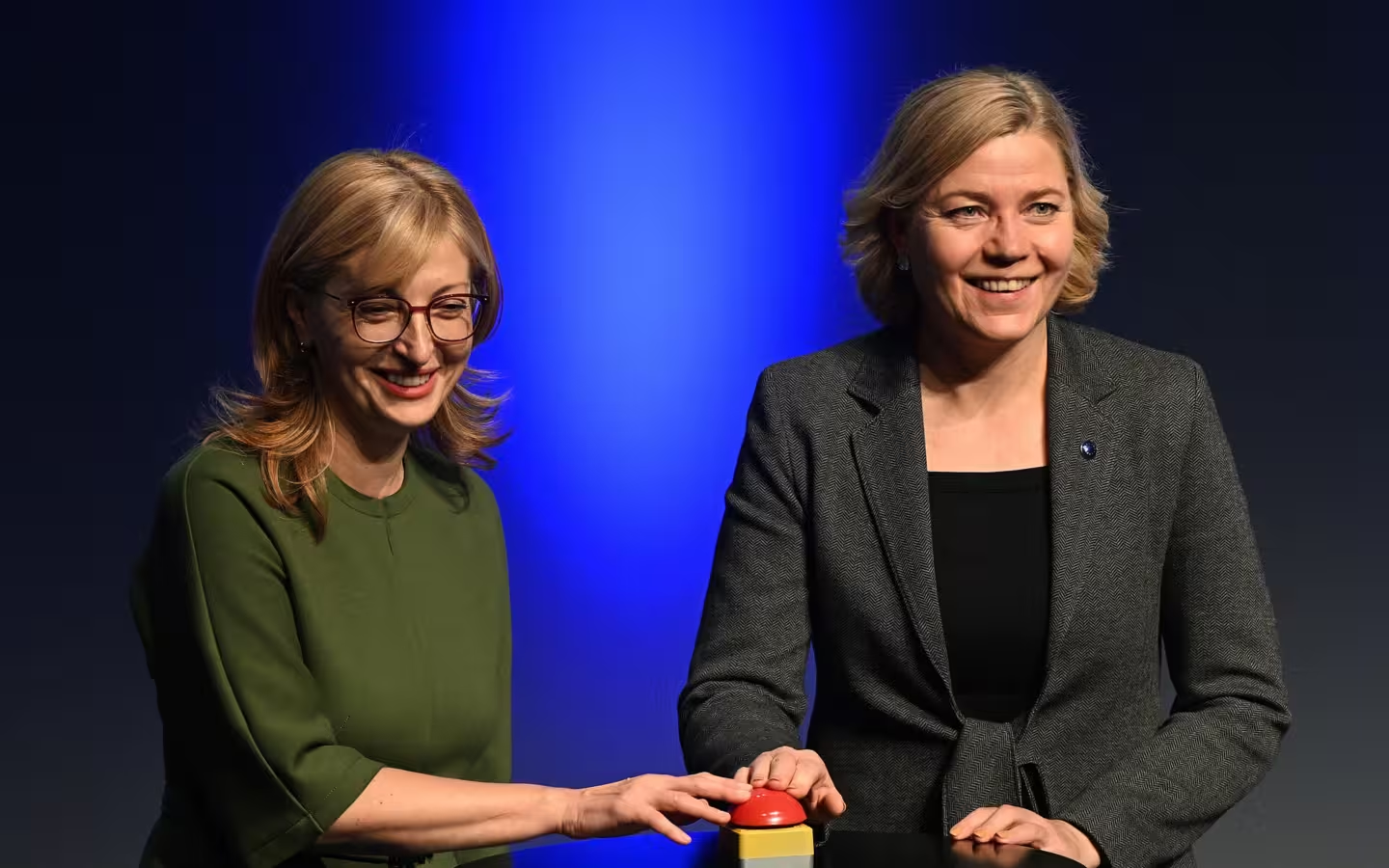
The pledge was announced at the AI in Science Summit in Dublin. Elsevier says the event brought together more than 1,000 people from research, technology, business and policy for the launch of the Commission’s initiative, which is intended to draw private-sector and philanthropic support towards European research.
Google has made a separate offer to European researchers: access to frontier models for up to 200 people and $3 million in compute credits, AI Affairs reported. Elsevier’s pledge centres on licences for its own products, together with institutional collaborations, funding and staff expertise.
Elsevier sets an annual AI training commitment
Kumsal Bayazit, Elsevier’s chief executive, described the pledge as combining product access with funded collaborations and training. Elsevier says it is part of RELX, a supplier of analytics drawn from information and decision-making tools for professional and corporate clients.
Elsevier says its training and career-development commitment covers approximately 10 PhD candidates, postdoctoral researchers and master’s students in AI each year. The company plans to provide those opportunities through programmes across its business.
.jpg)