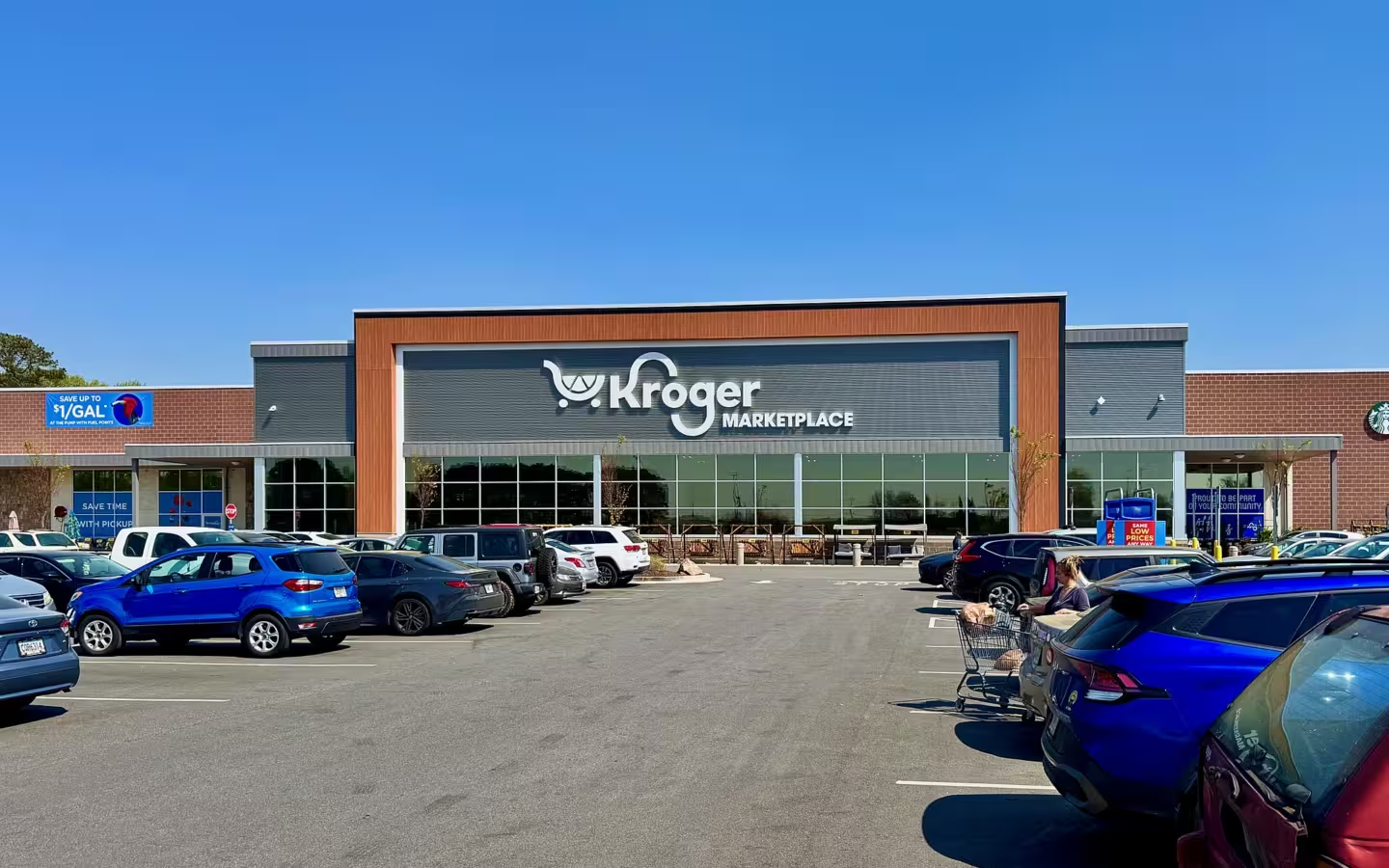
Kroger outlined a three-stage AI deployment strategy at GroceryShop 2026 on 22 September and said it is making AI literacy training and tools available to more than 400,000 associates, according to a company press release published by Blue Book.
Key points
- Kroger describes its deployment stages as assisted, augmented and autonomous.
- The company says it combines proprietary retail models with third-party frontier models.
- Its AI Shopping Assistant helps customers plan meals and assemble carts around budgets and dietary needs.
- Kroger is making AI training and tools available to more than 400,000 associates.
Cosset sets three stages for Kroger AI
Yael Cosset, Kroger’s executive vice president and chief digital officer, described assisted, augmented and autonomous uses of AI as separate stages of deployment. The level chosen for a task depends on its risk, how often it is repeated and the need for a person to exercise judgement, he said in the company’s release.
“The goal is not autonomy everywhere,” Cosset said. Kroger says its governance processes are designed to address privacy, security and responsible AI use, with human oversight forming part of those processes. Its approach leaves room for both tools that support a worker’s decision and agents that carry out parts of a workflow.
Cosset presented the programme as an extension of Kroger’s existing use of data science. He said the company has used forecasting to anticipate demand and customer information to offer relevant savings and help shoppers find products. Its newer AI investments are intended to bring business and operational information together so decisions can be made faster, he said.
Kroger combines loyalty data and outside models
Cosset tied Kroger’s AI work to its longstanding loyalty programme and years of customer and operational data, ESM Magazine reported. That history gives the retailer information about shopping patterns, while its operations provide information about product availability and fulfilment, according to the company’s release.
Kroger says its proprietary models cover demand forecasting, operational optimisation, personalisation and generative AI. It combines those models with third-party frontier models, supported by shared data and services. The company also lists agentic capabilities and governance controls as parts of the infrastructure it is using across its AI work.
The company says that mix helps it coordinate agents across workflows and manage their performance. Kroger serves more than 11 million customers daily through its retail food stores and eCommerce operations, according to the release. Its stated uses of AI span both customer shopping and the work carried out inside those operations.
AI Shopping Assistant builds weekly carts
Kroger says its AI Shopping Assistant helps customers plan meals for the week, find recipes and assemble a cart around their budgets, dietary needs and preferences. Customers can use conversational search to look for products and organise meals. The assistant is among the customer-facing applications the company says are in use.
Cosset also described a more extensive role for agents in grocery shopping. In the model he set out, a customer could provide goals and preferences rather than prepare a shopping list, and agents could help plan meals, select goods and complete purchases and fulfilment. Kroger presented that managed-service model as a future possibility.
More than 400,000 associates offered AI tools
Kroger is providing AI literacy instruction and tools to more than 400,000 associates throughout its operations. Cosset said employees need to learn where the technology is useful and how to use it responsibly, as well as reconsider how work is organised around it.
For frontline teams, Kroger says it is working to improve agents that can sort through dozens of daily notifications and tasks and bring the most important information forward. Cosset said the company wants AI to give associates more time and information for their interactions with customers and colleagues.