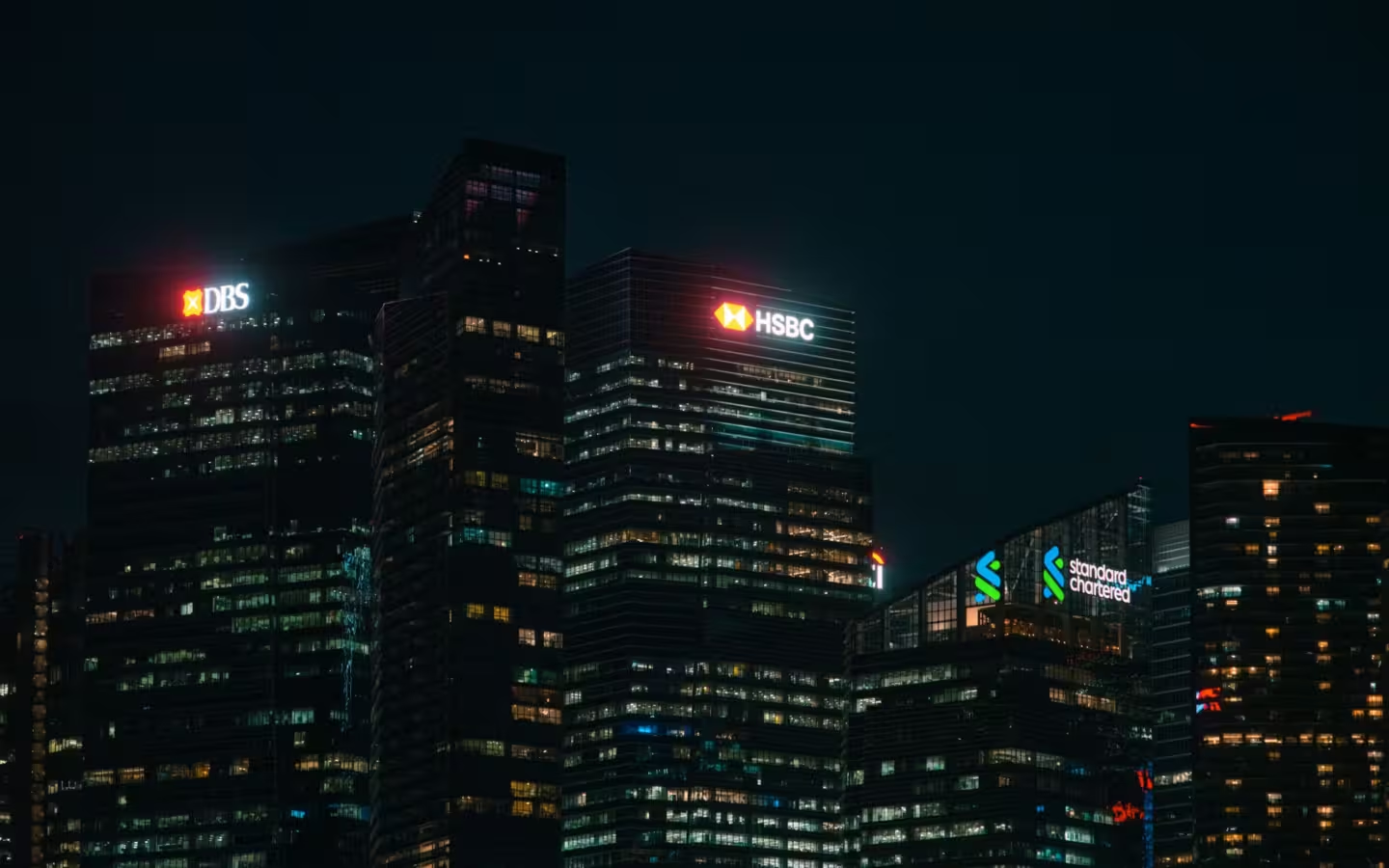
OpenAI and Anthropic are each taking additional office space in Singapore’s central business district, adding to upward pressure on premium rents in a market where vacancy rates have hovered near historic lows, according to the Financial Times.
Key points
- OpenAI and Anthropic are expanding Singapore office footprints in response to government overtures
- Combined demand from AI firms is pushing up premium office rents in a supply-constrained market
- Singapore’s premium office vacancy rate remains near historic lows, limiting space for new entrants
- Expansions signal long-term commercial bets on Singapore’s National AI Strategy
What was agreed and on what terms
The Financial Times reports that both companies are expanding in direct response to overtures from the Singapore government to establish AI operations locally. Neither company has disclosed the square footage, lease terms, or rental rates for the additional space. OpenAI opened its first Singapore office in late 2024, and Anthropic followed with an initial presence earlier this year. The new commitments represent second or third tranches of space for each firm, suggesting the initial landings were treated as beachheads rather than final footprints.
What it costs and who pays
Premium Grade A office rents in Singapore’s Raffles Place and Marina Bay districts have risen roughly 15 percent year on year, according to CBRE data cited in local property reports, with asking rates now exceeding SGD 15 per square foot per month. The AI firms’ expansions come on top of existing demand from financial services, legal, and established technology tenants. In a market where new supply is limited to a handful of completions through 2026, each large lease renewal or expansion removes inventory from an already thin pipeline. The government’s Economic Development Board has offered incentives including talent relocation support and compute infrastructure partnerships, though the Financial Times report does not specify whether rental subsidies form part of the current packages.
How it compares with the closest comparable
Google and Meta have maintained large Singapore campuses for years, but their space needs have stabilised as headcount growth slowed. Microsoft’s recent lease expansions were tied to cloud region capacity rather than pure AI research. The foundation model providers differ in that their Singapore teams are being built from a near-standing start, with hiring targets that imply continued space absorption. A comparable dynamic played out in London’s King’s Cross and San Francisco’s Mission Bay, where early AI leases triggered rent inflections that persisted for 18 to 24 months before new supply responded.
Who is exposed if it disappoints
Landlords with large upcoming expiries in premium towers face concentration risk if AI hiring slows. CapitaLand Integrated Commercial Trust and Frasers Property hold significant CBD exposure. For the Singapore government, the risk is reputational: the National AI Strategy 2.0 targets 15,000 AI practitioners by 2026, and visible anchor tenants are part of the evidence base. If OpenAI or Anthropic were to sublet or downsize — as some West Coast AI firms have done in their home markets — the signal to other prospective entrants would be negative. The companies themselves carry minimal downside. Lease commitments are typically three to five years with break options, and the incremental cost is small relative to compute budgets.
What has to become true for the valuation to make sense
Three conditions must hold. First, Singapore’s AI talent pipeline — dependent on university output, Employment Pass approvals, and retention of foreign researchers — must scale faster than the current 2,000 to 3,000 net additions per year. Second, the regional enterprise demand that justifies a Singapore hub must materialise in signed contracts, not pilots. The Financial Times report notes government overtures but does not cite local customer wins. Third, the data centre capacity needed to run inference workloads locally must come online. Current sovereign cloud builds are targeting 2026 to 2027 operational dates. The next test is the Urban Redevelopment Authority’s first quarter 2026 office stock release, which will show whether the AI-driven absorption has narrowed vacancy below 2 percent in the core.