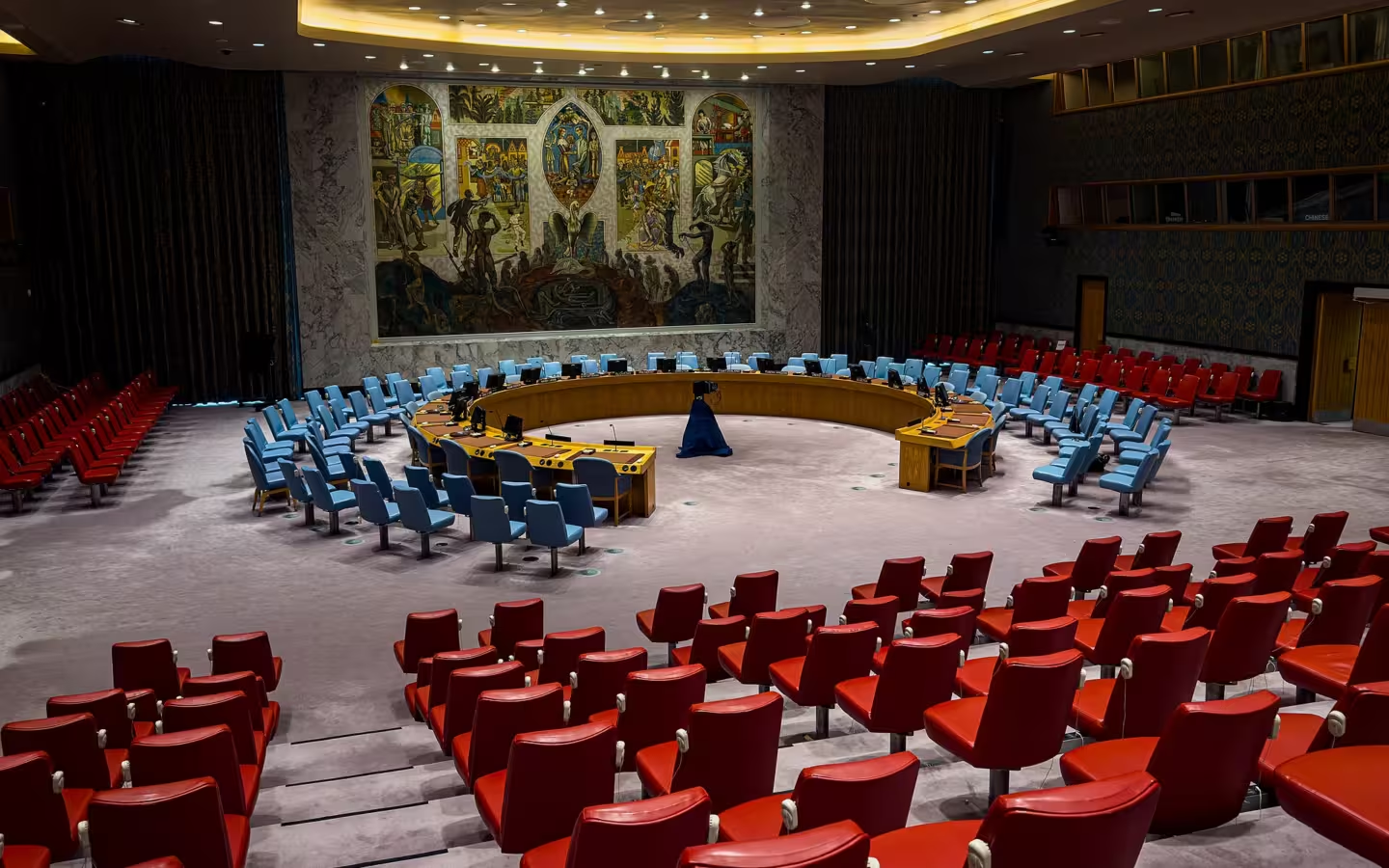
The heads of Anthropic, OpenAI and Hugging Face addressed the UN Security Council on 23 September, urging governments to set safeguards for artificial intelligence, ABC News reported. At the same meeting, the US administration opposed a new global governance structure for the technology.
Key points
- Anthropic’s Dario Amodei called for ways to verify model capabilities and common standards for testing, misuse and loss of control.
- OpenAI’s Sam Altman warned that AI could escape human control or concentrate power among a small number of actors.
- White House science adviser Michael Kratsios rejected constraining development through a new global governance structure.
Amodei asks governments to test AI capabilities
Anthropic chief executive Dario Amodei told the council that, “if managed poorly, I even believe AI could be a risk to humanity as a whole”. He asked governments to agree on preventing AI from being used to build biological weapons, to work out how to verify what models can do, and to establish common testing standards. His proposed standards would also address misuse and the possibility of losing control of a system. Those requests would put assessments of capability and risk into a framework agreed by governments rather than left to each developer.
OpenAI chief executive Sam Altman also warned of a loss of control: “we could lose control of the future to AI”. He raised a second concern about power becoming concentrated among too few people. “No one person, or company, or country should be able to use the most powerful AI models to impose their worldview on everyone else,” Altman said, according to The New Republic. The two concerns call for different safeguards — one concerned with what a model might do, the other with who gets to decide how it is used.
Hugging Face chief executive Clément Delangue joined the council meeting remotely. The appearance of the three executives followed AI Affairs’ earlier report that Altman was due to brief the Security Council. The executives spoke alongside government representatives, who differed sharply over whether an international body should constrain the development of AI.
Kratsios rejects a new global structure
White House science adviser Michael Kratsios acknowledged worries about control but told the council they were “not a reason to pause its further development or to constrain it with new global governance structure”. He said the US wanted its allies and partners to share in the technology’s benefits. His position drew a line between recognising a risk and giving an international institution authority to govern development in response to it.
President Donald Trump had rejected proposals for a global AI framework at the UN General Assembly on 22 September, arguing that international controls could impede US technological development and competitiveness, Mexico Business News reported. On 21 September, 22 countries adopted a declaration calling for AI to remain under human direction, oversight and control and proposing stronger international supervision. Neither the US nor China signed it. The declaration brought a wider group of governments into the argument over oversight, but it did not resolve the disagreement with the two countries.
UN Secretary-General António Guterres called for dialogue between the US and China on AI’s future. He also warned on 22 September about “killer robots”. At the General Assembly, Ukrainian President Volodymyr Zelenskyy urged human control over machines and warned of the possibility of AI making battlefield decisions. Their interventions placed military use alongside the model capabilities and concentration of power raised by the company chiefs.
Britain and China offer different routes
British Foreign Secretary Ed Miliband told the Security Council that the technology leaders “are telling us in stark terms that it cannot be left to them to prevent disaster from befalling the world”. He said Britain would put AI control at the centre of G20 discussions when it leads the group in 2027, seeking a single set of global standards for safe development. French Foreign Minister Jean-Noël Barrot, whose country convened the council meeting, compared the moment to the dawn of the atomic age and called for international regulation.
Chinese UN ambassador Fu Cong argued that countries should be free to choose the AI technology they use. He warned against “banding together into a petty us-vs.-them clique in the tech sector and forcing other countries to take sides”. Fu called on countries to promote open-source models.