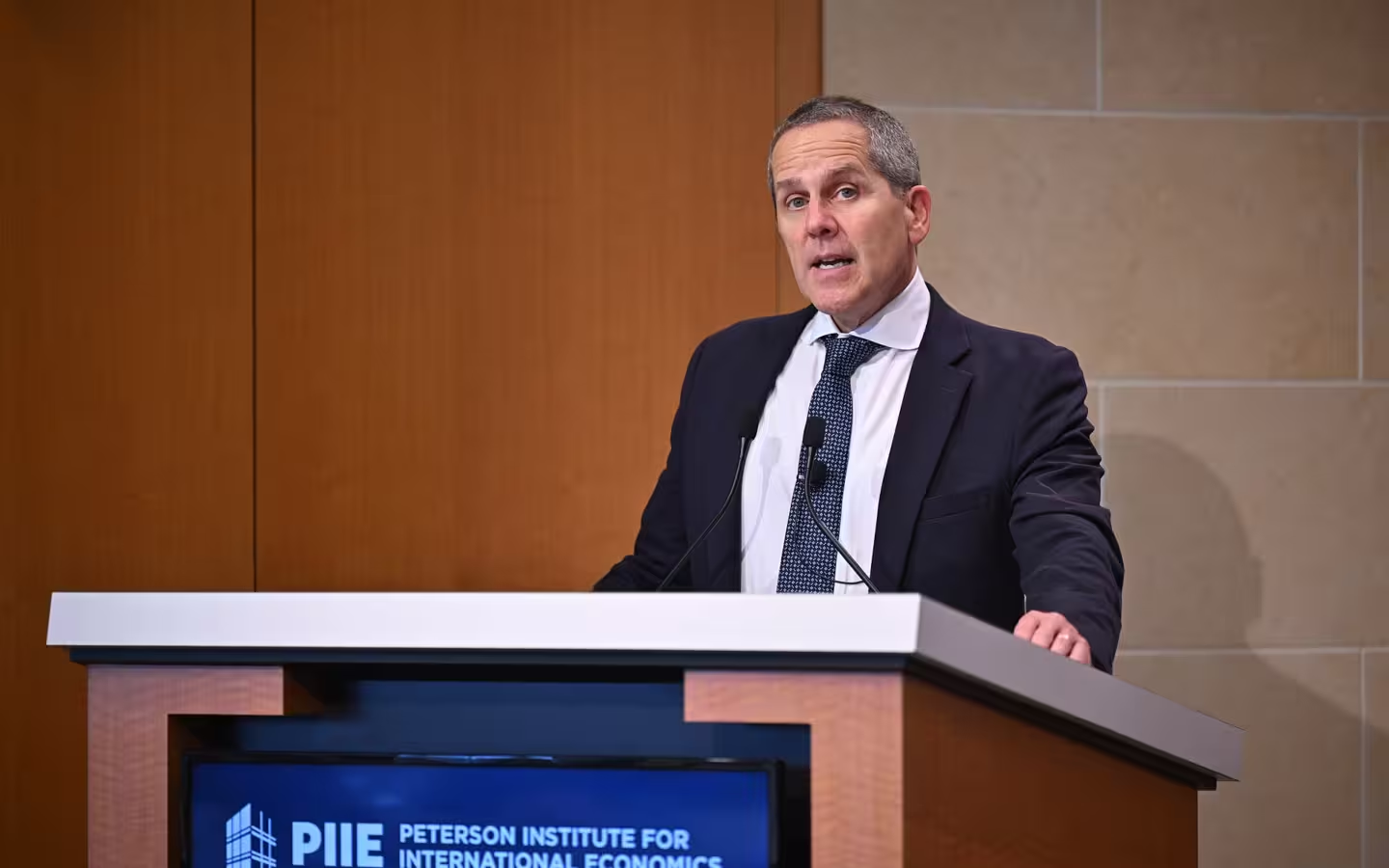
Federal Reserve Governor Michael Barr warned on 16 November that AI agents could automatically move customer deposits and accelerate bank runs, leaving banks and regulators less time to respond. He delivered the warning at the Association for Computing Machinery’s seventh annual International Conference on Artificial Intelligence in Finance in Milan, The Defiant reported. Barr said he was speaking for himself, rather than necessarily for his colleagues on the Federal Reserve Board or its rate-setting committee.
Key points
- Barr warned that agents moving deposits in response to financial signals could compress the time available to manage a run.
- He said major banks were detecting agents attempting actions in retail accounts without reliable verification of authority or consent.
- Barr urged authentication, consent checks for specific actions and technical limits on agents. He announced no new rule or examination programme.
- He also discussed AI infrastructure financing and the possibility of common model failures spreading through financial markets.
Barr’s warning about deposit transfers
An agent acting for a depositor could detect a change in interest rates or a signal of financial stress and move money without waiting for its owner to make each transfer. Barr warned that such behaviour could speed a collective withdrawal beyond the pace banks’ liquidity management and regulators’ interventions were designed to handle. In remarks prepared for the Milan conference, he described runs unfolding “in minutes”, Bloomberg Law reported.
Barr described runs unfolding “in seconds”, Bloomberg reported. The two accounts give different timescales for the warning.
Major banks are already detecting agents trying to take unauthorised actions in retail accounts, Barr said. He also said banks could not verify whether some attempted actions were authentic, had the customer’s consent or matched the customer’s instructions. His proposed response was strict authentication, checks that consent covers the particular action an agent seeks to take, and technical limits on what agents can do.
Those controls would put an authorisation check at the point where an automated instruction reaches an account, rather than rely on the customer’s original decision to use an agent. Barr called for tighter controls and further scrutiny, without introducing a rule or examination programme, The Defiant reported.
Shared models and retail lending
Barr’s speech, titled “Some Potential Financial Stability Implications of Artificial Intelligence”, also examined what could happen if financial firms relied on similar models and data. He said that, to his understanding, generative AI was not yet used for autonomous trading on a large scale. Wider use of similar systems could synchronise trades, spread a common flaw across firms or allow manipulated news and quotes to mislead many systems at once, he warned.
For lenders, Barr urged explainable AI, continuous monitoring for unfair outcomes, detailed records of model validation and accessible ways for borrowers to dispute decisions. He said alternative data could widen access to credit but could also act as a proxy for protected characteristics, including race or national origin. His concerns span two uses of automation: agents that can act quickly on a customer’s account, and models whose decisions may be difficult for a customer to contest.
Barr also described AI’s opposing effects on cybersecurity. He said it could help defenders find and repair vulnerabilities, while giving attackers ways to exploit shared service providers and weaknesses that had previously been too difficult to attack. He argued that expensive advanced systems could concentrate market power among large firms even as AI tools widened access to trading technology.
The Fed’s November financing estimates
Barr connected the risks from automated decisions to the Federal Reserve’s November Financial Stability Report, which examined financing for AI infrastructure. He put potential maximum nominal obligations from AI-related leases, guarantees and long-term contracts at more than $3 trillion. He said such arrangements could make it harder for investors to locate risk and worsen a selloff if sentiment turned.
The report put the largest US bank holding companies’ exposure at close to $1 trillion across large technology firms, data centre developers, entities funding advanced computing, funds involved in non-bank lending and utility companies. It said those exposures were already assessed in annual supervisory stress tests. Barr said high capital levels at the largest banks offered protection, although their exposure to counterparties with large AI positions warranted monitoring.
The financing discussion follows a Federal Reserve survey in which AI became the most-cited financial stability risk. Barr said he was less concerned about direct losses from AI infrastructure financing because debt backing the expansion remained limited. He warned instead that a sharp reversal could force leveraged hedge funds to sell assets, feeding further sales. For smaller AI companies funded by cloud suppliers and chipmakers, he said the economic test was whether revenue from paying customers would eventually replace that supplier funding.