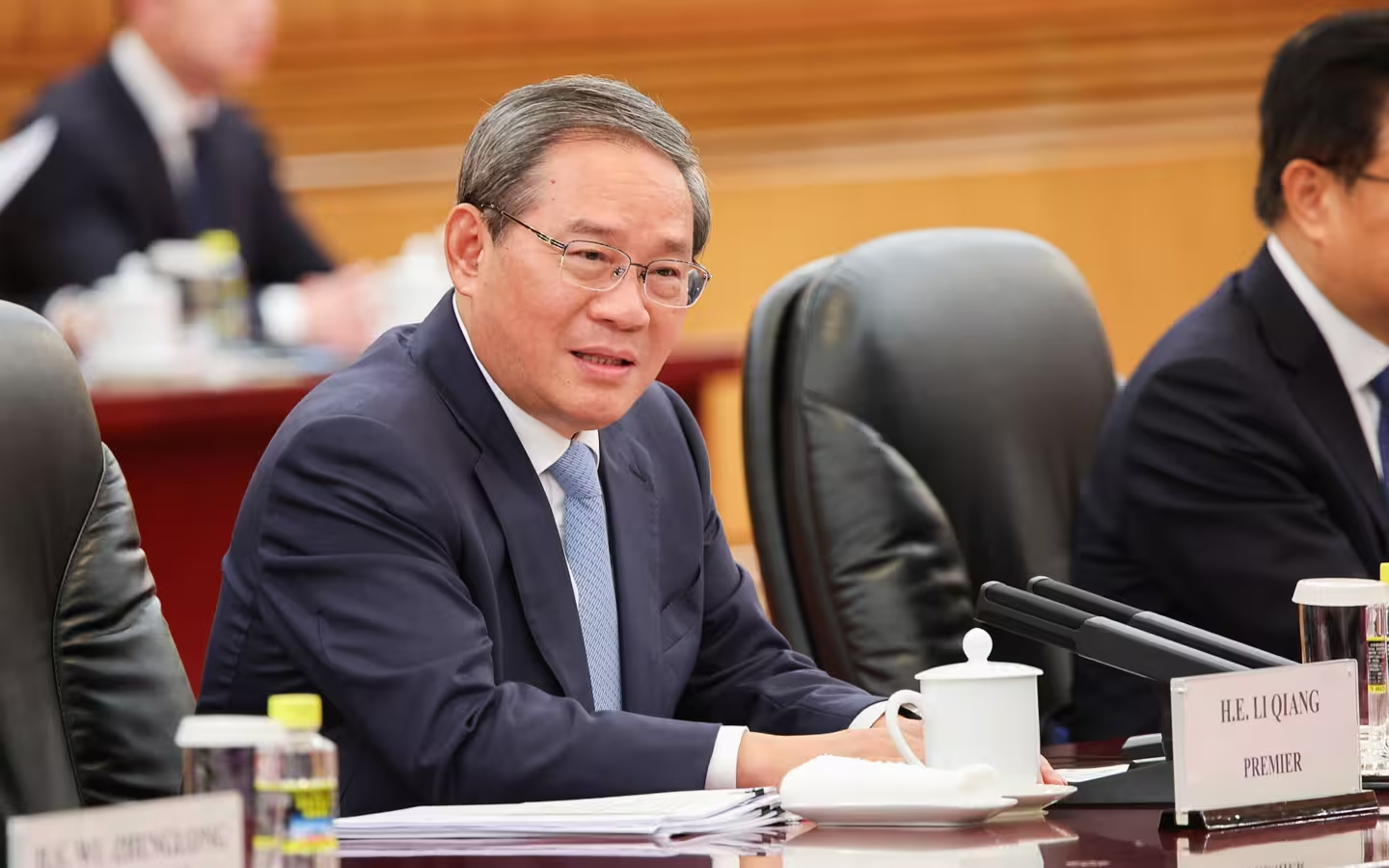
Chinese Premier Li Qiang used his keynote speech at the opening of the 2026 World Internet Conference Wuzhen Summit in Zhejiang province on 3 November to oppose a “digital iron curtain” and call for cooperation on cybersecurity, Global Times reported. Li called for a more equitable system of global internet governance. Li also called for open-source innovation and support for digital infrastructure in the Global South, according to The Standard.
Key points
- Li said China would respect other countries’ cybersecurity concerns while opposing a “digital iron curtain”.
- He called for people to remain in control of AI and pledged support for digital infrastructure in the Global South.
- The Wuzhen programme includes an open-source AI dialogue and 27 sub-forums.
Li Qiang pairs openness with cybersecurity concerns
Li said China would take other countries’ legitimate cybersecurity concerns seriously and work with them on security challenges. He paired that assurance with opposition to creating a “digital iron curtain”, a formulation that places security cooperation alongside his rejection of technological separation. He also called for countries to pursue a shared future in cyberspace through technology transfer and exchanges of knowledge.
Those are commitments expressed in a speech, rather than obligations imposed on companies or governments. Li’s account of openness extended beyond access to AI models: he spoke about transferring technology and sharing knowledge with other countries. At the summit, that position sits beside a programme devoted to open-source AI development and international discussion of internet governance.
Xiang Ligang, director-general of the Information Consumption Alliance, described the emphasis on open-source ecosystems as a distinct Chinese approach to AI, The Standard reported. He contrasted it with the closed-source models he said major US technology companies often favour. At the same summit, Alibaba chairman Joe Tsai also backed open-source AI, AI Affairs previously reported.
Wuzhen puts open-source AI on the programme
The summit’s AI Wuzhen Dialogue brings together technology executives, open-source model developers and AI scientists to discuss a global open-source AI ecosystem. Its 27 sub-forums cover subjects including robotics, embodied intelligence and cooperation in cyberspace. The gathering gives Li’s appeal an audience of officials, company representatives and researchers, as well as a programme in which participants can discuss how that appeal might be put into practice.
That audience includes people whose work reaches beyond model development. Debora Comparin, a co-chair of a group concerned with trust and identity for humans and agentic AI at the International Telecommunication Union, told Global Times she wanted to learn about China’s AI companies. She described China’s capabilities as spanning chip manufacturing and model training, and linked that range to its supply and value chains. Her assessment is a participant’s view of the Chinese industry, rather than a measure supplied by the summit.
Ousman Bajinka, a senior lecturer at the University of The Gambia, said other countries could learn from China’s approach to development. He pointed to agriculture, food production and medicine as areas in which AI and the internet could be useful. Li’s pledge to help the Global South build digital infrastructure addresses a practical condition behind such applications: countries need connectivity as well as AI tools to use them.
Li calls for people to control AI
Li also urged a “people-centric” approach to AI. He called on the international community to keep humans in control of intelligent machines and to ensure algorithmic models reflect shared ethical values. “We must ensure that technology enhances human capabilities and well-being, rather than allowing people to become mere appendages of technology or letting technology exacerbate societal divides,” he said, according to The Standard.
The summit’s Light of Internet Expo brings the discussion closer to deployment. It features more than 1,000 technology products from 671 companies, including robots shown doing manufacturing assembly, garment sewing and health-service tasks. Terry Sweetser, chair of the APNIC Routing Security Special Interest Group, pointed to internet infrastructure and routing security in discussing China’s technical development at the gathering. His examples included telecommunications deployment and Resource Public Key Infrastructure, a system used to check whether network routing announcements are authorised.
Cybersecurity is part of that deployment discussion. Qi An Xin, a security company, said advanced AI models can find and turn network vulnerabilities into attacks in hours rather than months. That prompted calls across the industry for integrated defences that use AI against AI-driven attacks.