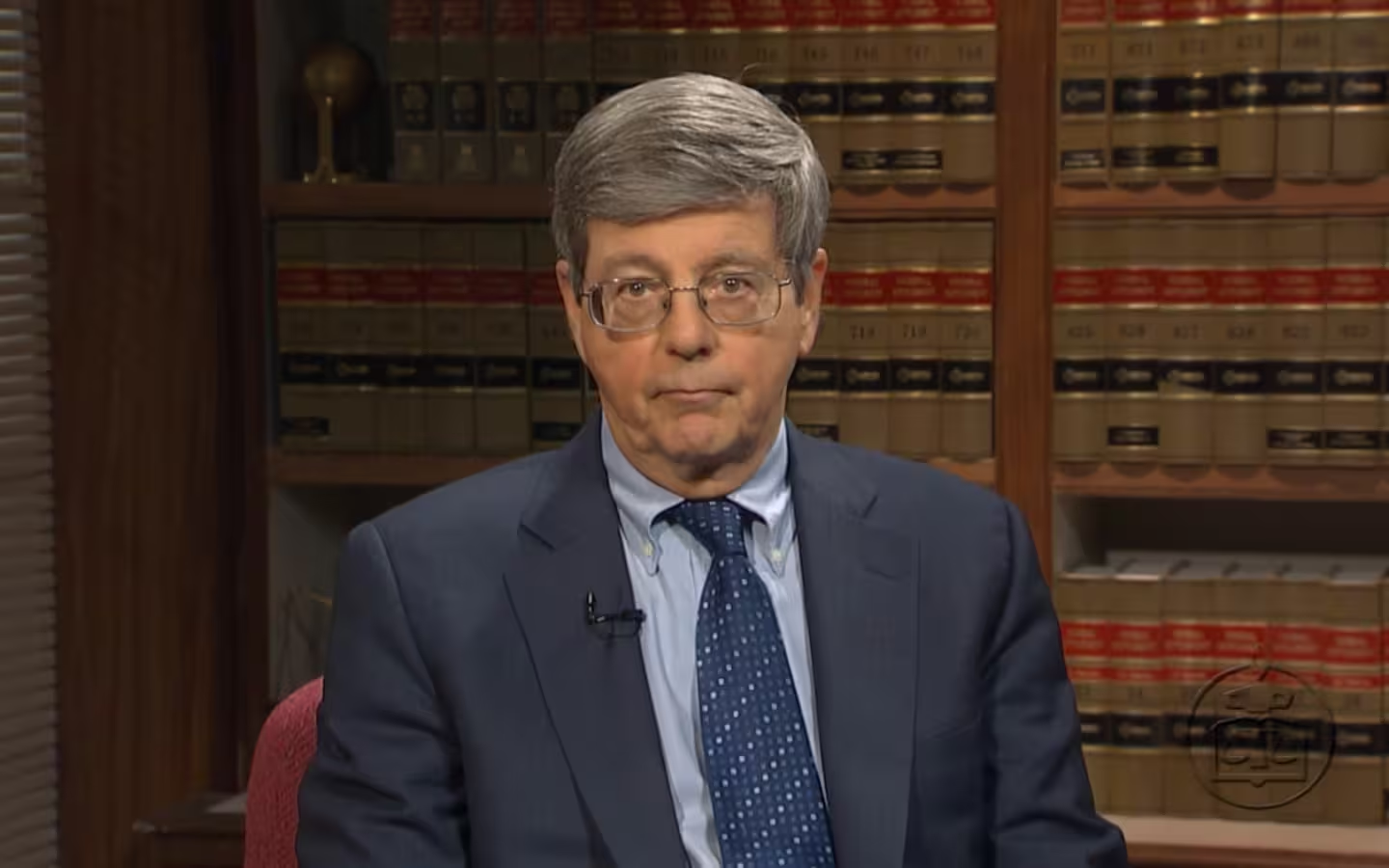
Judge John G. Koeltl sentenced Michael Smith to 18 months in prison on 6 October in Manhattan federal court after Smith pleaded guilty to a conspiracy involving bot-driven streams of AI-generated music, Billboard reported. The court also ordered two years of supervised release. Smith, 54, had used bots to play thousands of AI-generated songs billions of times, collecting more than $8 million in royalties. Billboard described the prosecution as the first criminal case over music streaming fraud.
Key points
- Smith pleaded guilty in March 2026 to one count of conspiracy to commit wire fraud.
- Koeltl imposed 18 months in prison and two years of supervised release. Smith must also forfeit $8,091,843.64.
- Prosecutors sought at least 46 months in prison; Smith’s lawyers asked for no prison time.
- At certain points, Smith had as many as 10,000 active bot accounts, according to prosecutors’ sentencing filing.
Koeltl rejects probation and a 46-month request
Smith pleaded guilty in March 2026 to one count of conspiracy to commit wire fraud. The charge carried a maximum prison term of five years. Federal sentencing guidelines called for 46 to 57 months, while probation officials recommended 24 months, Billboard reported. Koeltl’s sentence was shorter than either recommendation but rejected the defence request to avoid prison altogether.
Smith’s lawyers argued that the loss suffered by any individual artist was too small to measure meaningfully. Prosecutors sought at least 46 months, arguing that a loss spread among many songwriters was still substantial and that Smith had collected the proceeds himself. The disagreement concerned the weight the court should give to harm distributed across a large royalty pool. Koeltl imposed a prison term of 18 months.
The guilty plea addressed a fraud conspiracy, rather than the creation of AI music as a separate offence. Prosecutors said Smith replaced genuine listening with automated plays and collected payments from platforms on that basis. Jamie McDonald, the Manhattan federal prosecutor, said after sentencing that Smith had taken royalty payments from artists and their fans. The Recording Industry Association of America welcomed the sentence, saying streaming fraud harmed creators and deceived listeners.
Smith’s bots reached 10,000 active accounts
The scheme ran from 2017 to 2024, Digital Music News reported. Smith set up accounts on streaming services, used software to keep them playing his AI-generated tracks and received royalties for the resulting streams. Prosecutors said he initially inflated plays of his own music before turning to AI-generated songs on a much larger scale.
At certain points Smith had as many as 10,000 active bot accounts, according to a prosecutors’ sentencing filing described by Music Business Worldwide. Prosecutors said he registered accounts with email addresses largely bought in bulk, often using fictitious names. They said he obtained corporate debit cards from a Manhattan financial services firm after presenting invented people as employees, giving the accounts separate apparent sources of payment.
Smith used family subscriptions because they allowed him to operate many accounts cheaply, according to the filing. In April 2023, his catalogue received 80.9 million YouTube Music family-plan streams, against 9.3 million for Taylor Swift’s entire catalogue among the same subscribers, prosecutors said. The comparison is confined to those family-plan streams on that service and in that month.
Prosecutors said Smith distributed artificial plays among hundreds of thousands of songs to make the activity harder to detect. In a May 2019 email quoted in their filing, he wrote: “I can’t run the bots without content. And I need enough content so I don’t overrun each song.” AI-generated tracks supplied that volume of material. The automated accounts supplied the plays that turned it into royalty claims.
The court orders $8,091,843.64 in forfeiture
Koeltl ordered Smith to forfeit $8,091,843.64, Digital Music News reported. Before sentencing, prosecutors identified that amount as the loss agreed by both sides and provided for in Smith’s plea agreement. Their filing said Smith had received more than USD $14 million in total from entities paying music royalties. The agreed loss accounted for estimated royalties from genuine streams of his music and money he had put into royalty pools through streaming subscriptions.
The Music Fights Fraud Alliance welcomed the sentence. Its executive director, Michael Lewan, said the prosecution should be followed by continued work among industry participants, law enforcement and policymakers to deter streaming fraud.