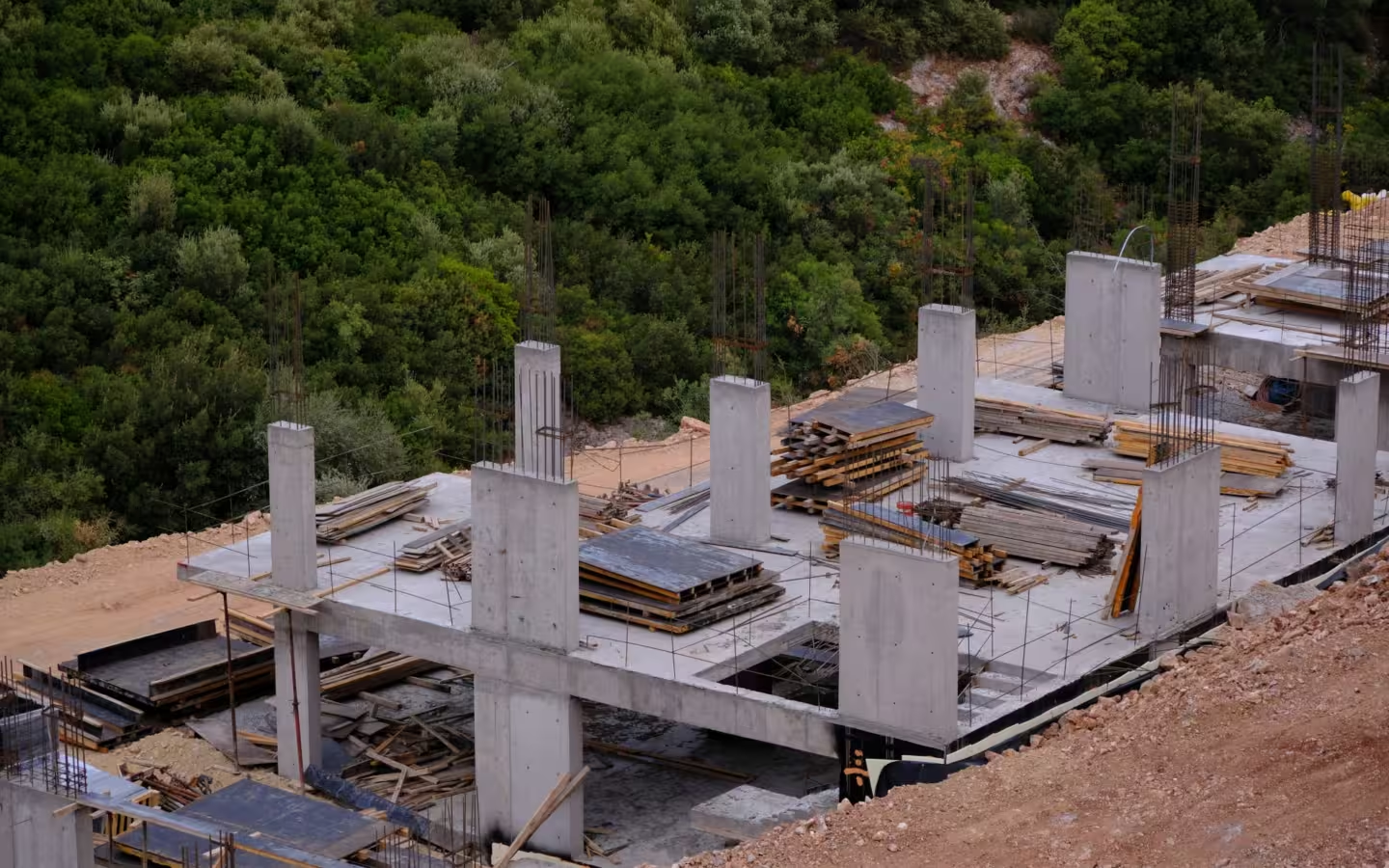
The Finnish Supervisory Agency (LVV) ordered Tuike Finland on 6 October to halt preparatory work that would significantly alter the environment at two planned Google data centre sites in Muhos and Kajaani, the BBC reported. The agency said work at one site had gone ahead without a mandatory environmental impact assessment. Its order applies to preparations at both sites, where assessment procedures remain unfinished.
Key points
- Tuike Finland must stop the specified work immediately and no later than 23 October.
- Planning, measurements and work with limited, easily reversible environmental effects may continue.
- LVV could pursue administrative enforcement, including a conditional fine, if Tuike Finland fails to comply.
- Tuike Finland must give LVV a written response by 14 October.
LVV draws a line around site preparation
The instruction covers tree clearance, excavation, blasting, crushing, removal of soil, drainage work and the construction of roads and storage areas, Helsinki Times reported. Tuike Finland must stop those activities immediately, with 23 October as the latest date for doing so. Planning, measurements and soil surveys can continue, as can work with limited environmental effects that is easy to reverse. The boundary concerns what happens on the land while the assessments are still being carried out.
LVV said the investigations available to it indicated that both sites had already changed. Tommi Muilu, the agency’s head of environment, described the removal of trees and topsoil, the building of site roads and storage areas, and alterations to ditches. These are the physical preparations the agency is seeking to stop while the projects remain subject to environmental assessment.
LVV said environmental assessments are meant to examine substantial impacts ahead of project choices and extensive site preparation. In the agency’s view, substantial changes made beforehand could restrict consideration of alternative approaches and ways to reduce environmental harm. The assessment procedures for Muhos and Kajaani are expected to conclude during 2026, Helsinki Times reported. The halt therefore applies during a period in which the agency says the environmental consequences of the proposed projects are still being examined.
More than 300 hectares at Muhos
The Finnish Association for Nature Conservation said more than 300 hectares of forest had been cleared at Leppiniemi, the planned Muhos site, while the assessment procedure was incomplete. It argued that a permanent change of land use on that scale should have been assessed first, and also raised concerns about work at Google’s Otanmäki project in Kajaani. Its objections preceded LVV’s instruction to Tuike Finland.
Google told the BBC it had “fallen short of our own high standards in this instance” and would follow the agency’s guidance. The company said it had acted in good faith under the Forestry Act, conducted nature surveys and taken steps to protect areas it considered environmentally valuable. Those are Google’s account of its preparations. LVV’s instruction addresses whether work with significant environmental effects should continue before the assessment procedures end.
Google also said its landscaping and biodiversity plans include planting trees across 130 hectares at Muhos. The company’s undertaking to follow LVV’s guidance means administrative enforcement is not required at this stage, Helsinki Times reported. If Tuike Finland fails to comply, LVV said it would consider proceedings under environmental assessment legislation or other applicable laws. Those proceedings could include a conditional fine.
Google’s €13 billion Finland programme
The two sites belong to a wider investment programme Google announced in September. The company said it would spend at least €13 billion in Finland during 2027 and 2028, with new data centres planned in Muhos, Kajaani and Vaala and investment in its existing Hamina facility. Google described the programme as its largest single investment in Europe. It said the infrastructure would help meet demand for Search, Maps and its Gemini AI assistant.
Google projected that construction during 2027 and 2028 would support more than 37,000 jobs and contribute an average of €3.6 billion a year to Finland’s economy. As part of the expansion, it signed a 22-year agreement with Finnish energy company Fortum to purchase power covering up to half the capacity of the Loviisa nuclear plant. Fortum said the agreement would help support the plant’s continued operation until 2050.
The immediate requirement falls on Tuike Finland, the company behind Google’s data centre projects. Google has said it will comply with LVV’s instruction. Tuike Finland must submit a written response to the agency by 14 October, stating how it intends to proceed and whether it will follow the request.