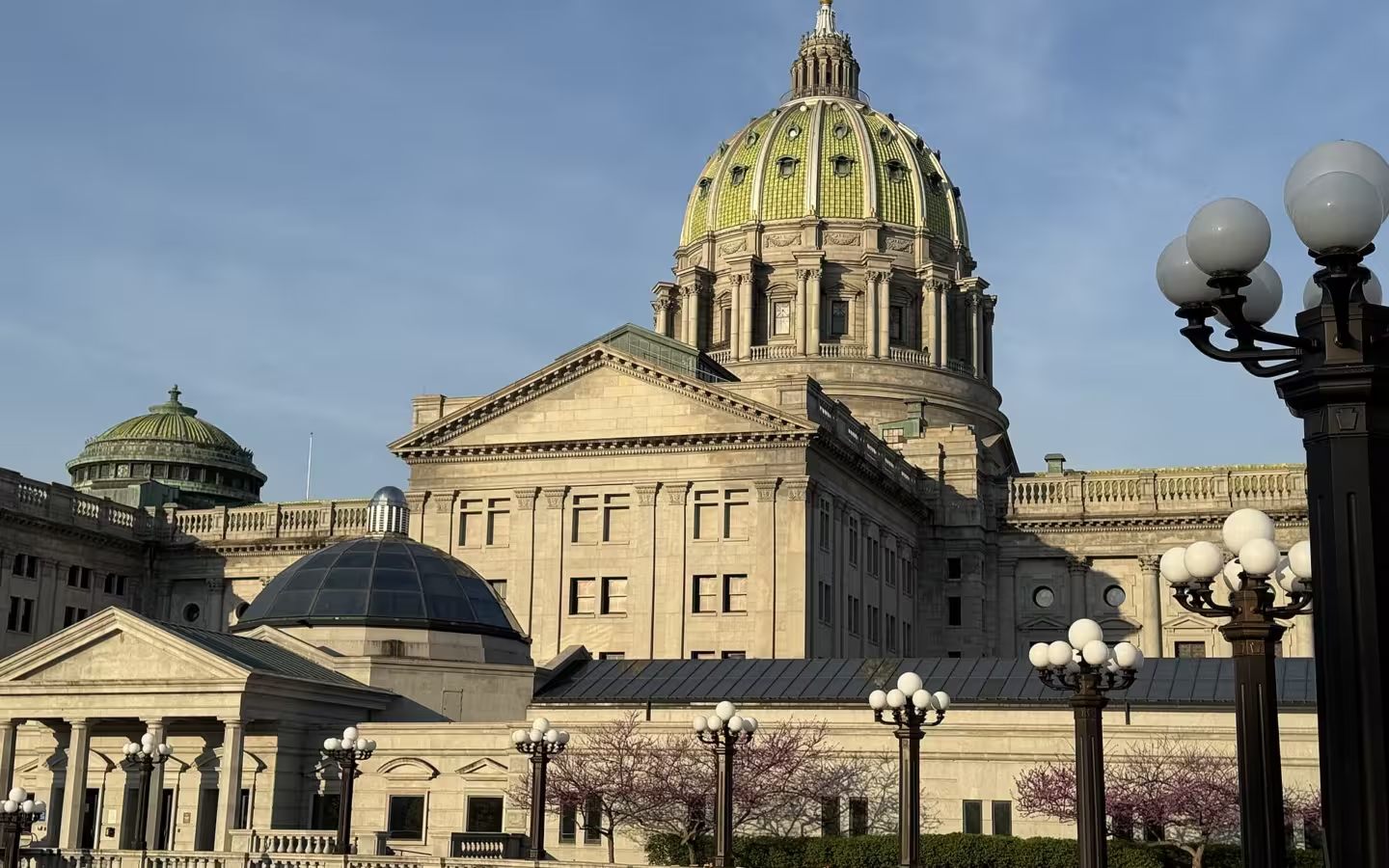
Pennsylvania Governor Josh Shapiro signed Senate Bill 806, the Artificial Intelligence Deceptive Advertising Act, on 22 October. The measure requires advertisers to disclose certain uses of AI-generated content in ads for goods or services, City & State Pennsylvania reported. Shapiro signed it as part of a group of 58 bills passed after votes in the state’s General Assembly.
Key points
- The duty depends on whether synthetic content creates a false consumer perception of the advertised goods or services.
- A required disclosure must accompany the content when it first appears and use the same medium.
- Reporting differs on whether text-only ads are covered.
- Only the attorney general and district attorneys can enforce the law.
SB 806 turns on consumer perception
The disclosure duty applies when an advertiser uses synthetic content that has been “significantly modified or generated by artificial intelligence” in a way that “creates a false consumer perception about the nature, origin or authenticity of the goods or services being advertised”, according to an analysis published by Loeb. That condition matters: the law does not describe every use of AI in an advertisement as a reason to label it.
Where the duty applies, the advertiser must say the ad “contains content that was modified or generated using artificial intelligence”. The notice must be clear and conspicuous, appear when the content is first presented and use the same medium. If the technology permits, the notice must stay in place indefinitely or be removable only with exceptional effort. Those requirements attach to the advertisement as presented to its audience, rather than to a separate account of how the advertiser made it.
State Senator Nick Pisciottano, a Democrat who represents Allegheny County, sponsored the bill, Beaver County Radio reported. Pisciottano described a broad duty to label an AI-generated online advertisement. On the Senate floor, he said Pennsylvanians “deserve to know whether the ad they are hearing or viewing was created by a person or generated by AI”. A co-sponsor described the measure more narrowly, as addressing AI content that makes a product “appear better than it is”.
The competing descriptions leave advertisers with a consequential choice about the trigger. Loeb sets out two readings of “false”: an AI depiction of a product might itself require a disclosure, or the depiction might have to misrepresent the product beyond the use of AI. Loeb also says the law preserves other legal remedies, so carrying an AI disclosure would not resolve a separate false-advertising problem.
Pennsylvania extends beyond synthetic performers
New York and California have advertising disclosure laws concerning synthetic performers — digitally created people who are not recognisable as real individuals. Pennsylvania’s measure instead concerns synthetic content in images, video and audio, while applying its false-perception condition to that content. Loeb gives an AI-altered real person delivering a fake endorsement as a case Pennsylvania’s approach may reach even though the New York and California performer rules do not.
The accounts differ over text. An advertisement can fall within the Pennsylvania law whether it uses a still image, video, audio or text, The Verge reported. Loeb says content limited to text is exempt. Beaver County Radio described covered content as “substantially rewritten or generated by AI”, while Loeb and The Verge use the wording “significantly modified or generated by artificial intelligence”.
The law also exempts content that is evidently fictional, along with parody, satire, commentary and criticism. The Verge identified “significantly modified” and “evidently fictional” as terms whose application could be contested. Advertisers assessing an image or audio spot therefore face more than a question about which tool was used: the content, its presentation and the perception it creates all matter to the stated trigger.
Pennsylvania prosecutors hold enforcement powers
Language that would have confined the duty to advertisers acting “knowingly, recklessly or willfully” was removed on the Senate floor. An advertiser deciding whether to label a synthetic ad cannot rely on that proposed knowledge test in the enacted measure. Loeb says a senator objected during debate that the bill “does not tell us false as compared to what”; neither chamber changed that language.
Only Pennsylvania’s attorney general and district attorneys may enforce the law, Loeb’s analysis says. They may seek an injunction or bring a civil action. A court may impose a fine of up to $3,000, together with attorney fees and costs. Consumers and competitors have no private right of action under this measure.
Pennsylvania’s law takes effect on 21 December 2026, 60 days after Shapiro signed it.