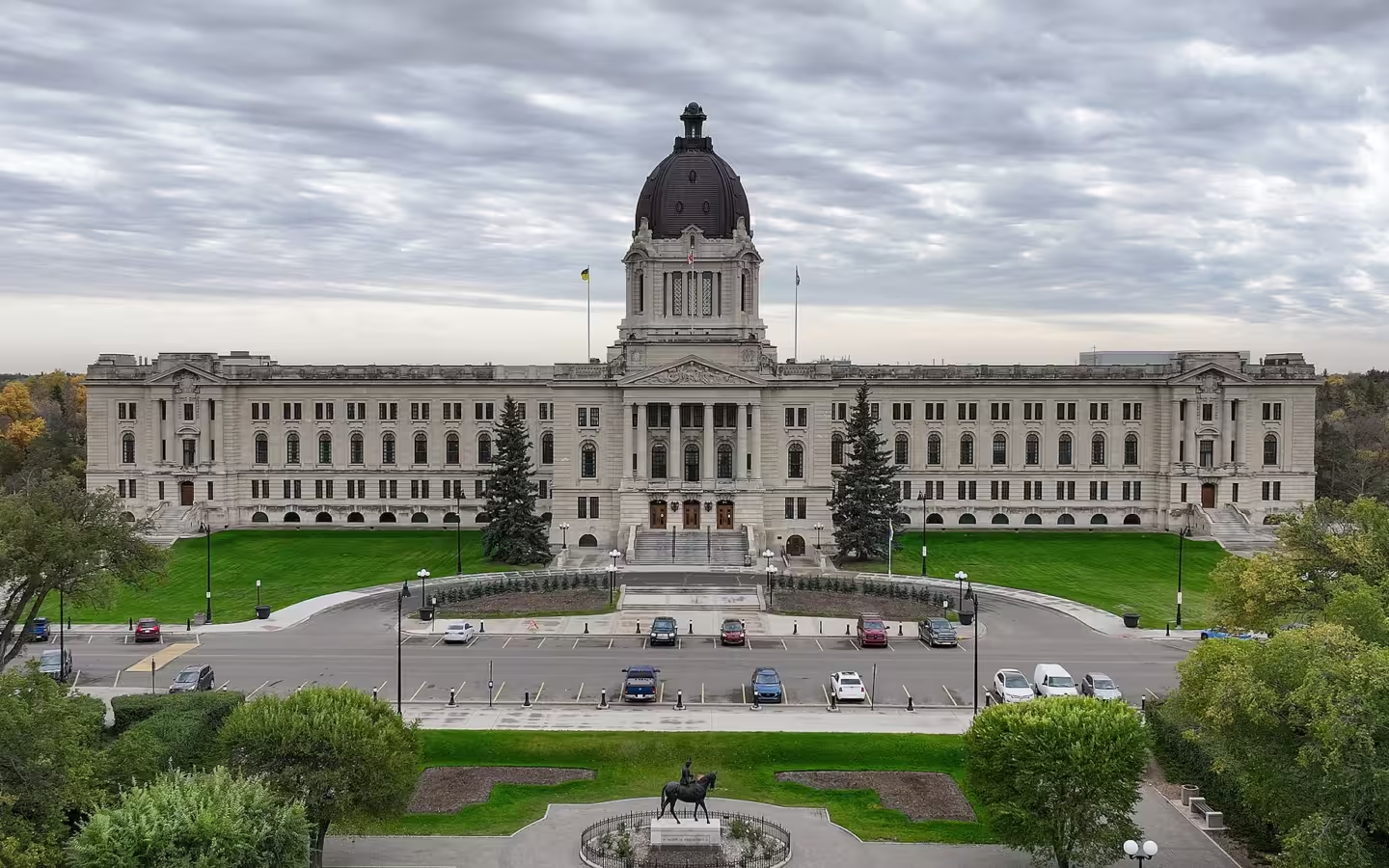
Saskatchewan’s government introduced The Prevention of Deceptive Artificial Intelligence Act in the provincial legislature on 17 November, proposing court remedies for people harmed by deceptive AI content, The Canadian Press reported. The bill would let courts order such content removed and allow victims to seek compensation. Justice Minister Tim McLeod told reporters that Saskatchewan was the first Canadian jurisdiction to propose a legislative framework addressing deceptive AI.
Key points
- Victims could take legal action against creators of deceptive AI content and seek court-determined compensation.
- Courts could order creators to destroy content and remove it from platforms.
- The bill would require AI disclosure in certain circumstances and amend laws covering elections, consumer protection and privacy.
- McLeod said policing agencies would enforce the proposed law.
Saskatchewan courts would gain removal powers
The bill addresses deceptive images, video and audio created or altered with AI. People harmed by that content could bring legal action against its creators. If a court found a creator responsible, it could set compensation for the victim, order the content destroyed and require its removal from platforms. Those remedies would put the decision about an individual victim’s payment and the fate of the content before a court.
McLeod told reporters that policing agencies would enforce the law. He said its provisions would also cover AI-generated intimate images. In an account published by CBC, McLeod said the bill would create an offence for deceptive use of synthetic media. He said compensation would depend on the harm the content caused.
McLeod pointed to a Nova Scotia case in which a judge acquitted a man charged under the Criminal Code’s intimate-images provisions over AI-generated nude images of his high-school classmates, CBC reported. McLeod said Saskatchewan’s proposal was designed to address gaps in the Criminal Code. The provincial bill would give people harmed by deceptive content a route to seek its removal and compensation through the courts.
AI disclosure across Saskatchewan’s existing laws
The proposal would also amend Saskatchewan’s election, consumer-protection and privacy laws to require disclosure of AI use in certain circumstances, Digital Journal reported. The Canadian Press reported that creators would have to mark AI content clearly if people could reasonably believe it was authentic.
Digital Journal reported that the bill had received its first reading. The Saskatchewan Chamber of Commerce supported the proposal. Its chief executive, Prabha Ramaswamy, said the chamber wanted to work with the government to make the legislation practical and clear for businesses of every size.
The bill would leave room for parody and satire provided the material was not manipulative. McLeod said people could continue to use synthetic media for lawful expression. Alberta has already passed legislation prohibiting fake AI content of politicians and targeting the use of AI to spread intimate images. McLeod’s claim of a Canadian first concerned a legislative framework specifically addressing deceptive AI content.
Moe’s likeness and Saskatchewan fraud concerns
Premier Scott Moe previously said that his likeness and that of Prime Minister Mark Carney had been used to trick Saskatchewan residents into making fraudulent investments, CBC reported. Moe had raised the issue at a news conference before the bill was introduced.
Rod McKendrick, a social prescribing coordinator with Saskatchewan Seniors Mechanism, described cases in which scammers called grandparents while pretending to be their grandchildren and asked for money, The Canadian Press reported. He supported the bill as another tool for people confronted by such scams. Saskatchewan’s government also cited older adults among those it wanted the legislation to protect.
The Saskatchewan NDP welcomed the government’s initiative, CBC reported. Brittney Senger, the opposition party’s critic for technology, innovation and AI, said it would continue to monitor the bill’s details and the regulations emerging through the legislative process.