Democrat Gina Hinojosa defeated Texas Governor Greg Abbott in the 3 November election, and Democratic state Representative James Talarico won the state’s US Senate race against Attorney General Ken Paxton, according to NBC News projections reported by NBC DFW. Hinojosa campaigned for a moratorium on data-centre construction, putting a candidate who favours a pause on course to lead a state with several large AI infrastructure projects under construction.
Key points
- Hinojosa advocated a data-centre moratorium during her campaign, having supported tax breaks for the facilities in 2023.
- Abbott directed a state regulator to halt data-centre permits on 21 September, before losing the governor’s race.
- City governments, county officials and state offices all have roles in decisions on data-centre projects.
Hinojosa’s shift towards a moratorium
Hinojosa and Talarico repeatedly raised data centres during their campaigns, MIT Technology Review reported on 4 November. Democrats will also take control of the Texas House for the first time in 24 years. Those results change the political setting for developers seeking to build in Texas, though an election campaign proposal is distinct from a decision on any particular permit.
Hinojosa’s position changed during her campaign. She had supported tax breaks for data centres in 2023 as a way to create construction jobs, then began advocating a moratorium. That shift matters to developers with projects already under way as well as those seeking approval for new facilities: the proposal concerns construction, while decisions on individual projects involve several levels of government.
Talarico’s result brings a prominent critic of data-centre development into a federal seat rather than the governor’s office. In an interview after his victory, he accused Elon Musk of wanting a senator who would give up Texas land and water for data centres, the BBC reported. His remarks put land and water alongside the cost-of-living concerns that the BBC said were central to his campaign.
Abbott’s 21 September permit direction
The election followed a change of course by Abbott. On 21 September, he directed a state regulator to halt data-centre permits. At an industry conference in Ashburn, Virginia, on 3 November, developers described a change in their dealings with the governor’s office and said it had stopped answering their emails, MIT Technology Review reported. Panellists expected existing projects might slow and new ones could stop altogether.
The effect of Abbott’s direction had already become a question for developers. AI Affairs reported that state approvals continued after Abbott called for a permit pause. AI Affairs also reported Abbott’s call for lawmakers to enact restrictions in 2027. Hinojosa’s campaign position adds a different proposed route to limiting construction, following a permit direction from the governor she defeated.
Shackelford County, Nexus Hubbard and local decisions
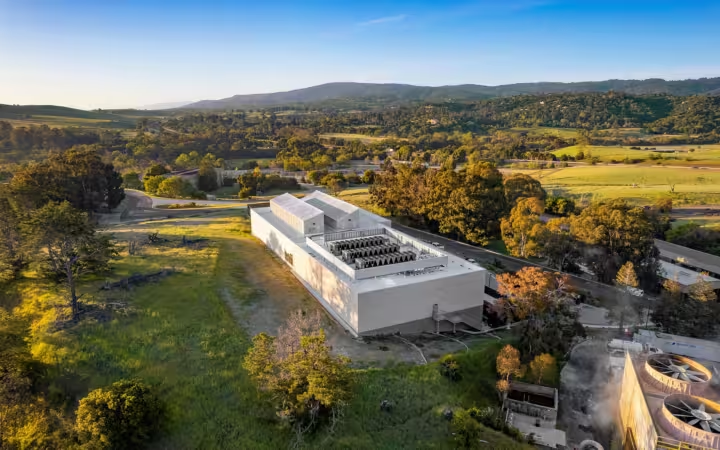
The projects at issue include Stargate Frontier in Shackelford County, which is projected to serve 1,820 megawatts. Nexus Hubbard is under construction, is intended mostly to serve Anthropic and has a planned size of 6,400 megawatts. MIT Technology Review identified both among the large AI facilities being built in Texas. Their stated sizes are projections and plans, rather than accounts of operating capacity.
Whether a Texas project proceeds is not decided by one office. City governments, county officials and state offices all play roles, and local officials with a say in development may resist broad state restrictions. Democrats seeking a moratorium could also encounter opposition from construction unions that backed some of their campaigns. For developers, the result is a set of decisions involving officials whose responsibilities and positions differ, even after a statewide election.
The voting in areas associated with data-centre development was mixed. Dallas County and other counties nearest the city voted Democratic, while Ellis County, which leads Texas in data-centre permitting requests, voted for Abbott and Paxton. Cameron County, another area with data-centre activity, voted Democratic. Mitchell and Scurry counties in west Texas, where several projects are located, voted Republican, MIT Technology Review reported.