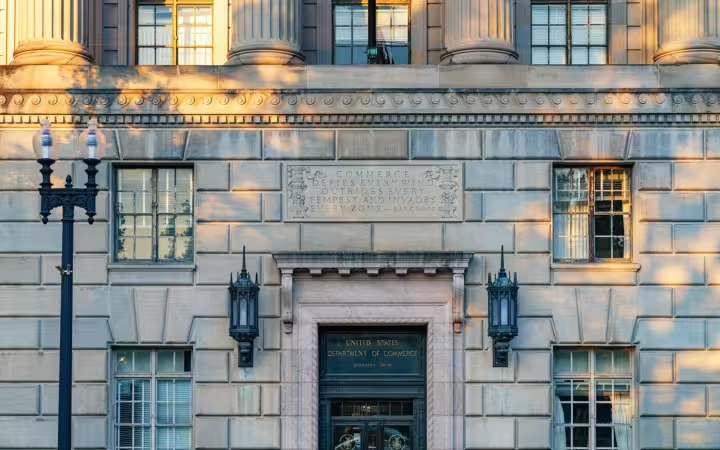
Staff at the Center for Advancing Innovation and Standards for Super Intelligence (CAISSI), a US Commerce Department unit that evaluates advanced AI models, have been asked to report informally to a White House office, Startup Fortune reported on 8 November. Its account relayed reporting based on two former government officials who spoke anonymously. The centre has an acting director after two directors left this year, and it has stopped publishing the results of its safety tests.
Key points
- CAISSI staff were asked to report informally to a White House office, according to an account based on two former officials.
- A director hired in April was fired within days. A successor resigned after a few months, leaving the head of CAISSI’s parent institute as acting director.
- Congress asked in August why the centre had stopped publicly releasing reports on its AI safety tests.
- CAISSI has a $10 million annual budget, described as about one-eighth of the funding received by its UK counterpart.
An informal line to the White House
The request gives CAISSI staff a route for reporting to the White House while the centre remains within Commerce. That distinction matters: an informal arrangement can affect who hears from the people testing models without settling who formally directs their work. The account describes a request to report, rather than a transfer of the centre out of the department.
A move involving its senior staff had been under discussion. On 12 October, the administration planned to move three senior CAISSI officials to the White House, according to the earlier reporting on which AI Affairs covered the proposed transfer. Under that plan, the officials would answer to Michael Kratsios, director of the Office of Science and Technology Policy, and National Cyber Director Sean Cairncross. The newer account concerns staff reporting informally to a White House office. It does not turn the earlier proposed transfer into a completed formal move.
Commerce Secretary Howard Lutnick had invited Kratsios and Cairncross to co-manage CAISSI about six months before the 12 October report. That invitation and the planned transfer put the White House officials in the centre’s management discussions before the account of informal reporting. The officials’ proposed roles concern an organisation whose work is to assess advanced AI systems, including safety risks that can matter well beyond the companies whose models are tested.
CAISSI has an acting director
The reporting arrangement arrives during a series of changes at the top of CAISSI. A director hired in April 2026 was fired within days, Startup Fortune reported. The person who replaced him served for a few months and then resigned. The head of the centre’s parent institute is serving as acting director.
Those departures leave the acting director holding the role while staff have been asked to report informally outside Commerce. The two developments concern different parts of the centre’s operation: one is who leads it, the other is where its staff are asked to report. Both matter to a unit carrying out government evaluations of frontier models. Its annual budget is $10 million, about one-eighth of the amount received by its UK counterpart, according to the same account.
Funding sets one limit on the work a testing centre can undertake. Leadership and reporting arrangements set others, including who receives information from its staff and who is responsible for decisions made within the unit. CAISSI’s current arrangement places an acting director at its head alongside the informal White House reporting request.
Congress questioned CAISSI’s test reports
CAISSI has also stopped publicly releasing reports on how AI systems perform in its safety tests. Congress asked why in August. Those published results were a way for people outside the government and the model developers to see the centre’s assessment work. Their absence changes what the public can examine while CAISSI’s staff are being asked to communicate with a White House office.
The question from Congress concerns publication, rather than the formal status of the White House reporting request. It bears directly on what can be scrutinised outside the administration: a public test report can be read by lawmakers, researchers and the companies affected by an evaluation. An informal account of where staff report offers none of those readers the test results themselves.
The White House did not respond to specific questions about CAISSI, Startup Fortune reported. Amos Toh of the Brennan Center for Justice told the Associated Press that decisions concerning cybersecurity and bioweapons risks have immense public consequences and should be explained in public.