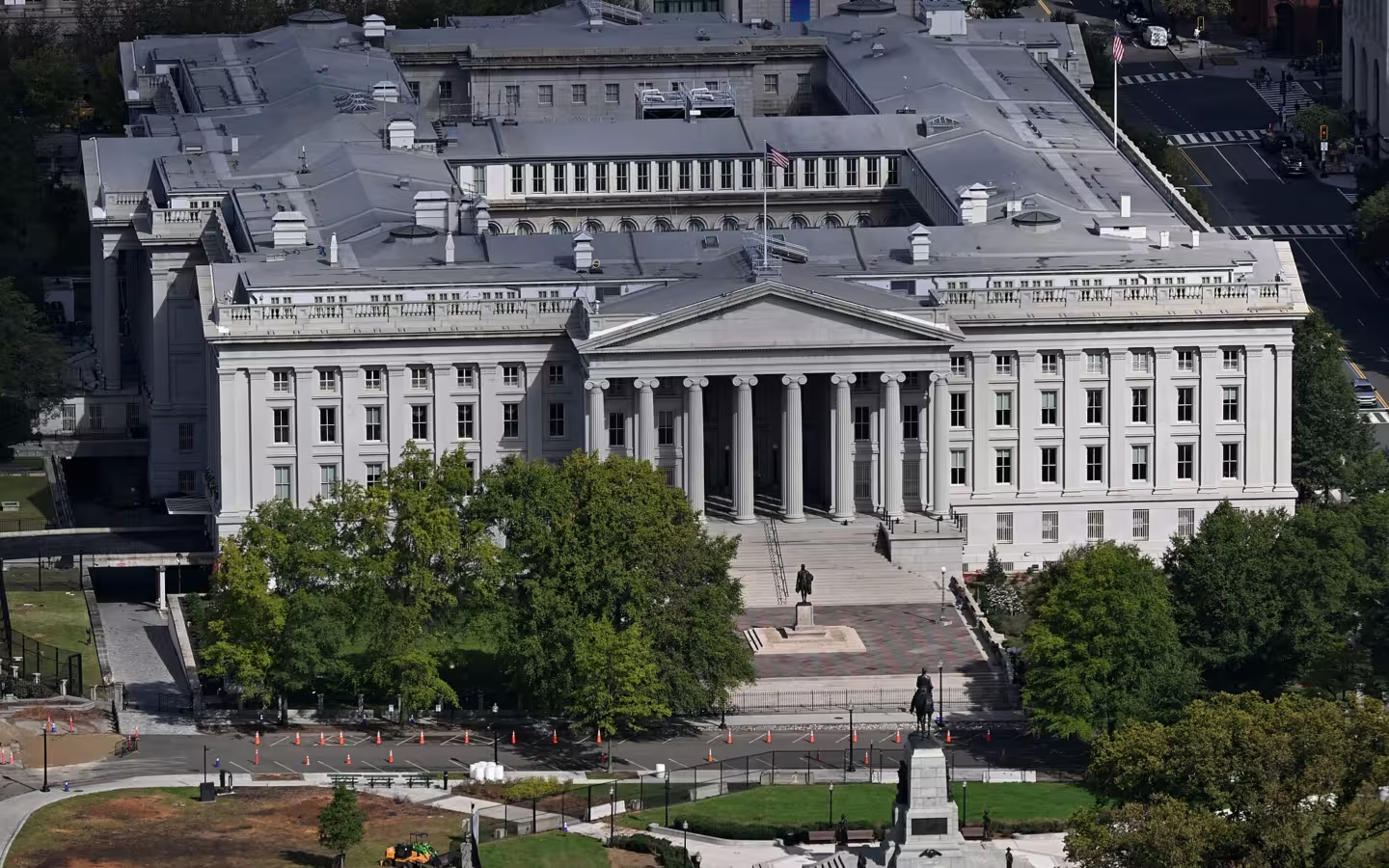
The US Treasury Department proposed rules on 22 October to restrict American investment in artificial intelligence, supercomputing, biotechnology and hypersonic systems in China, Russia, North Korea and other countries of concern, AP News reported. The draft would implement legislation passed in December 2025, extending an outbound investment programme that began with restrictions on investment in China. Investors would face a wider set of covered technologies and countries if Treasury adopts the proposal.
Key points
- The proposed rule would apply only to investments exceeding $50,000.
- Many financial investments, including stock purchases, would be excluded.
- The draft reaches biotechnology alongside AI, supercomputing and hypersonic systems.
- China’s Foreign Ministry objected to restrictions on business investment.
The $50,000 threshold and the 2025 law
The earlier programme began in 2023, when President Joe Biden signed an executive order restricting outbound US investment in semiconductors, quantum computing and AI going into China. Treasury subsequently established the Outbound Investment Security Program. Congress passed legislation in December 2025 that codified and expanded the programme, adding technologies and countries including Cuba, Iran, North Korea and Russia. The October draft is Treasury’s proposal for putting that legislation into operation.
AP News calls the statute the Comprehensive Outbound Investment National Security Act. Financial News calls it the Comprehensive Foreign Investment National Security Act. Both accounts place Treasury’s draft under legislation Congress passed in 2025.
The proposed restrictions would reach investments exceeding $50,000, while leaving out many financial investments, among them stock purchases. That boundary matters to an investor considering a transaction with a business in a covered technology: the proposed rule is directed at qualifying investments, rather than every movement of American money into the affected countries. Jason Chipman, a WilmerHale partner who specialises in cybersecurity, investment rules and export controls, said the new rule would require more substantial compliance programmes to manage risk.
Treasury’s draft adds hypersonic systems, supercomputing and biotechnology to the areas addressed by the programme. Hypersonic systems are capable of travelling at five times the speed of sound. For artificial intelligence, Treasury used the term “superintelligence”, abbreviated to SI, in the proposed rule. That terminology sits alongside a wider geographical reach: the original executive order concerned investments going into China, while the legislation also covers other countries.
Biotechnology enters Treasury’s proposed restrictions
The biotechnology provisions include brain-computer interfaces, therapies involving cell or gene modification, and immunotherapies, Financial News reported. Treasury was concerned that some advanced biotechnology could carry risks involving biological weapons, or find military, intelligence or large-scale surveillance uses. Those categories put investment in medical and interface technologies within a programme initially associated with chips, quantum computing and AI.
Treasury Secretary Scott Bessent described the rules as “a measure to prevent critical technologies that threaten national security from being developed in adversarial countries with U.S. investment”, Financial News reported. He also said clearer standards for American and foreign investors would support an open investment environment. The Biotechnology Innovation Organization warned that “overly broad regulations could undermine the competitiveness of the U.S. biotech industry”. Its objection addresses the breadth of the proposed restrictions, rather than the government’s stated national-security purpose.
Financial News reported that US biotechnology companies have increasingly relied on China for early-stage drug development. It said licensing agreements for new drugs involving companies such as Eli Lilly and Pfizer may avoid the restrictions when they consist only of cash payments and include no equity investment. That distinction would matter to companies structuring drug-development relationships across the two markets, alongside the proposal’s broader exclusion of many financial investments.
China objects as Treasury prepares to hear comments
China’s Foreign Ministry said the US should follow market-economy principles and cease interfering with ordinary commercial cooperation between businesses. Asked about the addition of biotechnology, ministry spokesperson Mao Ning objected to the expansion of national-security restrictions against particular countries. She said China would watch developments closely and take measures to protect its interests. The response places the new biotechnology category within the wider dispute over investment and technology controls.
Treasury will hear public comments before issuing a final rule. The department already enforces reporting obligations under the outbound investment programme: in July, it fined a US-based company $200,000 after a subsidiary failed to report a $92,500 investment in a Chinese AI and robotics company, AP News reported.