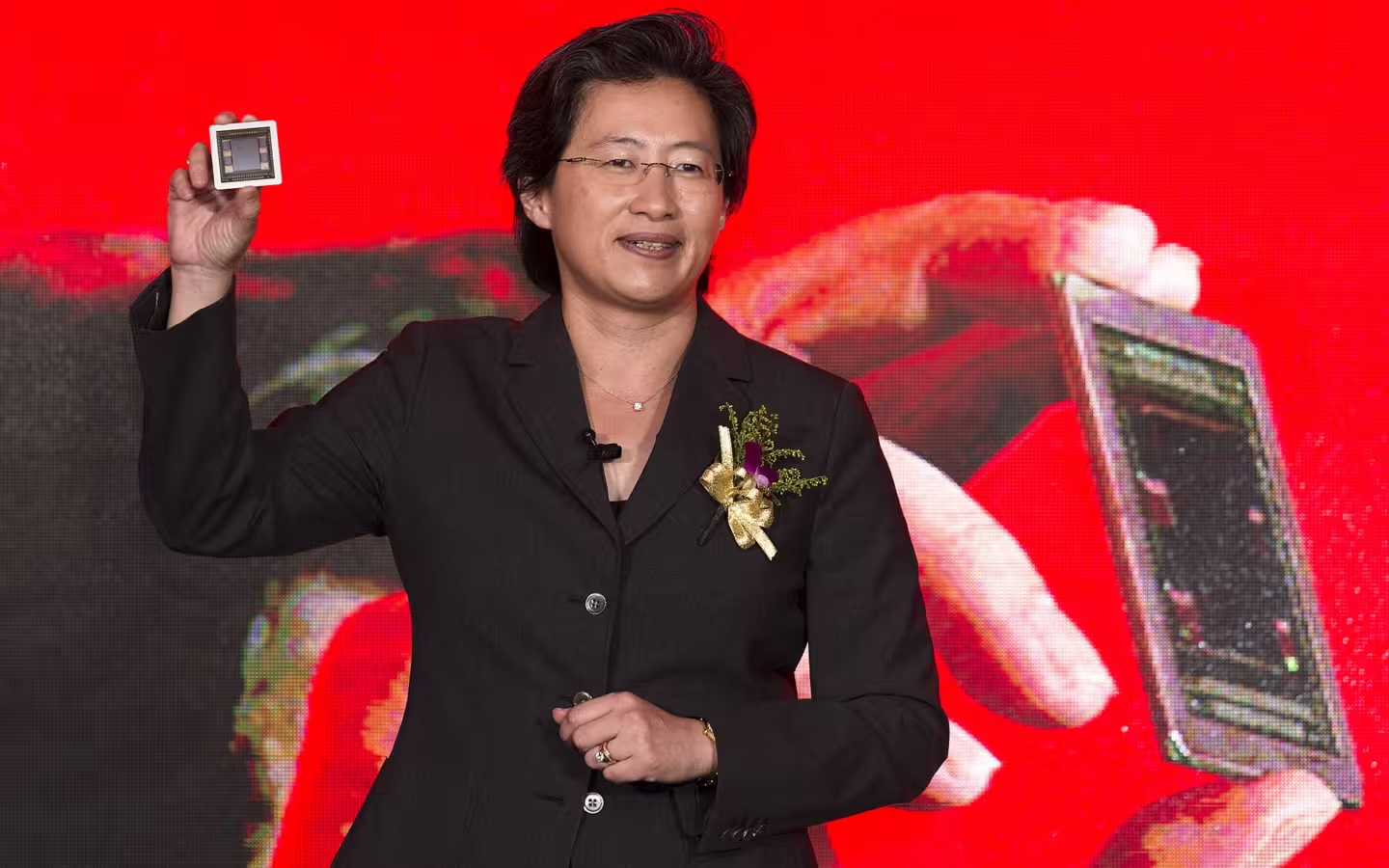
AMD plans to “substantially increase” chip supply in 2027 after raising supply during 2026, chief executive Lisa Su said in Taipei on 6 October, Reuters reported.
Key points
- Su said AMD needs more advanced wafer capacity to meet demand over the next several years.
- She met Foxconn and was due to meet TSMC about the supply chain for CPU and GPU production.
- AMD is working with memory-chip makers on supplies, while Su says memory remains tight across the market.
AMD targets more supply in 2027
Su linked the planned increase to demand for artificial intelligence chips. She said AMD had expanded supply as 2026 progressed, but its requirements extend beyond the coming year. The company is planning three to five years ahead, she told reporters in Taipei.
AMD remains constrained by supply, including memory, despite this year’s increase, Finimize reported. Su said the company “could definitely use more” and described memory as tight across the market. She said AMD was coordinating its plans with suppliers and customers.
AMD competes with Nvidia in AI graphics processors. Reuters described it as Nvidia’s closest rival in that market and reported that AMD’s market value had recently exceeded $1 trillion amid an AI-driven rally. Su’s 2027 supply target concerns the chips AMD expects to make available. She also described the manufacturing capacity the company needs to pursue that target.
Su discusses capacity with Foxconn and TSMC
Su said she had met Foxconn and was due to meet TSMC during her Taiwan visit. One purpose of the trip, she said, was to check whether AMD’s supply chain could expand CPU and GPU production in response to growing AI demand.
“There’s very, very high demand for the next several years. We can see very high demand, and so we need more advanced wafer capacity,” Su said. She made the remarks when asked whether TSMC had discussed a potential investment in Texas with AMD. Reuters reported that TSMC was evaluating a potential investment there.
Manufacturing is one part of the capacity pressure. Global demand for AI and data-centre products has also tightened advanced packaging capacity, Taiwan News reported. The publication said Su was expected to seek support from packaging, testing and substrate partners during her Taiwan visit and review chip delivery schedules covering the second half of 2026 and 2027.
AMD’s EPYC processor codenamed Venice has entered mass production on TSMC’s 2-nanometre process and is expected to become available in 2027, according to market sources cited by Taiwan News. The publication also reported claims from sources that production capacity for Venice was already fully booked.
AMD works with memory-chip makers
Su said AMD was working closely with memory-chip makers to secure supplies. South Korea is home to Samsung and SK Hynix, two companies in that industry. Memory availability sits alongside wafer capacity in the supply planning Su described, with both needed for the production increase AMD is targeting.
Su plans talks with South Korean AI chipmakers on 8 October, AI Affairs reported.