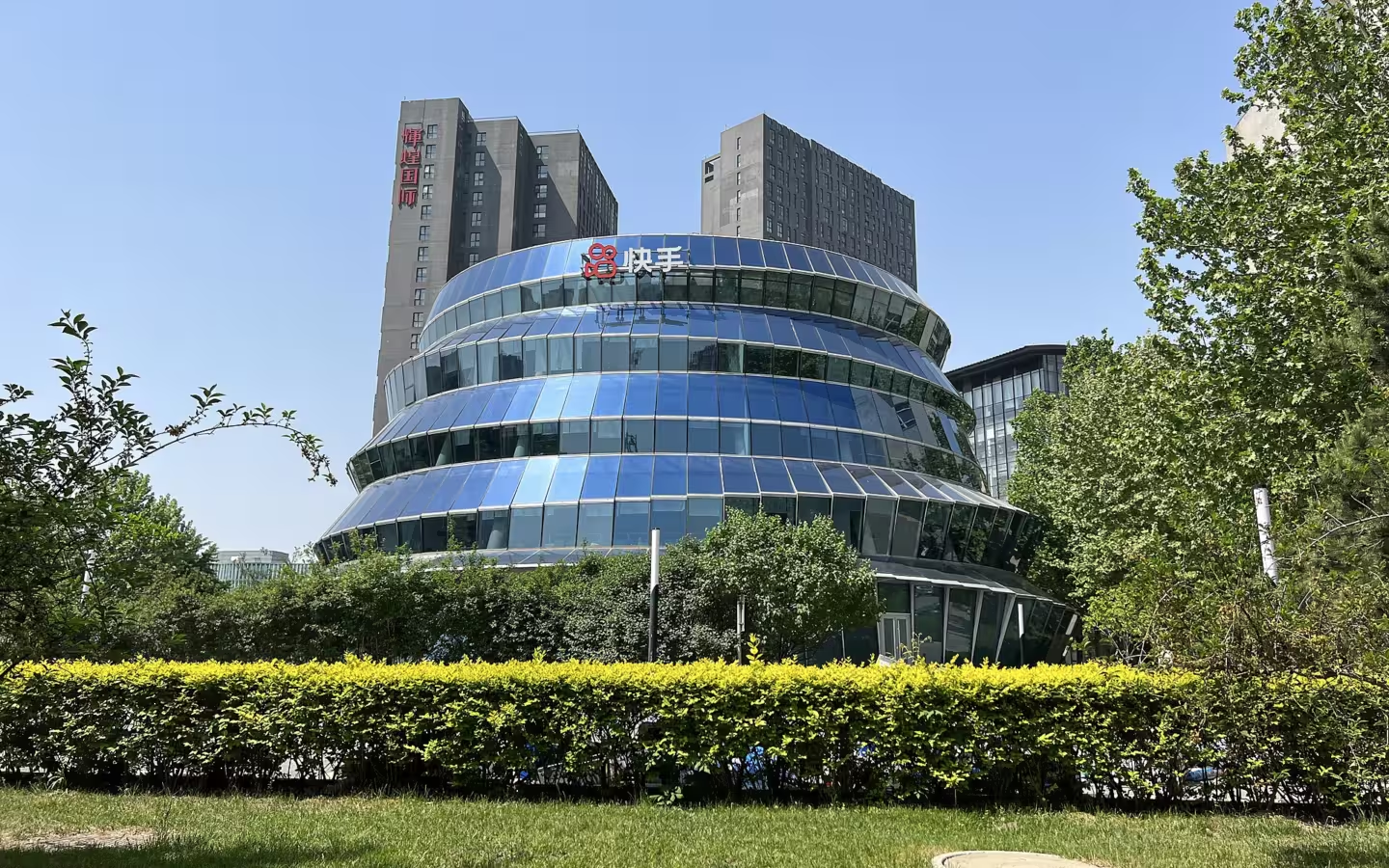
Kuaishou Technology’s Kling AI had picked banks by 6 October for a possible Hong Kong IPO that could raise at least $1 billion, Bloomberg reported, citing people familiar with the matter. The AI video business is targeting a listing as soon as 2027, the people said.
Key points
- China International Capital Corp., Goldman Sachs and UBS are working on Kling’s potential Hong Kong share sale.
- Beijing Kling has attracted about RMB19.05 billion ($2.79 billion) in investment commitments, Asia Business Outlook reported.
- Kuaishou said Kling’s second-quarter revenue exceeded RMB850 million, up more than 200% from a year earlier.
- GPU inference costs constrain margins for AI video providers, according to industry analysis reported by Tech in Asia.
Three banks work on Kling’s Hong Kong sale
China International Capital Corp., Goldman Sachs Group Inc. and UBS Group AG are working with Kling on the potential offering, Bloomberg reported, citing the same people. They asked not to be identified because the information was confidential. The proposed fundraising amount and 2027 timetable remain targets for a potential sale.
Kuaishou had begun considering a different ownership structure for the business before the bank selection. In May 2026, the company said its board was considering a restructuring of Kling and the introduction of outside investors. The proposal was then under discussion and no final agreement had been reached, Asia Business Outlook reported on 29 September.
Kling lets users generate videos and images with AI. A Hong Kong spin-off could proceed with Kuaishou retaining control if Kling operated independently under separate governance, Tech in Asia reported on 29 September, describing the city’s rules. Kuaishou held a majority stake in Kling at the time of that report.
Beijing Kling attracts RMB19.05 billion
Kuaishou’s restructuring plan attracted about RMB19.05 billion ($2.79 billion) in investment commitments for Beijing Kling, the company expected to hold the relevant Kling AI assets, Asia Business Outlook reported. The funding followed an investment plan announced in July, with further investors subsequently joining. The account put Beijing Kling’s value at around $15 billion before the new investment.
Tech in Asia reported that Kling had reportedly raised US$2.8 billion in July at a valuation of about US$18 billion. Its account placed that valuation alongside a funding figure for July, while Asia Business Outlook described investment commitments under a plan that subsequently brought in more investors.
Kuaishou, which previously owned the business in full, is expected to retain about 68.33% after the financing and employee equity arrangements. China’s National AI Industry Investment Fund invested about RMB1.4 billion in Beijing Kling. Charoen Pokphand Robot invested around RMB131 million.
Those commitments bring outside capital into the business while leaving Kuaishou with a controlling stake under the reported arrangements. The investors’ funding is tied to Beijing Kling, the company expected to hold the AI assets, rather than to the potential Hong Kong share sale.
Kling’s quarterly revenue exceeds RMB850 million
Kuaishou said Kling’s revenue exceeded RMB850 million in the 2026 second quarter, more than 200% higher than in the equivalent quarter a year earlier. Kuaishou had said in December 2025 that the business had passed $20 million in monthly revenue.
Tech in Asia reported that Kling’s annualised revenue topped US$500 million in March. The annualised figure and the subsequent quarterly revenue describe different periods, while both put a measure of Kling’s commercial activity alongside the proposed fundraising.
Kling unveiled its Kling 4.0 model in September. It can generate clips of up to 30 seconds, and Kling said a lite version was available to annual subscribers. AI Affairs previously reported on the model’s 30-second clips and additional controls.
Kling competes with ByteDance for users and revenue, according to Tech in Asia. Industry analysis reported by the publication says GPU inference costs constrain margins for AI video providers unless they raise prices, restrict output quality or duration, or obtain cheaper computing power.

.jpg)