Global AI glasses shipments rose 263% year over year in the first half of 2026, according to Counterpoint Research’s Global Intelligent Eyewear Market Tracker H1 2026 Update published on 21 September 2026.
Key points
- Total AI glasses shipments including display-less and AR & AI models surged 263% YoY in H1 2026
- Display-less devices accounted for 96% of volume, growing 258% YoY and 22% sequentially
- Meta held 94% of the display-less segment, with its shipments up 260% YoY and 22% sequentially
- AR & AI glasses shipments jumped 449% YoY, led by Chinese OEMs Rokid, Even Realities and Alibaba
- Rising memory prices and privacy concerns over cameras cited as near-term headwinds
Display-less segment dominated by Meta and EssilorLuxottica
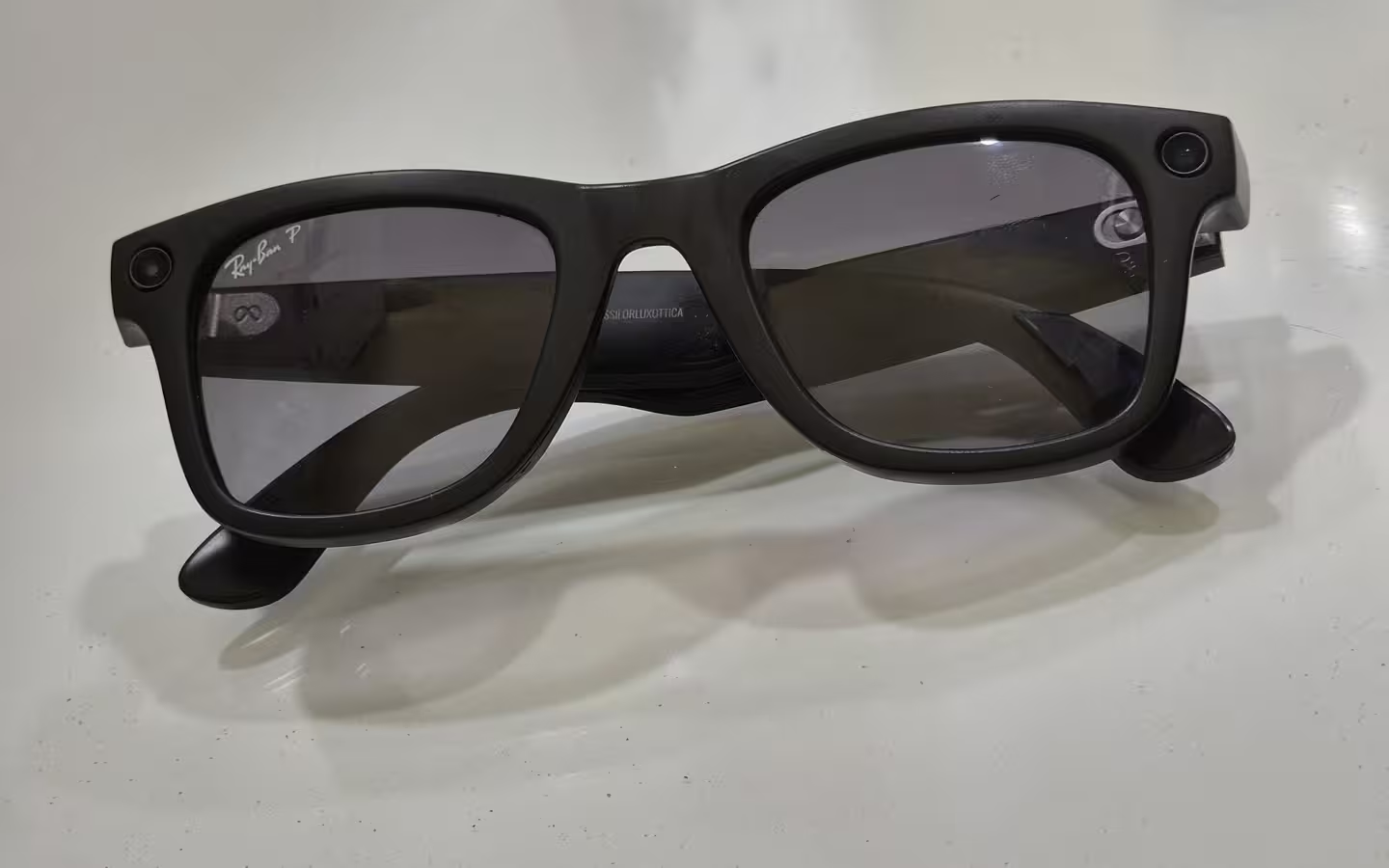
Display-less AI glasses grew 258% year over year and 22% compared with the second half of 2025, driven by Meta and EssilorLuxottica’s broader lineup, entry into new APAC markets and wider retail promotions. Meta accounted for 94% of global display-less shipments, with its volumes rising 260% year over year and 22% sequentially. Xiaomi and Alibaba each accounted for 1% of the display-less segment, with other brands at 4%, 9to5Mac reported citing the same Counterpoint data.
Regional distribution of display-less shipments showed North America at 50%, Western Europe at 28%, Australia at 4.4%, APAC at 4%, Latin America at 3.8%, India at 3.7%, China at 3% and the UAE at 2%, according to the 9to5Mac report.
AR & AI glasses grow 449% with Chinese OEMs leading
The AR & AI glasses segment, defined as devices with displays and optical components for see-through experiences, grew 449% year over year and 18% sequentially from a small base. Chinese OEMs led commercialisation, supported by a domestic supply chain spanning micro-display makers, waveguide suppliers, manufacturing partners and audio component providers, according to Counterpoint’s Principal Analyst Flora Tang. China accounted for 45% of AR & AI shipments, ahead of North America at roughly 41%.
Segment share by OEM placed Rokid at 41%, Meta at 37%, Even Realities at 11%, Alibaba at 7%, INMO at 2% and other brands at 2%, 9to5Mac reported. Explaining the divergence, Counterpoint’s Principal Analyst Flora Tang said the competitive landscape at this early stage is shaped more by product supply than consumer demand, noting Chinese companies tend to launch earlier, iterate faster and refine based on user feedback, while Meta and Apple generally wait for technologies to mature before scaling.
Component costs and privacy concerns emerge as headwinds
Rising semiconductor component prices, especially memory, and growing public concerns over cameras in AI glasses are cited as near-term challenges that could introduce greater uncertainty and weigh on growth. 9to5Mac reported that the “perv glasses” label has gained traction as reports of non-consensual filming and harassment draw wider attention. Counterpoint said it does not expect these challenges to alter the broader trajectory of growth and innovation, forecasting that the next phase will be driven by agentic AI glasses offering proactive, context-aware experiences enabled by advances in embedded intelligence, energy-efficient chips and novel control schemes.
Apple is rumoured to be developing display-less smart glasses targeting a 2027 launch, with a more advanced version featuring an AR display reportedly still several years away, according to the 9to5Mac report.