South Korean chipmaker SK Hynix expects memory demand to outpace supply until 2030 and has signed agreements with 14 major buyers covering more than 50% of its production capacity in 2027 and 2028, the Chosun Ilbo reported after the company released third-quarter earnings on 28 October. The contracts give the buyers access to future output while leaving prices able to move with the market.
Key points
- Agreements with 14 customers, including global cloud providers, cover more than half of SK Hynix’s capacity for 2027 and 2028.
- SK Hynix expects demand to exceed supply until 2030, citing difficult advanced manufacturing processes and the time needed to build factories.
- Third-quarter revenue rose 327.9% to 104.6155 trillion won, while operating profit rose 632.1% to 83.3338 trillion won.
- The company plans shareholder returns exceeding 100 trillion won in 2026 and expects investment to increase substantially in 2027.
Fourteen buyers secure 2027 and 2028 capacity
The buyers include global cloud service providers. SK Hynix has also been discussing extensions with some customers beyond a typical five-year contract period, the Chosun Ilbo reported. Contract prices reflect market conditions within ranges agreed separately with each buyer. SK Hynix says that arrangement helps protect profitability while allowing prices to adjust.
The supply forecast rests partly on how quickly manufacturers can add capacity. SK Hynix expects technically demanding advanced processes and lengthy factory construction to constrain output through 2030. It also expects AI investment to broaden from large technology companies to other businesses and national projects.
The contracts cover future capacity rather than fixing every sale at a single price. Less than half of the company’s 2027 and 2028 capacity sits outside the agreements, BeInCrypto reported. The publication said weaker demand could still affect earnings from that remaining output.
The nearest reported comparison is Samsung Electronics. KB Securities estimates that Samsung has agreements covering about 80% of its 2027 memory output, AI Affairs previously reported. SK Hynix’s disclosed coverage extends across both 2027 and 2028.
SK Hynix reports 83.3338 trillion won profit
Third-quarter revenue reached 104.6155 trillion won, up 327.9% from a year earlier. Operating profit was 83.3338 trillion won, up 632.1%, with a 79.7% operating margin. That margin compared with 76.3% in the second quarter. Operating profit also exceeded market expectations of around 77 trillion won, the Chosun Ilbo reported.
Revenue and operating profit beat LSEG SmartEstimates of 98.34 trillion won and 76.72 trillion won respectively. Net profit, however, fell 58% from the preceding quarter to 39.78 trillion won, below FnGuide’s forecast of 61.29 trillion won. Analysts linked gains in the second quarter to the company’s sale of its Kioxia stake, according to BeInCrypto.
Before the results, Goldman Sachs estimated that Korean chip valuations implied a 65% fall in sector earnings in 2027. SK Hynix shares rose 5.67% from the previous close to 1.417 million won in early Seoul trading on 28 October.
HBM4 output and 2027 investment
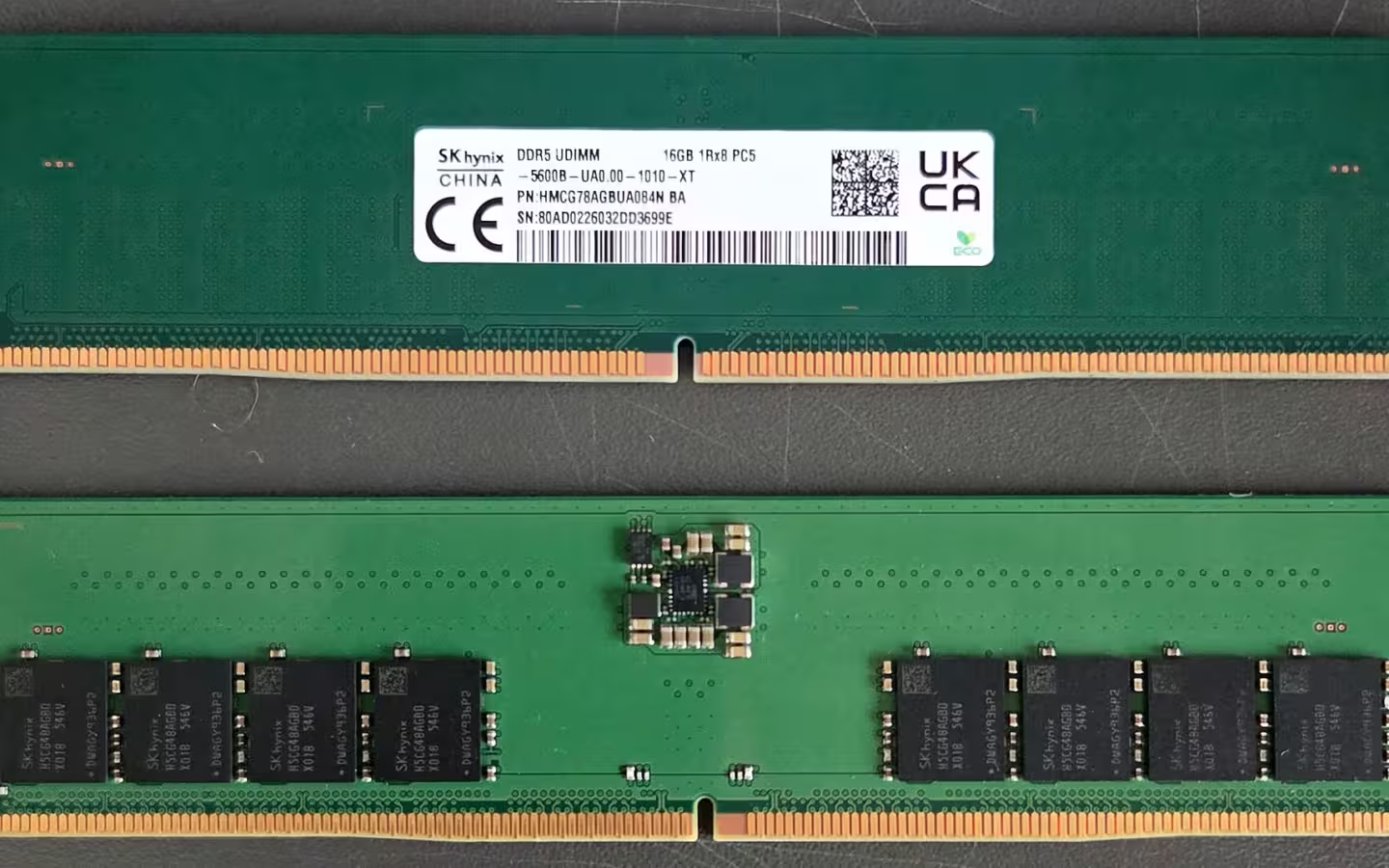
SK Hynix expects HBM4 to overtake HBM3E in both shipments and revenue in the fourth quarter. HBM, or high-bandwidth memory, transfers large amounts of data to AI processors. Sales of server-grade DDR5 memory and enterprise solid-state drives using 321-layer NAND also increased in the third quarter.
The company plans to bring its Cheongju M15X facility to maximum production capacity by the end of 2026 to raise HBM4 output. It also aims to put more than half of its domestic NAND capacity on 321-layer processes during the fourth quarter.
SK Hynix expects investment to rise substantially in 2027 as its Yongin Phase 1 factory begins full operation and it expands production elsewhere. The company plans to adjust the scale and timing of spending according to customer demand, profitability and investment efficiency.
SK Hynix plans returns above 100 trillion won
SK Hynix plans to return more than 100 trillion won to shareholders in 2026 through dividends and share buybacks. That target includes more than 60 trillion won in additional returns on top of 40 trillion won announced in August. Announced returns had reached 64 trillion won by 28 October.
At its 28 October board meeting, the company decided on a 14 trillion won third-quarter cash dividend and a 10 trillion won share buyback for cancellation. It also decided to buy 10 trillion won of shares for employee compensation, which it excludes from the shareholder return total.