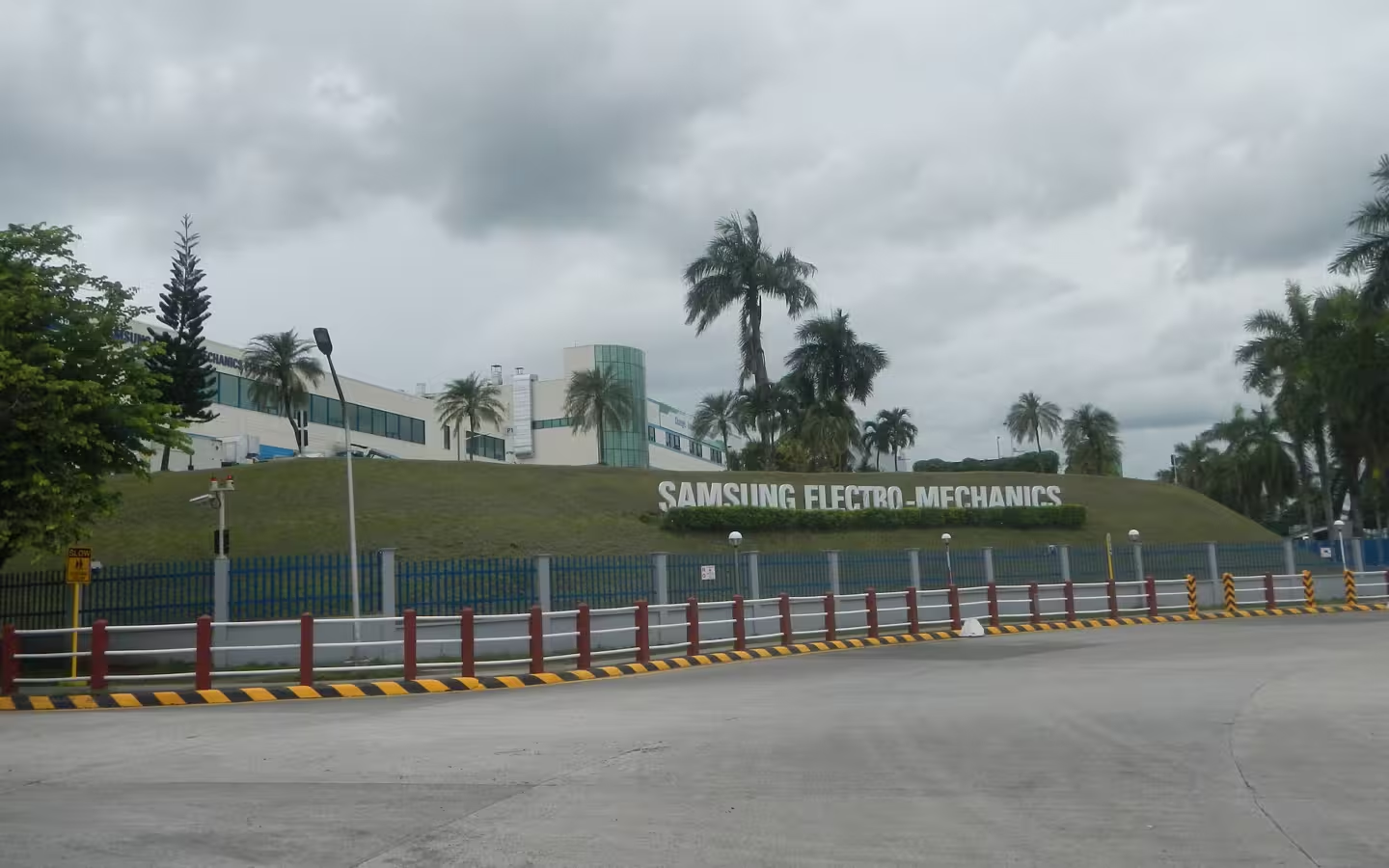
Samsung Electro-Mechanics reported third-quarter operating profit of 690.9 billion won on 28 October, up 165.5% from a year earlier and 7.6% above one market estimate, MoneyToday reported. Its quarterly results put a figure on rising sales of components used in AI data centres.
Key points
- Revenue rose 30.3% to 3.7633 trillion won, but fell 1.6% short of a market forecast.
- MLCC division revenue grew 36% to 1.8830 trillion won; package substrate revenue rose 58% to 939 billion won.
- Seven disclosed long-term supply agreements signed since May total about 4.3 trillion won.
- A 360.5 billion won package substrate agreement covers deliveries throughout 2027.
MLCC sales lift Samsung’s component division
Consolidated revenue rose 30.3% from a year earlier to 3.7633 trillion won. Operating profit increased 56.9% from the previous quarter. MoneyToday put the quarterly profit consensus at 642.3 billion won, which the result exceeded by 48.6 billion won, or 7.6%. Revenue, by contrast, was 1.6% below the 3.8247 trillion won market forecast it cited.
A different pre-results consensus put operating profit at 645.4 billion won, Chosunbiz reported on 26 October, citing figures compiled by FnGuide. That forecast projected revenue of 3.8282 trillion won. Chosunbiz also put rival component maker LG Innotek’s projected third-quarter operating profit at 202.9 billion won, down 0.4% from a year earlier, alongside projected revenue of 6.1048 trillion won, up 13.7%.
Samsung Electro-Mechanics’ Component Solutions division, which sells MLCCs, generated revenue of 1.8830 trillion won, up 36% year on year. Sales to AI data centres included components for servers, networks and power systems. Higher-performance AI server GPUs also increased demand for high-capacity, very small MLCCs, MoneyToday reported.
MLCCs store and release electricity to stabilise voltage. AI servers require more high-capacity versions, while the larger substrates used to connect advanced chips to circuit boards have more circuit layers. For high-performance semiconductor substrates, the time between order and delivery was 48 to 56 weeks as of 19 October, compared with around 12 weeks when supply and demand are balanced, Chosunbiz reported.
Package substrate revenue grows 58%
Package Solutions revenue reached 939 billion won, up 58% year on year — the largest year-on-year increase of Samsung Electro-Mechanics’ three divisions. Sales included substrates for server CPUs, AI accelerators and data-centre networking, as well as products for advanced driver assistance and autonomous driving. Optical Solutions, which includes camera modules, recorded revenue of 941.3 billion won, up 3% from a year earlier but down 9% from the previous quarter.
Samsung Electro-Mechanics expects demand for high-specification data-centre components to continue in the fourth quarter, according to MoneyToday. The company plans to increase supplies of flip-chip ball grid array, or FC-BGA, substrates for server CPUs and AI accelerators, alongside MLCC deliveries under long-term agreements with major technology customers.
One package substrate agreement commits Samsung Electro-Mechanics to supply an unnamed global customer with substrates for memory semiconductors from 1 January to 31 December 2027. The contract is worth 360.5 billion won, Evertiq reported. It is among seven long-term agreements the company has signed since May that each met its threshold for public disclosure of at least 2.5% of sales. Together, those agreements are worth about 4.3 trillion won.
Contracts and capacity extend into 2028
The seven agreements cover silicon capacitors, MLCCs, inductors and package substrates. All begin on 1 January 2027, while only the silicon capacitor agreement extends into 2028, Digital Today reported. It put the company’s contracted supply volume for 2027 at about 3.5 trillion won. AI Affairs previously reported agreements totalling 3.6 trillion won.
The contracts secure volumes before the planned expansion of production facilities. IBK Investment & Securities now forecasts 4.4 trillion won in 2027 operating profit for Samsung Electro-Mechanics, up from its previous 3 trillion won estimate, as it expects prices to contribute more amid tight supply, according to Digital Today. iM Securities expects the company to add 20% to 30% capacity in 2027 through investment in existing lines.
Samsung Electro-Mechanics announced a 6.78 trillion won expansion of FC-BGA production in Sejong and Vietnam in September, as AI Affairs reported at the time. Chosunbiz reported that Nvidia’s investment in substrate capacity was in the 2 trillion won range and that Tesla had reportedly provided funding in the 1 trillion won range for a dedicated Sejong production line. Samsung Electro-Mechanics’ new Sejong line targets mass production in September 2028, while its expanded Vietnam plant aims to begin operations in June 2030.